


 Business Recorder
 Six policemen including DSP martyred in Kohat attack
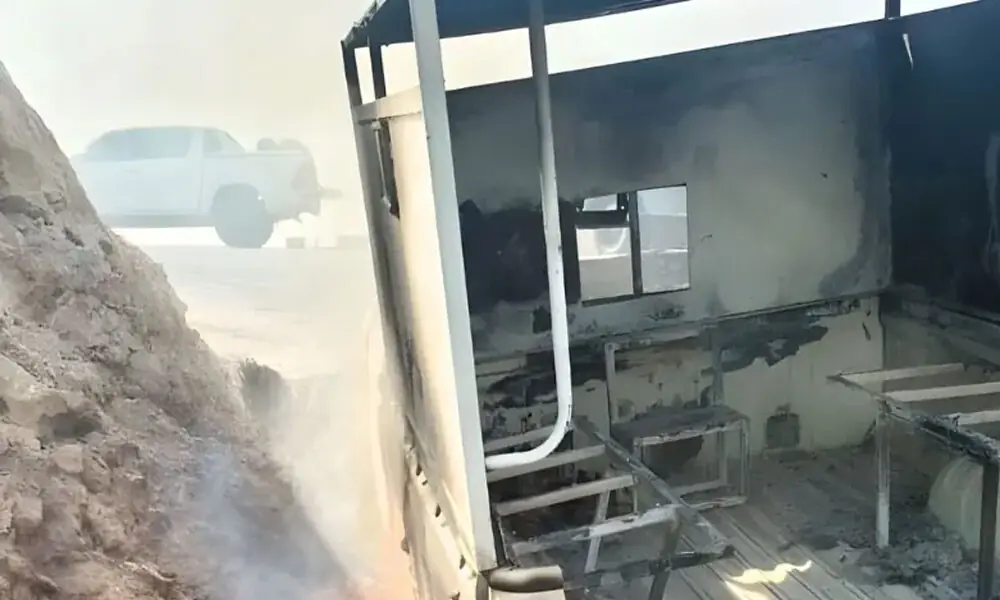
In yet another tragic incident of terrorism in Khyber Pakhtunkhwa, at least six police officials including a deputy superintendent of police (DSP) were martyred as armed assailants targeted a police mobile van on Shakardara Road in Kohat district, Aaj News reported. According to police sources, the attack resulted in the immediate martyrdom of DSP Asad Mahmood and two fellow officers at the scene, while three other personnel later succumbed to their injuries at the hospital. Three injured officials are currently undergoing medical treatment. After the firing, the terrorists set the police vehicle ablaze, causing severe panic and fear across the area. Upon receiving word of the incident, a heavy contingent of security forces and police reached the site, cordoning off the area to launch a search operation. Police authorities stated that the bodies of the martyrs have been moved to Lachi Hospital for necessary formalities. Preliminary reports suggest the attack was a well-planned ambush in which the police van was severely targeted. Following the assault, security has been placed on high alert in Kohat and its surrounding districts, with intensified checking at all entry and exit points. Senior police officials asserted that elements attempting to sabotage peace and order will face stern action, vowing that the sacrifices of DSP Asad and the other fallen officers will not go in vain. Interior Minister Mohsin Naqvi condemned the attack by Fitna al-Khawarij terrorists on police vehicle in Kohat. The interior minister paid rich tribute to DSP Asad and the police personnel who embraced martyrdom in the line of duty. He expressed his heartfelt sympathy and deepest condolences to the families of the fallen officers. He further remarked that the martyred DSP and the officials sacrificed their “today” for the nation’s “tomorrow”. “The timeless sacrifices of the martyrs will always be remembered. The government stands firmly with the families of DSP Asad Mahmood and the other martyrs in this hour of grief,” he said. After a marked decline in violence in December 2025, the start of the new year saw resurgence in terrorist attacks, resulting in increased fatalities among militants, civilians, and security personnel, according to figures released by the Pakistan Institute for Conflict and Security Studies (PICSS). The report disclosed that combat-related deaths in January 2026 rose by 43percent compared to December 2025. In January, 242 militants were killed, along with 73 civilians and 46 members of the security forces. In addition, 12 militants were injured, while at least 71 civilians and 52 security personnel sustained injuries. The PICSS reported that January saw 87 militant attacks nationwide, marking a 28percent increase from the 68 attacks recorded in December 2025. Of these, 38 attacks took place in mainland Khyber Pakhtunkhwa, 20 in the province’s tribal districts (erstwhile Fata), and 27 in Balochistan and two in Punjab. READ MORE: Afghan border closure brings down terrorist violence by almost 17%: report Balochistan emerged as the primary theatre of militant activity, as well as, security operations. The province reported the highest monthly militant toll since the current wave of militancy began there in 2001. While Balochistan remained relatively peaceful for most of the month, a sharp surge in violence during the final two days drew attention to the province. Coordinated attacks by the banned Balochistan Liberation Army (BLA) on at least 12 locations, followed by intensified security operations, highlighted the escalation. Compared to the previous month, the civilian deaths increased by 143 percent, militant deaths by 35 percent and security force fatalities by 7 percent. At least 53 suspected militants were arrested, 48 of them from Lahore. No militant attacks were reported in January from Sindh, Azad Jammu and Kashmir, Islamabad or Gilgit-Baltistan. A senior security expert affiliated with a reputable Islamabad-based university told Business Recorder that the success of counter-terrorism operations cannot be assessed in black-and-white terms, as it invariably falls within a grey area. Counter-terrorism operations are effective in neutralising short-term threats. The capability of personnel of our Law Enforcement Agencies (LEAs) to carry out Intelligence-Based Operations (IBOs) is growing day by day. For instance, in 2021, Pakistan was losing 37percent LEAs’ personnel. In 2025, Pakistan lost only around 16percent LEAs’ personnel compared to 67percent of terrorists. The numbers are self-explanatory. Notwithstanding, in the long run, the ongoing operations are of limited utility. “The need of the hour to maximise the utility of the operations is to take communities onboard,” the security expert said, requesting anonymity. He said that terrorists inside Pakistan have been weakened to a greater extent. Pakistan successfully eliminated more than 3500 militants in 2025, which can be termed a great success. He explained that the reason for the continued threat is straightforward. The Afghan Taliban, Tehreek-e-Taliban Pakistan (TTP), Al-Qaeda, Islamic Stat-Khorasan Province (ISKP), and the East Turkestan Islamic Movement (ETIM) are living in safe havens in Afghanistan. It must be stated unequivocally that the Afghan Taliban TTP, Al-Qaeda, ISKP, ETIM and other similar outfits are terrorist organisations, with no meaningful distinction among them. When such groups are in power, they provide sanctuary to their ideological counterparts. Terrorists are being recruited, trained, and equipped in Afghanistan and, after completing their training, cross the border to carry out attacks inside Pakistan.