


 Ruptly
 'France would no longer protect it' - Senate votes 251-41 to delay New Caledonia elections as PM warns on independence
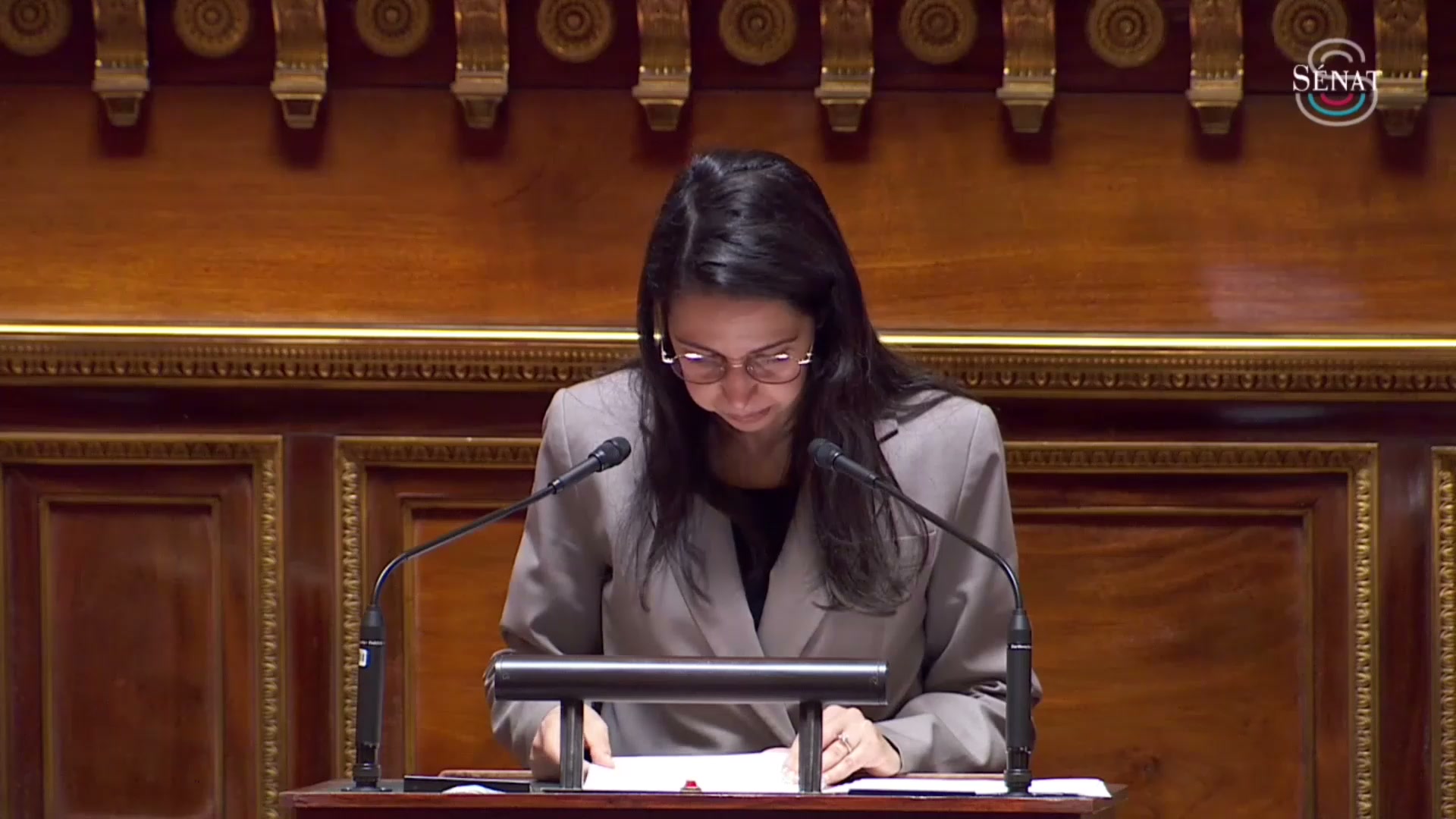
"France's upper house on Tuesday adopted the amended constitutional bill on New Caledonia 251–41, which aims to implement the provisions of the Bougival agreement. The bill was introduced by the country's Minister for Overseas Territories, Naima Moutchou, on October 14, 2025. The text will now be sent to the National Assembly. "They (amendments) finally plan to postpone the provincial elections, scheduling them to take place no later than December 20, 2026, with necessary organisational measures as an exception," Moutchou told the house in Paris. "Organising the provincial elections before stabilising the constitutional framework and clarifying the rules from the agreement would risk opening a new sequence of elections on still uncertain grounds," she warned. Robert Wienie Xowie, a senator from New Caledonia, rejected the proposed voting date set by the minister and urged the government not to be 'wasting the time of the Caledonians'. "We need to return to a negotiation based on the principles of the Noumea Accord, the only basis allowing for inclusive and lasting peace," he added. France's Prime Minister Sebastien Lecornu proposed injecting 330 million EUR (388.5 million USD) into New Caledonia over the next five years to "enhance the territory's attractiveness and support private initiative." "The nickel sector has not managed to become a lasting growth engine for the Caledonian economy," he explained, persisting, "If New Caledonia were to become independent one day, France would no longer protect an exclusive economic zone that would no longer be its own. It is as simple as that." New Caledonia experienced violent riots in May 2024, triggered by the adoption of a constitutional bill aimed at partially unfreezing the electoral roll for the election of members of the provincial assemblies and the Congress. In January 2026, the French government and parliamentary groups from New Caledonia agreed on a new social and economic Elysee-Oudinot Accord, aimed at complementing the previously signed Bougival Accord. The Bougival Agreement provides for the creation of a State of New Caledonia, the introduction of a Caledonian nationality, and a new distribution of powers between the state and local institutions. It also sets out a revised electoral roll for provincial and Congress elections. The draft constitutional law seeks to incorporate the Bougival accord in France's Constitution, providing for a referendum on the deal, the creation of a self-governing State of New Caledonia, enhanced autonomy, dual nationality, and, crucially, an 'unfrozen' voter list for provincial elections."