


 Ruptly
 'We have been severely punished' - 17 families in Ayacucho receive relatives' remains decades after Peru's armed conflict
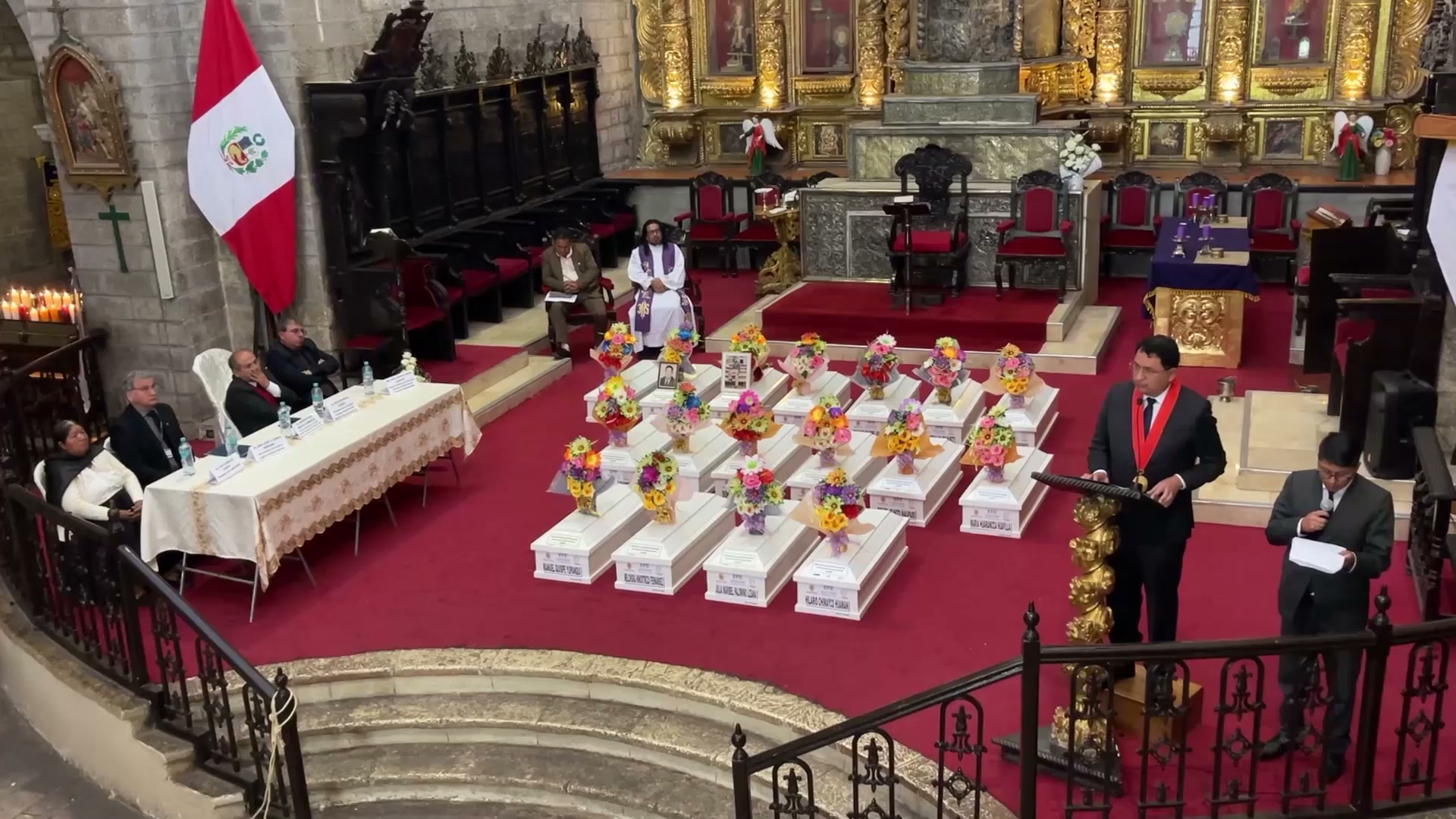
"17 families received the remains of their relatives killed during Peru's internal armed conflict between 1980 and 2000 in Ayacucho on Wednesday. Footage shows 17 coffins inside the Basilica Cathedral of Ayacucho during a posthumous ceremony attended by relatives of the victims and members of civil organisations. "What they have done to my father is unjust, taking him away from me, tearing him away from me at a very early age and not receiving his love, his affection. I miss him very much," said Sonia de la Cruz Ayala, a relative of one of the victims. "We have been severely punished." The ceremony was led by representatives of specialised human rights prosecutors' offices. Prosecutor Andres Angel Montoya Mendoza highlighted the symbolic and restorative nature of the event. "It is a ceremony that has a lot of feeling," he remarked, adding, "It is work that has made it possible to restore dignity to the victims of the violence of the 80s and 90s." Montoya Mendoza explained that identifying remains requires years of technical work and inter-institutional coordination. "It is hard work. [...] It is not only about finding the remains and associated elements, such as clothing, trainers, et cetera, but mainly identifying and knowing who they belong to. And all of this requires an enormous effort." After the ceremony, the remains were accompanied in a funeral procession before being transferred to their communities of origin, where they will finally receive a dignified burial. During the 1980s and 1990s, Ayacucho was the scene of clashes between security forces and the insurgent group Sendero Luminoso, which sought to seize power through armed struggle. The conflict saw massacres, enforced disappearances and executions that mainly affected Quechua-speaking rural communities. In 1992, the leader of Sendero Luminoso, Abimael Guzman, was captured, significantly weakening the group. The conflict gradually subsided until the early 2000s. Peru's Truth and Reconciliation Commission documented nearly 69,000 deaths and disappearances from the conflict in its final 2003 report. "