


 Business Recorder
 Curating erasure
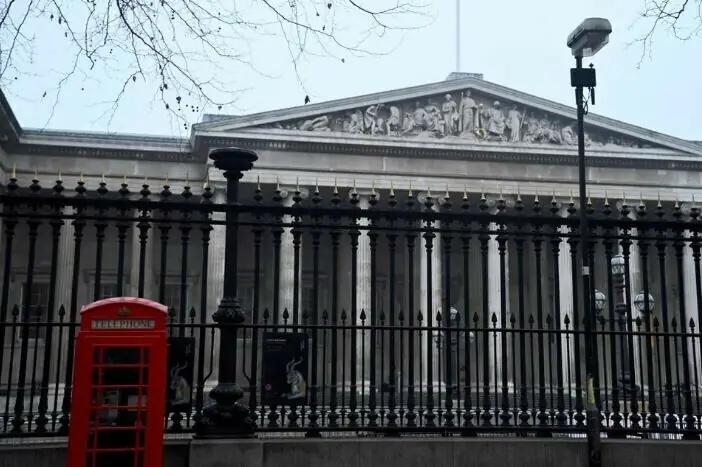
EDITORIAL: The growing controversy surrounding the decision by the British Museum to revise references to “Palestine” in parts of its ancient Middle East galleries underscores the fraught intersection of historical scholarship and contemporary politics. At a time when the conflict between Israel and the Palestinians — marked by a genocidal campaign in Gaza and ongoing settler violence in the occupied West Bank — dominates international headlines, even ostensibly technical adjustments to museum terminology carry profound symbolic weight. As reported by The Guardian, the revisions followed objections from UK Lawyers for Israel (UKLFI), which argued that applying the term “Palestine” retrospectively across thousands of years risks obscuring historical distinctions, particularly those concerning the biblical kingdoms of Israel and Judah. From a strictly historiographical perspective, scholars do indeed debate how best to describe ancient regions whose political boundaries and cultural identities shifted over time. However, in a museum setting, where concise labels can shape public understanding for generations, precision in terminology is no trivial matter. The timing and context of the British Museum’s revisions are inseparable from present-day political realities. For many observers, narrowing or removing the term “Palestine” is a part of a broader pattern of pressure exerted by pro-Israel groups, like UKLFI. Such interventions serve to reinforce a long-standing Israeli narrative that denies the historical continuity of Palestine and its people. The language of anachronism thus becomes a vehicle for political erasure. When cultural institutions alter terminology connected to contested identities, particularly during ongoing violence, perceptions of bias can quickly take hold. Reports that more than 5,000 people have signed a petition urging the museum to reverse the changes indicate that public confidence in the institution’s impartiality is at stake. Among the most prominent critics of the change is historian William Dalrymple, who has highlighted the antiquity of the term “Palestine,” noting its appearance on the Egyptian monument at MedinetHabu (c. 1186 BCE). He has contrasted this with the much later emergence of the word “Britain” in the writings of Pytheas of Massalia in the 4th century BC, arguing that it is inconsistent to dismiss a term with such deep historical roots. His intervention reflects a wider scholarly view that “Palestine” has long functioned as a geographical descriptor, even as its political meanings evolved over centuries. Other academics, including Marchella Ward of the Open University, have similarly defended the use of “ancient Palestine” as an established convention in classical studies. And advocacy groups such as Energy Embargo for Palestine interpret the museum’s decision as further evidence of Western public institutions yielding to lobbying aligned with Israeli state narratives. In accusing the museum of hypocrisy — professing objectivity while “preparing to rewrite history” — the group has framed the issue squarely as one of cultural erasure that seeks to marginalise Palestinian identity in the public imagination. This dispute is a reminder that museums are not neutral storehouses of artefacts; they are arenas in which identity, memory and power converge. Institutions such as the British Museum must therefore uphold scholarly rigour while remaining vigilant against the use of academic language for political ends. In conflicts where history itself is a contested terrain, credibility depends less on appeasing competing constituencies than on demonstrating intellectual independence, transparency and methodological integrity. Copyright Business Recorder, 2026