


 Dawn.com
 Ayatollah Khamenei’s assassination: A new chapter for Iran, a region at a crossroads
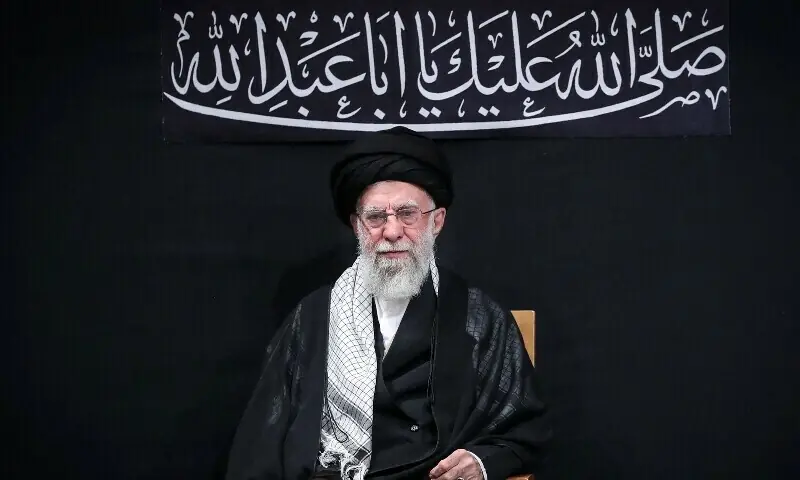
The martyrdom of Ayatollah Ali Khamenei, Iran’s Supreme Leader and Marjai Taqleed for millions of Shia Muslims, in coordinated US-Israeli airstrikes marks a turning point not only for the Islamic Republic of Iran but for the wider West Asian region. His assassination removes a figure who for more than three decades stood at the apex of Iran’s political, military and religious order. Yet those expecting the immediate collapse of the Iranian system may be misreading both its structure and its history. Ayatollah Khamenei was not merely a head of state. As Supreme Leader, he exercised ultimate authority over foreign policy, the armed forces and the direction of the revolution. As Marjai Taqleed, a source of emulation in Shia jurisprudence, he embodied religious legitimacy that extended beyond Iran’s borders. His passing, therefore, creates a vacuum that is institutional as much as personal. Under Iran’s constitution, an interim council comprising President Masoud Pezeshkian, the judiciary chief, and a cleric from the Guardian Council is to assume responsibilities until the Assembly of Experts appoints a successor. The Assembly must choose from among senior Shia clerics. No consensus candidate has so far emerged. Names circulating in Tehran include Sadeq Larijani, the former judiciary chief and a close aide to Khamenei; Alireza Arafi, who oversees Iran’s seminaries; Mohsen Araki, a longtime member of the Assembly; Mohsen Qomi, an adviser within the Supreme Leader’s office; and Hassan Khomeini, the grandson of the Islamic Republic’s founder, Ruhollah Khomeini. Arafi, a source said, may be the favourite for filling in the space left behind by Ayatollah Khamenei. The late Ebrahim Raisi had been widely seen as a frontrunner before his own death in an air crash. Reports that Ayatollah Khamenei had quietly identified three potential successors during earlier crises suggest that contingency planning was already underway, though the names remain undisclosed. Despite the shock, Iran’s system is not built around one man alone. The Islamic Republic rests on multiple pillars, including the clerical establishment, security services, the bureaucracy, and an ideological base shaped by the doctrine of Velayat e Faqih. Unlike personality-driven autocracies, it therefore has institutional depth. During the transition phase, the Islamic Revolutionary Guard Corps (IRGC) is likely to play a decisive role in managing the affair. Whether as a stabiliser or dominant force, it will seek to prevent fragmentation. That, however, does not mean friction is impossible. Economic sanctions have already strained society and fueled periodic unrest. Elite rivalries could surface as factions maneuver for influence over the next Supreme Leader. A hardline successor would definitely double down on ideological orthodoxy. Even if a relatively moderate cleric is chosen, immediate flexibility toward the West appears unlikely, as regimes, in moments of perceived siege, tend to project strength, not compromise. Iran’s own history counsels against premature obituaries. The Islamic Republic has faced moments far more perilous and yet endured. During the Iran-Iraq War, when the revolution was still young, Iran confronted invasion, diplomatic isolation, and crippling arms embargoes. It answered not by retreat but by mobilising society through revolutionary zeal and religious conviction, expanding the Basij volunteer force and adjusting its economy to survive under siege. During that period, the Hafte Tir bombing, carried out by the militant Mujahedin-e Khalq (MEK), eliminated 74 senior officials in one stroke, among them Chief Justice Mohammad Beheshti and several cabinet members. It was a decapitation attempt targeting the heart of the nascent revolution. Yet the system did not unravel. Vacancies were filled with speed, institutions closed ranks, and the doctrine of Velayat e Faqih was consolidated rather than diluted. The external consequences are already visible. Iran has responded to aggression with missile and drone strikes against Israel and US facilities in the Gulf. Its network of regional allies and proxies, often described as the Axis of Resistance, including Hezbollah in Lebanon and the Houthis in Yemen, is expected to intensify asymmetrical attacks. Ayatollah Khamenei’s death will be framed as martyrdom, a narrative that resonates deeply within Shia political theology and could mobilise supporters from Iraq to Bahrain and eastern Saudi Arabia. For Israel, the operation may have removed a principal adversary, but it also introduces new unpredictability. Khamenei, though implacably opposed to Israel, was a calculating actor who calibrated escalation. A leadership in transition, under pressure to demonstrate resolve, may be less restrained. Multi-front confrontations stretching from the Gulf to the Levant become more conceivable. The US under President Donald Trump has presented the assassination as an act of “justice” and even an opportunity for Iranians to reclaim their country. Yet history offers caution. Air power alone seldom topples entrenched systems absent ground intervention or a coherent internal uprising. Instead, external attack often consolidates ruling elites and blunts domestic dissent, at least in the short term. The strategic gamble is therefore immense. If retaliation expands to target US assets across West Asia, Washington could find itself drawn deeper into a conflict without a clear political end state. Moreover, with the erosion of deterrence, cycles of strike and counterstrike may harden into a wider war. And if the Islamic Republic survives, as seems probable in the near term, it may emerge more securitized and more distrustful. Khamenei’s assassination has closed one chapter in Iran’s revolutionary history, but it does not automatically open another aligned with the ambitions of those who ordered the strike. Instead, it ushers in a period of uncertainty. The Islamic Republic is wounded but not necessarily weakened and the region is unsettled and more combustible. The world may soon discover that removing a man is far easier than reshaping the order he helped build.