


 The Huffington Post
 Gen Z Has Gone Postal: The Most Online Generation Are Ditching DMs For Stamps
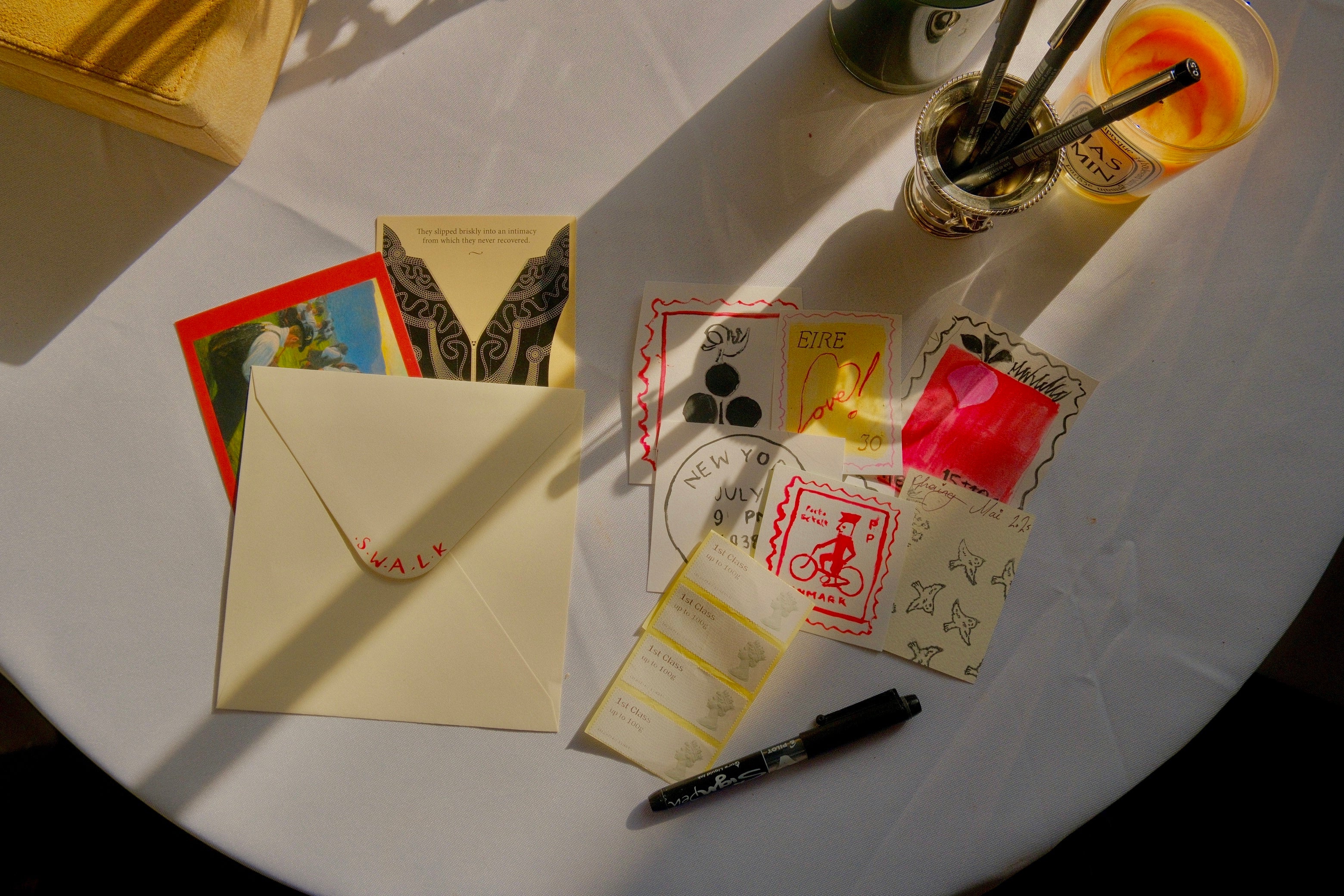
"My letter isn't data. It's just a letter. Nobody's going to serve me an ad based on what I wrote to my mate about his break-up. That feels like the bare minimum, but apparently it isn't." It is 2026. Artificial intelligence can write your dissertation, generate your face, and compose a symphony in the style of Beethoven if Beethoven had grown up on SoundCloud. The metaverse exists. (Nobody’s in it, but it exists.) And Gen Z – digital natives, chronically online, the generation that essentially grew up inside a WiFi router – has decided that its preferred form of communication is to write something on paper, lick an envelope, and hand it to a stranger in a red van. The stamp. The address. The three-week wait. The prayer. Welcome to the most unexpected cultural trend of the decade: Gen Z has gone postal. The data is, frankly, deranged. Pinterest – which correctly predicted 88% of its 2026 trends and has half a billion monthly users, so we can’t just dismiss this as vibes – has reported searches for “penpal letters” up 35%, “handwritten letters” up 45%, and most importantly, “cute stamps” up a deeply unhinged 105% . A quarter of Gen Z and millennial users say they are actively rediscovering letter-writing. One hundred and five percent more people are excited about stamps. Those tiny adhesive squares your granny hoards in a biscuit tin next to a broken calculator and some elastic bands. So what’s going on? Why has a generation with AirDrop, WhatsApp, Snapchat, BeReal, iMessage, Instagram DMs, Signal, Telegram, and the ability to send a 47-second voice note whilst walking to Pret decided that actually, what they really want is to use the postal system? A few reasons, it turns out. None of them are as simple as “they’re quirky.” “I’d been doom-scrolling for about four hours,” says one 22-year-old graphic designer from London I spoke to. “I realised I hadn’t actually said anything to anyone. I’d consumed about four thousand opinions and contributed nothing. I felt like a ghost.” She dug out a notebook, wrote three pages to her university friend in Edinburgh, and posted it on her lunch break. “It took her eleven days to write back. Eleven days where I just... didn’t know? And not-knowing felt weirdly healthy. Like I’d sent something into the world and let it go.” Eleven days of not knowing. In an era where you can see exactly when someone has read your message, watch the three dots appear and disappear for twenty-two minutes, and infer the entire emotional state of another human being from the speed of their reply, the concept of simply not knowing whether someone got your letter is practically radical. It is the anti-read-receipt. The anti-notification. The anti-everything. And people find it a relief. Here is what a letter categorically cannot do. It cannot be screenshotted and dropped into a group chat. It cannot be ratio’d. It cannot go viral. It cannot be fed into an algorithm that decides who sees it and when. Yes, someone could theoretically photograph it and upload it – but the very act would feel like a breach of the intimacy the letter assumes. It arrives in one place, for one person, and exists entirely outside the attention economy’s jurisdiction. In an era where a private thought posted at the wrong moment can resurface years later to end a career, there is something quietly radical about a form of communication that leaves no searchable trace, no timestamp, and absolutely no engagement metrics. “Everything I do online is data,” says a 24-year-old postgraduate student in Durham. “My letter isn’t data. It’s just a letter. Nobody’s going to serve me an ad based on what I wrote to my mate about his break-up. That feels like the bare minimum, but apparently it isn’t.” He’s not wrong. For a generation whose digital behaviour was monetised since they were in nappies, the concept of communication that nobody is profiting from is, apparently, deeply appealing. It also helps that the economics of being young in Britain right now are, for want of a better word, catastrophic. Under-30s in the UK now spend more than 30% of their income on rent – more than any other age group – while average rents have climbed £1,616 in a single year. Sixty percent of 18-24 year olds say the pressure to succeed has left them unable to cope. Nearly half report feeling financially insecure. When you can’t control your rent, your job prospects, or the general direction of civilisation, you can control whether you lick a stamp. A stamp costs £1.35. A piece of paper costs virtually nothing. And the letter, once sent, belongs entirely to you and the person who receives it, a sealed object travelling through the physical world at its own unhurried pace, indifferent to the algorithm and immune to the ratio. This is not nostalgia. These are people in their early twenties. They do not remember a world before smartphones. They are not longing for a simpler time they once lived through. They are making a deliberate, rational choice to opt out of a system that has consistently promised connection and delivered anxiety instead. The metaverse, it turns out, promised a world without limits and produced a space that nobody actually wanted to spend time in. Social media promised community and delivered comparison. The smartphone promised freedom and became, for a significant portion of its users, a documented source of psychological harm. So they’re writing letters. They’re also buying vinyl, joining running clubs in record numbers, and cooking elaborate meals on a Tuesday evening for absolutely no reason except that it takes an hour and requires both hands and therefore cannot be done while also watching a million 15 second videos. It is all the same impulse: find something that demands your full presence and returns something tangible. Find something that is yours. Before we get too misty-eyed, it is worth asking whether this is accessible to everyone. Nice stationery costs money. The Pinterest aesthetic, wax seals, vintage stamps, handmade paper, presumably a single artisan candle burning in the background – is not free. The young person working two jobs with an hour commute each way is not, in all likelihood, sitting down with a fountain pen and a fresh pot of Earl Grey. The trend skews, as these things tend to lean toward people who can afford to be intentional about their consumption. Fair criticism. But a stamp is £1.35 and paper is practically free, and the impulse behind it, wanting something slow, private, and entirely your own – is not a luxury. It belongs to anyone tired enough to want out of the performance, even briefly. And tiredness, right now, is extremely democratically distributed. As one cultural commentator put it recently: ” The girls are going analog in 2026 .” It reads like a joke. It is, in fact, a data point – and one that says rather a lot about what it feels like to be young right now. The algorithm can have the rest. The letter is mine. Related... The Art Of Conversation Is Becoming Just That: An Art I Tried Bricking My Phone And Was Shocked By The Changes In My Life From BDSM To Sordid Affairs: What Emerald Fennell's Wuthering Heights Gets Right About 18th Century Sex