


 Dawn.com
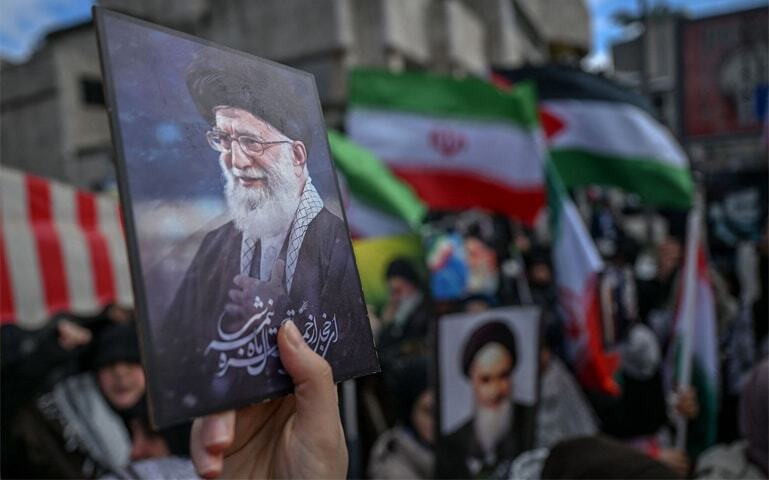
 Khamenei’s assassination brings world to precipice of chaos
• Iran confirms supreme leader’s death, declares 40-day mourning • Hospital targeted as Israeli missiles pound Tehran, other areas for second day; retaliatory strikes kill 9 in Israel • US claims sinking 9 Iranian warships, B-2 bombers target missile sites; 3 American troops killed • Shipping paralysed as IRGC closes Strait of Hormuz • Trump says war on Iran ‘could last four weeks’; Tehran still open to talks, insists on ‘no limit’ to self-defence JERUSALEM: The war between Iran and the US-Israel alliance escalated sharply on Sunday after Iran confirmed the assassination of Supreme Leader Ayatollah Ali Khamenei in a joint US-Israeli airstrike, a move that has plunged the Middle East into its most perilous crisis in decades. As Iranian government declared 40 days of national mourning and seven public holidays following the death of the man who wielded absolute power since 1989, Iranian missiles killed at least nine people in a central Israeli town, while the US and Israel continued bombardment of Tehran, with Trump claiming that the war on Iran could last four weeks. The tit-for-tat attacks have sent shockwaves through global markets, disrupting vital shipping lanes in the Gulf and threatening to draw regional and global powers deeper into a direct military confrontation. Senior leadership decimated The Israeli military announced that 40 senior Iranian officials were killed in the coordinated strikes, including six names confirmed by Iranian state media. Among the dead were Revolutionary Guards commander Gen. Mohammad Pakpour, armed forces chief of staff Abdolrahim Mousavi, Defence Minister Aziz Nasirzadeh, Supreme Leader military office head Mohammad Shirazi, police intelligence chief Gholamreza Rezaian and top security adviser Ali Shamkhani. Khamenei’s daughter, granddaughter, son-in-law and daughter-in-law were also killed in the strikes, Iranian media reported. State media said Khamenei was working in his office when Saturday’s attack struck. US President Donald Trump said on his Truth Social network that intelligence and tracking systems had monitored Khamenei’s movements, adding that “there was not a thing he, or the other leaders that have been killed along with him, could do.” Escalation and retaliation The escalation has been swift and deadly on multiple fronts. Israeli military spokesperson Lt. Col. Nadav Shoshani said Israeli aircraft had conducted strikes to open the “path to Tehran” and that the majority of aerial defence systems in western and central Iran had been dismantled. “Ground forces are not being considered and we have the capabilities and the targets to keep going on for as long as necessary,” Shoshani said. Israeli Prime Minister Benjamin Netanyahu vowed to intensify strikes, saying Israel was not yet at “full strength”. Iran responded with volleys of missiles targeting Israel and at least seven other countries hosting US bases. A missile strike on the Israeli city of Beit Shemesh killed at least nine people and wounded 28, with 11 still missing, according to the Magen David Adom emergency service and Israeli police. Iran’s Revolutionary Guards also claimed to have attacked the US aircraft carrier USS Abraham Lincoln with four ballistic missiles, state media reported, though the Pentagon denied this. The IRGC also said three US and British oil tankers were hit by missiles in the Gulf and the Strait of Hormuz and were on fire, though there was no independent confirmation. Iran’s leaders promised a fierce counter-response. Acting President Masoud Pezeshkian called Khamenei’s assassination a “declaration of war against Muslims.” Senior security chief Ali Larijani promised to hit the US and Israel with a force “never seen before.” Separately, the US military reported its own naval successes. US Central Command posted on X that an Iranian Jamaran-class corvette was struck by US forces at the start of its operations and was sinking in the Gulf of Oman. US President Donald Trump said he envisages a four-week military operation against Iran. “It’s always been a four-week process. We figured it will be four weeks or so,” he told The Daily Mail . “As strong as it is, it’s a big country, it’ll take four weeks — or less,” Trump said. About the American soldiers dying during war on Iran, he said it was expected in a war that was nevertheless a “great deal”. “We have three, but we expect casualties, but in the end it’s going to be a great deal for the world,” Trump told NBC after the Pentagon announced three US service members had been killed during military strikes on Iran. Earlier, in a series of posts on his Truth Social network, he claimed credit for the widening assault. “I have just been informed that we have destroyed and sunk 9 Iranian Naval Ships, some of them relatively large and important,” Trump wrote. “We are going after the rest.” He added that the US had “largely destroyed” Iran’s naval headquarters. In separate interviews, he said 48 Iranian leaders had been killed. The central command also said B-2 stealth bombers armed with 2,000-pound bombs struck Iran’s “hardened ballistic missile facilities” on Saturday night. Disruption and diplomacy The conflict has caused immediate chaos in the Gulf, a critical artery for global trade. Shipping data showed at least 150 tankers, including crude oil and liquefied natural gas vessels, had dropped anchor in open waters to avoid the Strait of Hormuz, according to a Reuters analysis of MarineTraffic data. Major shipping lines MSC and Maersk suspended navigation in the region. Iranian state television reported that an oil tanker was struck and sinking after attempting to ‘illegally’ pass through the strait, which the Revolutionary Guards declared closed. Even as the war intensified, diplomatic channels remained active. A statement from Oman’s foreign ministry claimed Araghchi told his Omani counterpart, Badr bin Hamad Al Busaidi, that Tehran was open to “serious efforts at de-escalation”. The foreign minister of Oman, who mediated recent US-Iran talks, also said the “door to diplomacy remains open” “I want to be very clear — the door to diplomacy remains open,” Omani Foreign Minister Badr Albusaidi said on X. “Talks in Geneva made genuine progress towards an unprecedented agreement between Iran and the United States and although the hope was to avoid war, war should not mean that the hope of peace is extinguished. I still believe in the power of diplomacy to resolve this conflict.” Foreign Minister Abbas Araghchi rejected any suggestion that Iran’s right to self-defence was limited. “What the United States is doing is an act of aggression. What we are doing is the act of self-defence,” he told ABC News. The United Nations’ nuclear agency announced an extraordinary meeting on Iran for Monday, convened at Russia’s request. European Union foreign policy chief Kaja Kallas called Khamenei’s death “a defining moment in Iran’s history.” She wrote on X: “What comes next is uncertain. But there is now an open path to a different Iran, one that its people may have greater freedom to shape.” Experts cautioned that while the leadership losses dealt Iran a devastating blow, they would not necessarily spell the end of the country’s entrenched clerical rule or the Revolutionary Guards’ grip on power. War goes on Meanwhile, in western Iran, more than 40 security personnel — mostly border guards — were killed in a strike on a border regiment headquarters in Mehran near Iraq, the Mehr news agency reported. “Tehran’s Gandhi hospital was attacked by Zionist-American air strikes,” ISNA reported, while the Fars and Mizan agencies published a video, presented as being from inside the facility, showing debris on the floor among wheelchairs. The Israeli military has announced plans to mobilise nearly 100,000 reservists in its campaign against its longstanding adversary, Iran. “The [army] is preparing to call up around 100,000 reservists and is raising its level of readiness on the various fronts as part of Operation ‘Roaring Lion’,” it said in a statement, using the name Israel has given to its assault — launched in coordination with the US — against Iran. Published in Dawn, March 2nd, 2026