


 Axios
Axios Anthropic's Pentagon standoff signals a broader corporate pushback
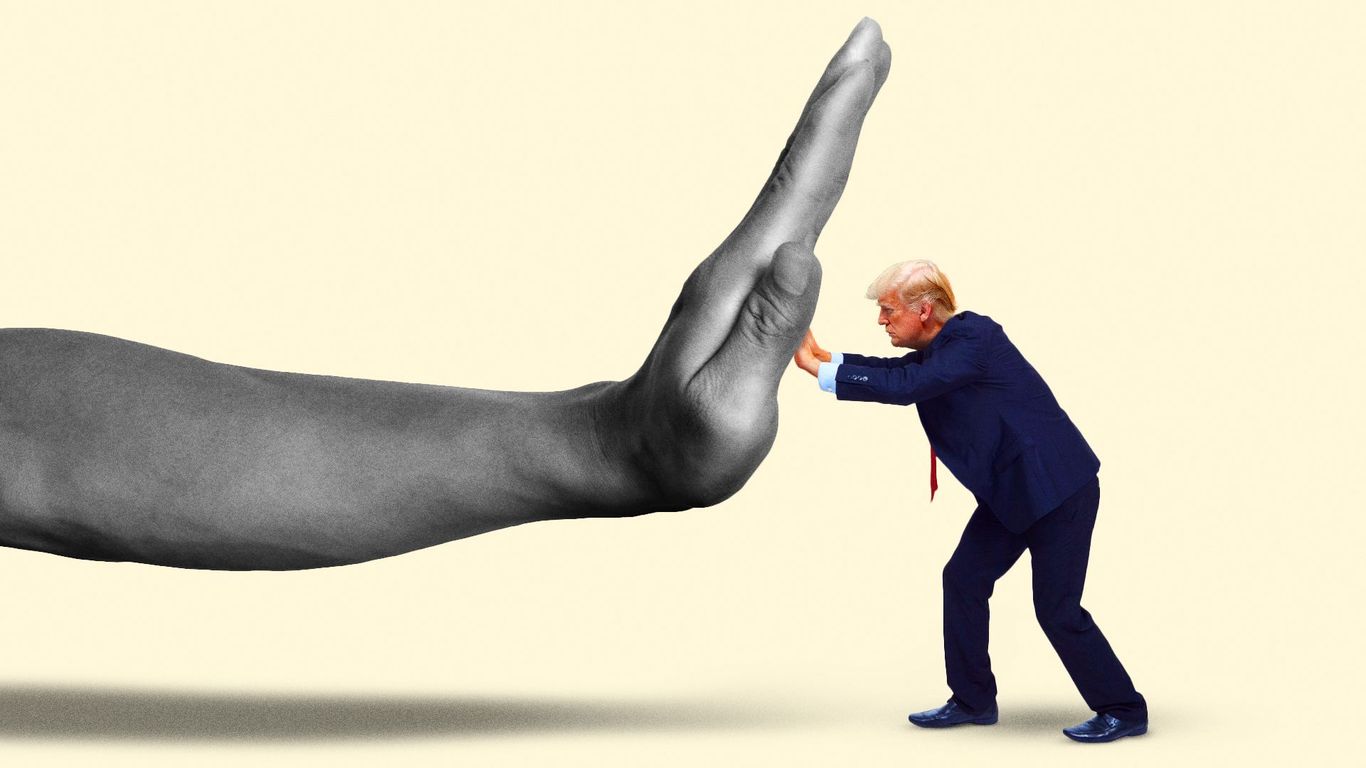
Corporations are starting to find their backbone: from AI labs resisting military ultimatums to retailers successfully suing the president. Why it matters: The prevailing corporate strategy has been one of high-profile compliance, particularly with the Trump administration. Now, corporates are pushing back, because the cost of that compliance is existential. Driving the news: Anthropic CEO Dario Amodei rejected a Friday deadline from the Pentagon to strip safety guardrails from its AI models for military use. The standoff: Defense Secretary Pete Hegseth demanded "unfettered access" to Claude, rebuffing Anthropic's proposed restrictions on mass domestic surveillance and fully autonomous lethal targeting. The threat: The Pentagon threatened to label Anthropic a "supply chain risk," a blacklisting usually reserved for foreign adversaries, if it didn't acquiesce. The backbone: Amodei stated the company "cannot in good conscience" comply, arguing that today's AI is simply not reliable enough to power autonomous weapons without risking American lives. The big picture: This refusal to bend is part of a broader "No" taking shape across corporate America. In the courts: Following a legal campaign from dozens of U.S. companies, the Supreme Court ruled 6-3 that the president lacks the authority to use emergency powers to impose tariffs. Now, companies like Costco, FedEx, Hasbro, Kohl's and L'Oreal are suing the administration for refunds. In states: More than 60 Minnesota-based CEOs — including 3M's William Brown, Best Buy's Corie Barry, General Mills CEO Jeff Harmening, Geoff Martha of Medtronic, Target CEO Michael Fiddelke and United Healthcare Group CEO Stephen Hemsley — signed an open letter calling for deescalation following the administration's ICE operations which resulted in the fatal shootings of two U.S. citizens by federal agents. What they're saying: "You are starting to see companies find their footing in standing up to some unpopular policies," says Steve Dowling, co-host of the Communication Breakdown podcast and former head of communications for OpenAI and Apple. "Even if we are witnessing some kind of turning point, companies on the whole still seem far from confident in openly criticizing the administration. They just haven't found their voice yet. You can see them trying in some cases, but it feels exceptionally cautious," he added. Between the lines: This isn't necessarily charity or altruism. All these moves could be positive from a profit margin perspective. Anthropic knows its multibillion dollar valuation depends on its brand as the "safe" alternative to rivals, and its pushback to the Pentagon has resulted in generally positive PR for the company — particularly among technical talent, a key stakeholder group for AI labs. Retailers stand to get up to $175 billion in refunds from tariffs previously paid that are now deemed unlawful. And the response by business leaders in Minnesota helps curtail mass boycotts and backlash within their local communities, while also easing employee concerns. The bottom line: The corporate pushback is strategic — not ideological — because even in this political climate, protecting long-term shareholder value and reputation ultimately trumps Trump. More on Axios: Trump moves to blacklist Anthropic AI from all government work Hollywood's mega-merger battle ends with Warner Bros. as the real winner Target, other Minnesota-based CEOs call for calm after latest shooting