


 Ruptly
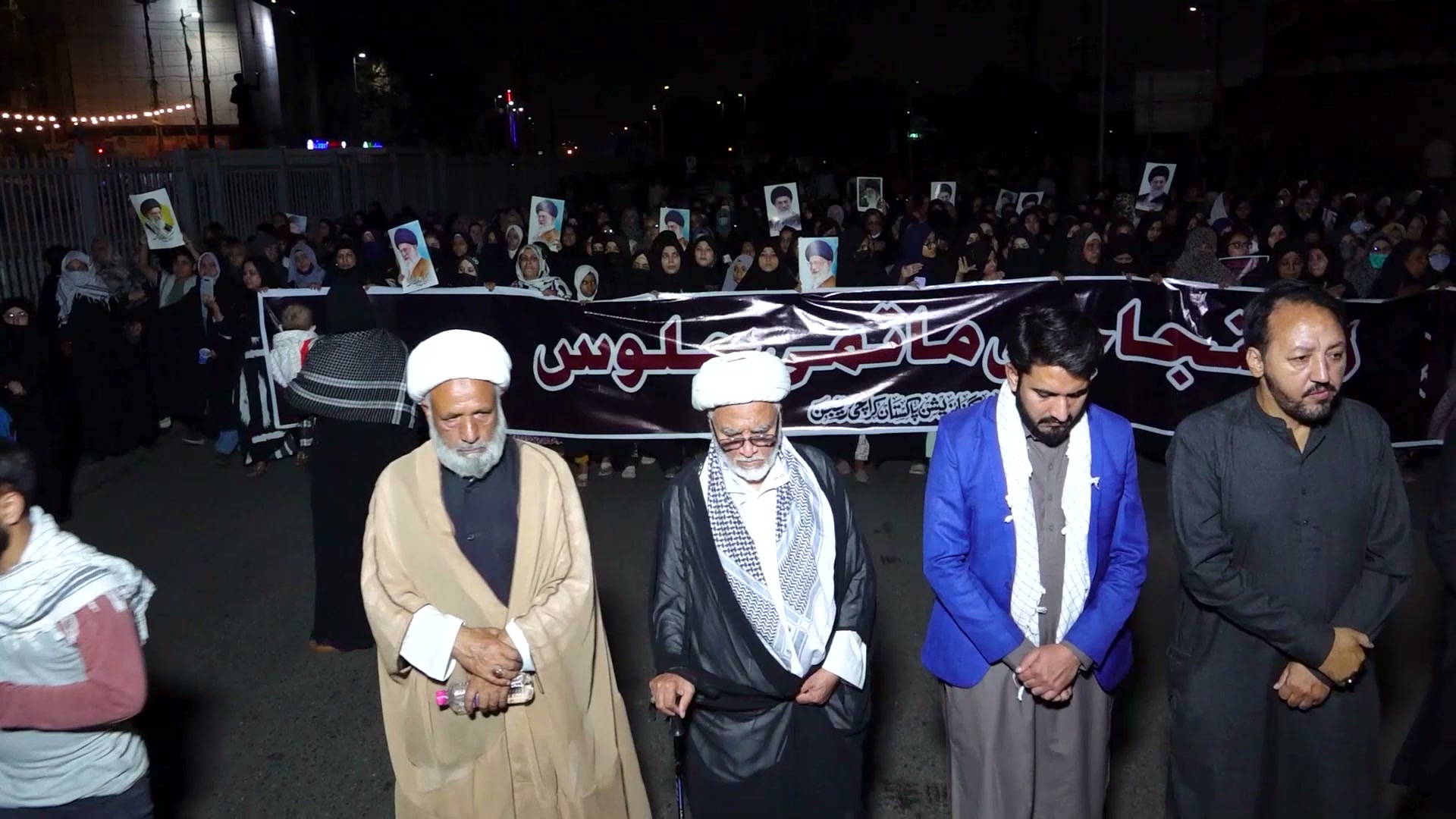
 'US is architect of oppression!' - Pakistan's Shia community condemns killing of Khamenei as hundreds mourn in Karachi
"Hundreds of mourners gathered in Karachi on Monday for a ceremony honouring the late Supreme Leader, Ali Khamenei, as members of the city's Shia community condemned the joint military attack on Tehran and expressed solidarity with Iran. The Council for Muslim Unity to Unite Muslims and its student wing, the Imamia Students Organization, had called for participation in the mourning ceremony following Khamenei’s assassination. Footage shows hundreds of Shia Muslims walking through the streets of Karachi, holding pictures of Khamenei, while others sat on the ground chanting anti-US slogans. "We have condemned America in the past, we condemn it now, and we will continue to do so. We have no quarrel with the American people; it is their foreign policy that is unjust. We will not allow their government to remain at ease," said a mourner. "If the U.S assumes by killing the supreme leader, everything is fine then let me tell them they have courted death, which is now imminent. The US is heading toward imminent collapse," added another. Mass protests broke out across the country following the death of the Supreme Leader, with some demonstrations erupting in violent clashes. At least 10 people were killed, and dozens more injured during the unrest in Karachi, with the nationwide death toll reportedly exceeding 25 following similar demonstrations in Lahore, Islamabad and Peshawar. Pakistan is host to one of the largest Shia populations outside of Iran. Iranian state media confirmed that Supreme Leader Ali Khamenei was killed during the strikes. Trump described the development as “the greatest opportunity for the Iranian people to reclaim their homeland.” In response, Iran’s Islamic Revolutionary Guard Corps (IRGC) announced 'large-scale missile and drone attacks' targeting Israeli territory. Regional reports also indicated that US military facilities across the Middle East, including bases in the United Arab Emirates, Bahrain, Qatar, Iraq and Kuwait, were struck amid the widening confrontation. Khamenei had served as Supreme Leader since June 4, 1989, succeeding Ruhollah Khomeini, founder of the Islamic Republic. During his more than three decades in power, he remained Iran’s highest political and religious authority, overseeing foreign policy, military strategy and the country’s nuclear programme, and becoming one of the longest-serving leaders in the modern Middle East."