


 Business Recorder
 Iran war enters fourth day in ‘smoke and blood’ as markets slide
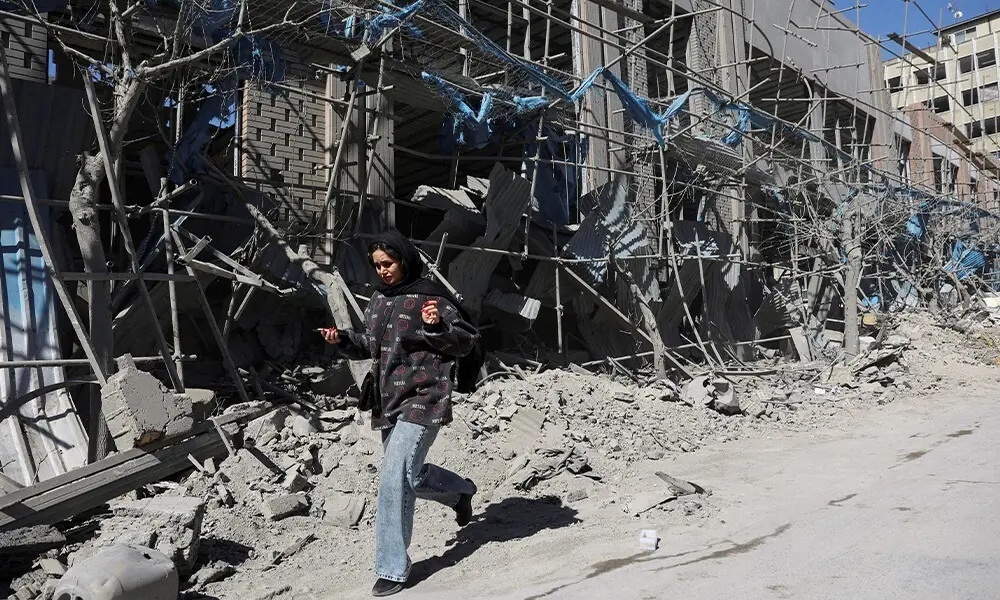
DUBAI/TEL AVIV: Explosions tore through Tehran and Beirut on Tuesday and financial markets around the world slid at the prospect of a prolonged disruption to global energy supplies from the US-Israeli air war against Iran. A day after President Donald Trump and Prime Minister Benjamin Netanyahu gave open-ended answers when asked how long the war would last, a source told Reuters that Israel’s campaign had been planned to last two weeks and was moving faster than expected. The source, familiar with Israel’s war plan, said its aim was to overthrow Iran’s rulers, and there was no firm deadline to achieve it. Also read: Travel stocks tumble as US-Iran conflict sparks worst disruption since pandemic But the Israeli military was going through its target list faster than planned, with early success killing Iran’s leaders and taking out its defences, the source said. Israel was also accelerating its campaign out of concern that Washington might agree with Iran’s surviving leaders to stop before Israel’s objectives were realised, the source added. Inside Iran, Israel struck the Tehran headquarters of the state broadcaster IRIB . Residents have jammed highways to flee cities as the bombs have fallen. “How long will this continue? Where are the shelters? Where is the government?” Bijan, 32, a bank employee, told Reuters by telephone from Tehran. “Every night my wife and I hide in the basement. The whole city is empty. There is smoke and blood everywhere.” The price of crude oil rose around 4% overnight. Europe’s benchmark STOXX 600 index fell 3% in early trading, after a 1.7% drop on Monday. A 2% fall in US stock futures suggested the selloff might reach Wall Street later. US orders personnel to leave Middle East The US-Israeli campaign killed Iranian Supreme Leader Ayatollah Ali Khamenei on day one, in what may have been history’s first assassination of a national leader by enemy forces from the air. If it were to achieve the aim of overthrowing Iran’s ruling system using air power with no armed force on the ground, that would also be a first. Iran has called the war an unprovoked attack, and responded by firing missiles and drones at neighbouring Arab states and strangling shipping through the Strait of Hormuz, where a fifth of the world’s oil and huge volumes of gas skirt its coastline. Also read: US embassy in Riyadh hit by drones, Saudi defence ministry says Since Monday, the war has spread to Lebanon, where Iran’s Hezbollah allies fired on Israel, which responded with air strikes and reinforcements of ground positions in the south. Thick black smoke blanketed Beirut as the sound of explosions rumbled in the air. Authorities said dozens were killed there. The US ordered non-emergency government personnel and their families to leave the United Arab Emirates, Qatar, Kuwait, Bahrain, Iraq and Jordan. US diplomatic missions in Saudi Arabia and Kuwait, hit by Iranian drones, were shut.