


 Business Recorder
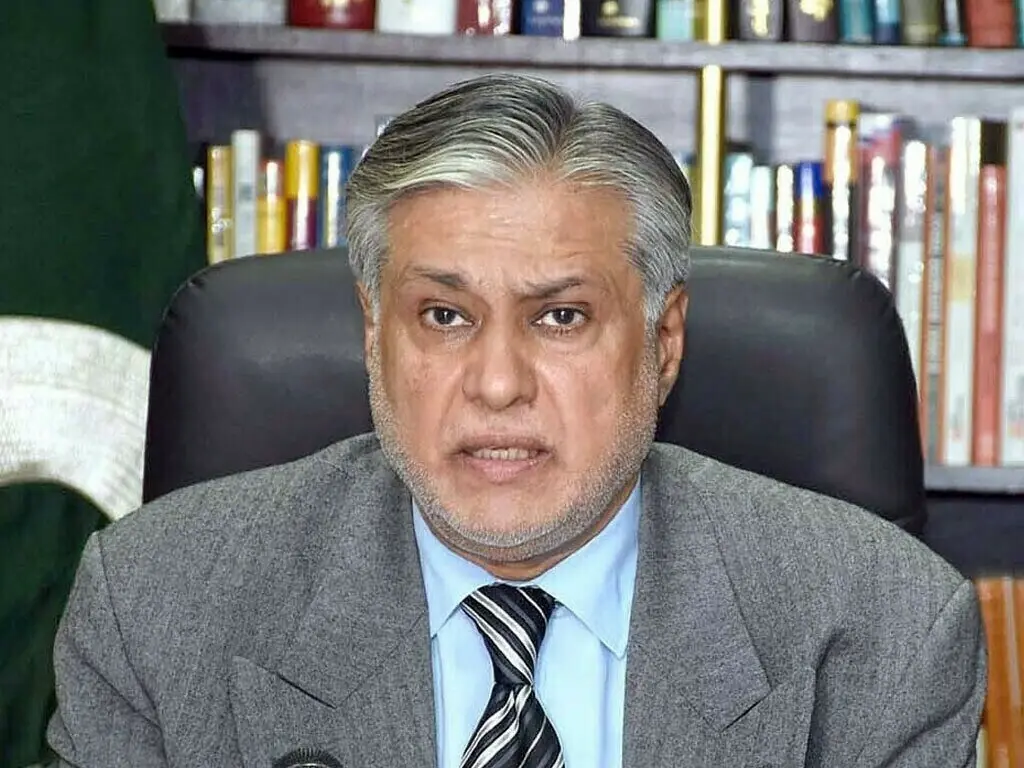
 Iran-Israel conflict: Dar says no immediate threat to Pakistan
ISLAMABAD: Deputy Prime Minister and Foreign Minister Ishaq Dar emphasised that Pakistan is not a direct party to the Iran-Israel conflict, while there is no immediate threat to Pakistan, indirect damages may occur due to oil price hikes and trade embargoes. “Rising oil and dollar prices are expected to impact Pakistan’s economy,” he remarked. Briefing the media at the Ministry of Foreign Affairs (MoFA), he said that the government has taken comprehensive and urgent steps to facilitate and support Pakistanis stranded in Iran and other Gulf States following US-Israel strikes on the Islamic State. Pakistanis are currently stranded in Iran and other Gulf states with religious tourism visas, he added. The deputy prime minister stated that most of the Gulf states are nearly shut down, except Oman and Saudi Arabia. In response, the Ministry of Foreign Affairs has activated a 24/7 Crisis Management Unit, with centres in Tehran, Zahedan, and Mashhad, and facilitation desks at the Saudi Consulate in Jeddah, and embassies in Abu Dhabi, Dubai, Qatar, Bahrain, and Kuwait. Around 35,000 Pakistanis are stranded in Iran, with Azerbaijan opening its northern border to assist evacuation. READ ALSO: Pakistan engages with Middle Eastern leaders to de-escalate regional tensions Over 792 Pakistanis have already crossed into Pakistan via Taftan, alongside 300 Iranians arriving on valid visas. A facilitation desk has also been set up in Baku. In the UAE, where 2.1 million Pakistanis reside, 4,509 tourists are stranded due to unrest, and one Pakistani national was martyred in Abu Dhabi following an Iranian missile strike. Over 1,400 Pakistanis are stranded in Qatar, while in Iraq, around 850 Zaireen are stuck in Karbala and other holy cities, Dar said, adding only 27 Pakistanis are stranded in Kuwait out of a diaspora of 200,000, and no nationals are stranded in Bahrain or Jordan. The situation in Saudi Arabia remains relatively stable, with Pakistan assuring that Saudi soil will not be used for attacks on Iran, in line with the defence pact between both countries. Overall, 4.5 million Pakistanis reside in Gulf states and are being facilitated round the clock. Ishaq Dar pointed out that Pakistan is actively engaging friendly states, including Saudi Arabia, Bangladesh, and Iran, to de-escalate tensions through diplomacy. Arab states have been advised not to retaliate against Iranian missile strikes on U.S. bases in the Gulf. The Prime Minister has invited all parliamentary and opposition leaders for a high-level briefing on the Middle East and Afghanistan situation. He stated that Pakistan and China remain in close coordination on Iran and Afghanistan, with China seeking immediate de-escalation. Pakistan continues to support peace efforts in Afghanistan, Gaza, and Palestine. To a query, Dar stated Pakistan has offered mediation, including through Oman, to resolve the Iran dispute and stands ready for a constructive role. Pakistan does not support regime change in Iran and rejects any imposition of external rule. Afghanistan has been urged to prevent its soil from being used by TTP, BLA, Majeed Brigade, and other terrorist groups. Dar recalled that the PML-N government under Nawaz Sharif had spent Rs 1,000 billion annually on Operation Zarb-e-Azb to counter terrorism. Copyright Business Recorder, 2026