


 The Advocate
 Christian nationalism’s role in the war with Iran — and U.S. LGBTQ+ rights
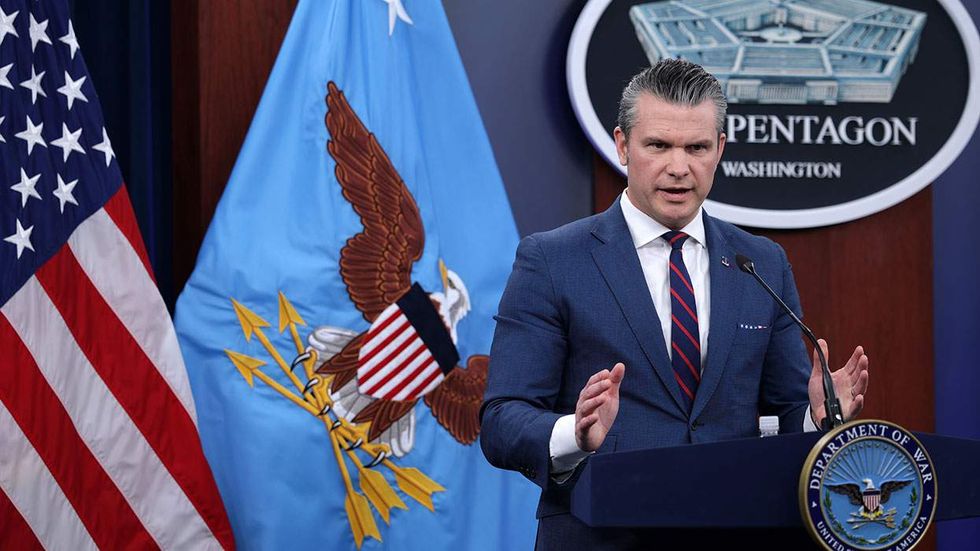
On Saturday morning, in the southern Iranian city of Minab, an airstrike struck a girls’ elementary school shortly after classes began. Rescue workers spent hours digging through the collapsed building. By the end of the day, between 165 and 180 people were dead, most of them girls between the ages of seven and twelve. Keep up with the latest in LGBTQ + news and politics. Sign up for The Advocate's email newsletter. The strike was part of a widening military campaign carried out jointly by the United States and Israel against Iran, a conflict that has already spread across multiple countries and killed hundreds of civilians. Related : Trump administration is potentially sending two gay men to their death by preparing to deport them to Iran Events like this should force a moment of moral clarity. The deliberate or reckless killing of civilians in pursuit of political or religious goals has a name in both international law and ordinary moral language. We call it terrorism. When powerful states produce the same result, the language changes, becoming deterrence, strategy, and the defense of civilization. The people directing this campaign increasingly describe it in exactly those terms. Pete Hegseth, the United States secretary of defense, has spent years portraying global politics as a civilizational struggle between the West and Islam. In his book American Crusade , he writes that his “planetary purpose” is to destroy Islamist enemies and urges Americans to see themselves as modern crusaders defending a threatened civilization. Related : Rachel Maddow urges Americans to consider ‘Who benefits?’ from Trump’s war with Iran Related : Kamala Harris calls Donald Trump’s Iran strikes ‘recklessness dressed as resolve’, dragging U.S. into war This is not simply overheated rhetoric. It is a worldview. In that worldview, conflict is not primarily about diplomacy or competing national interests. It is a moral confrontation between civilizations in which compromise begins to look like weakness and coexistence like surrender. Once violence is framed this way, restraint becomes difficult to sustain. Civilian casualties become tragic but acceptable losses in a struggle for civilization itself. The rules designed to limit war begin to look less like moral safeguards and more like obstacles. Hegseth has made that logic explicit. He has argued that international law and the Geneva Conventions too often tie the hands of American soldiers and prevent victory. Related : Retired Space Force colonel warns Trump’s Iran strikes are ‘reckless adventurism and distraction’ To question this worldview is not to defend the Iranian regime. The government in Tehran is authoritarian and deeply repressive. Women face severe legal restrictions, political dissent is crushed, and LGBTQ+ people are persecuted. For queer people in particular, Iran’s laws remain among the most brutal in the world. But the brutality of one government does not erase the moral questions raised by another. The United States has long claimed to stand against theocratic extremism and the idea that religious certainty should guide the use of military force. Yet the language surrounding American power now increasingly echoes the moral absolutism that defines the movements it claims to oppose. Increasingly, that language reflects the worldview of Christian nationalism, a political ideology that frames American power as the instrument of a religious mission. Military action in the Middle East is often justified in the West by pointing to the brutality of the Iranian regime. That justification is frequently framed as a struggle for civilization itself. Women in Iran face severe legal restrictions. LGBTQ+ people are persecuted. Political dissent is crushed. These realities are not disputed. But the argument that military intervention automatically produces liberation ignores a complicated and uncomfortable truth. Some of the most aggressive anti-LGBTQ political movements in the world today are deeply intertwined with American religious activism. In countries like Uganda, American evangelical groups have helped shape political campaigns and legislation targeting LGBTQ+ people , including laws that criminalize homosexuality and threaten severe punishment for those accused of violating them. Similar networks have promoted anti-LGBTQ+ policies across parts of Africa and Eastern Europe , exporting a vision of Christian nationalism that mirrors the same religious absolutism now appearing in American political life. The same ideological networks that claim to defend civilization abroad have helped export repression elsewhere. And the ideology they exported is no longer only operating overseas. Related : After forcing gender surgery for decades, Iran now touts its expertise to pursue medical tourism goal Across the United States, a growing wave of legislation has begun asserting government authority over gender identity in ways that would have been difficult to imagine only a decade ago. In Kansas, a recent law invalidated driver’s licenses and other identification documents for many transgender residents whose IDs reflected their gender identity, forcing them to revert to sex assigned at birth and restricting their access to public facilities. At the same time, courts are increasingly being asked to determine how much privacy transgender young people are allowed to have even within their own schools. In a recent emergency order, the Supreme Court allowed policies requiring schools to notify parents if a student identifies as transgender to take effect while litigation proceeds, overriding California’s attempt to prevent schools from automatically disclosing a student’s gender identity without their consent. The decision places the machinery of the state directly inside some of the most intimate questions of identity, family safety, and childhood privacy. For transgender Americans, the logic behind many of these policies is beginning to look disturbingly familiar. Governments are increasingly asserting the authority to define gender in law, regulate where people may exist in public space, and determine when private identity must be disclosed. The campaign unfolding across the Middle East is not solely an American project. It is a joint military effort between the United States and Israel, combining intelligence, political coordination, and overwhelming military force. That reality matters because the consequences extend far beyond the governments directing the strikes. Decisions made in Washington and Jerusalem now reverberate across Lebanon, the Gulf, and the wider Middle East . Cities are bombed, civilians are displaced, and entire populations are forced to live under the shadow of retaliation. Israel’s government describes these actions as necessary security measures. The United States describes them as the defense of regional stability. That language will not reach the civilians beneath the American and Israeli bombs. The idea that bombs can liberate societies from religious authoritarianism becomes harder to sustain when the ideology driving those bombs is itself rooted in religious certainty. James Baldwin once observed that America often exports the violence it refuses to confront within itself, projecting its own moral struggles onto distant battlefields. The nation has long told a story about its wars in which its motives are reluctant, and its power is exercised only in the service of freedom. That story has always been comforting, and therefore dangerous. Because the moment violence is wrapped in moral certainty, the ability to question it begins to disappear. If a conflict is framed as a righteous struggle between civilization and barbarism, every civilian casualty becomes easier to justify. The tragedy unfolding in places like Minab should force a difficult question. If terrorism is violence against civilians intended to impose a political or religious worldview, the line separating it from state violence becomes difficult to discern when nations adopt the same logic. America rarely confronts these questions while the bombs are still falling. The reckoning comes later, when the language of necessity fades and what remains are the ruins of cities, the photographs of the dead, and the quiet realization that the moral lines once believed to be clear were crossed long before anyone was willing to admit it. Josh Ackley is a political strategist and the frontman of the queerpunk band The Dead Betties. @momdarkness @thedeadbetties Voices is dedicated to featuring a wide range of inspiring personal stories and impactful opinions from the LGBTQ + community and its allies. Visit out.com/submit to learn more about submission guidelines. We welcome your thoughts and feedback on any of our stories. Email us at voices@equalpride.com. Views expressed in Voices stories are those of the guest writers, columnists, and editors, and do not directly represent the views of Out or our parent company, equalpride.