


 Daily Finland
 20 killed in Israeli attacks across Lebanon
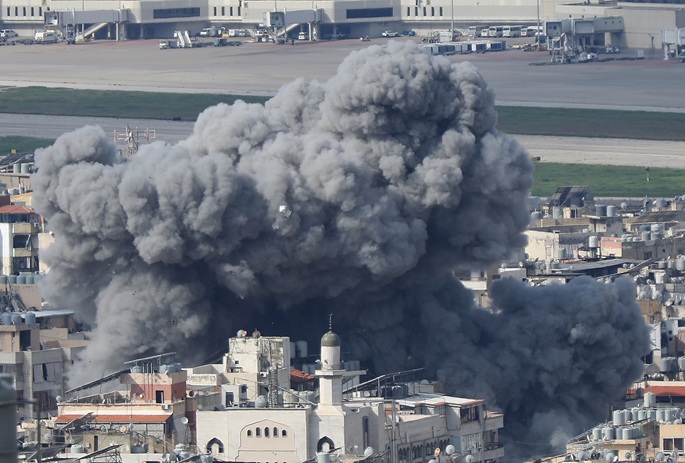
At least 20 people were killed and 283 others injured in Israeli attacks across Lebanon over the past 24 hours, raising the casualty toll since Monday to 72 deaths and 437 injuries, Lebanon's Public Health Emergency Operations Center at the Ministry of Public Health said Wednesday, reported Xinhua. The escalation has also triggered a wave of displacement, with the number of displaced people rising to 83,847, or 18,033 families, according to figures released by Lebanese authorities. As cross-border hostilities intensified, Israeli warplanes carried out a series of airstrikes across southern Lebanon on Wednesday afternoon, according to Lebanon's official National News Agency (NNA). The NNA reported that Israeli warplanes and drones targeted multiple areas in southern Lebanon throughout the afternoon, including the villages of Deir Siriane and Harouf, and the town of Arnoun. Separate airstrikes also targeted the cities of Tyre and Nabatieh. Hezbollah's military wing, the Islamic Resistance, said in statements that it launched drone attacks on Israeli military targets. Meanwhile, the Lebanese army said Israeli attacks are continuing across different regions alongside what it described as Israeli troop incursions into Lebanese territory, calling them a blatant violation of international resolutions and Lebanese sovereignty. In a statement, the army said it is implementing decisions issued by the political leadership in line with the country's national interest while coordinating with the United Nations Interim Force in Lebanon (UNIFIL) and the mechanism overseeing the ceasefire agreement to halt Israeli attacks. The army added that its units have repositioned some border posts within their designated sectors despite limited capabilities, while exceptional security measures have been implemented across the country to prevent armed displays. Also on Wednesday, UNIFIL said in a statement that its peacekeepers remain deployed on the ground in southern Lebanon and along the Blue Line, continuing to carry out their mandate. It called for calm and urged all parties to exercise maximum restraint amid escalating tensions along the Lebanon-Israel border. On the diplomatic front, Lebanese President Joseph Aoun held a series of meetings on Wednesday with foreign ambassadors to explain Lebanon's position regarding the ongoing security developments and Israel's continued attacks on the country. Aoun also briefed the diplomats on the Lebanese government's recent decisions affirming that the authority to decide on war and peace rests exclusively with the state and banning illegal military and security activities. The developments followed Hezbollah's Monday rocket launches toward Israel, the first since a November 2024 ceasefire, and subsequent Israeli airstrikes on Beirut's southern suburbs and areas across Lebanon. Despite the ceasefire agreement, Israeli forces have continued to carry out occasional strikes in Lebanon, claiming they are aimed at eliminating Hezbollah "threats."