


 Ruptly
 From waste to energy - Cameroon's eco-charcoal project fights toxic smoke, forest loss
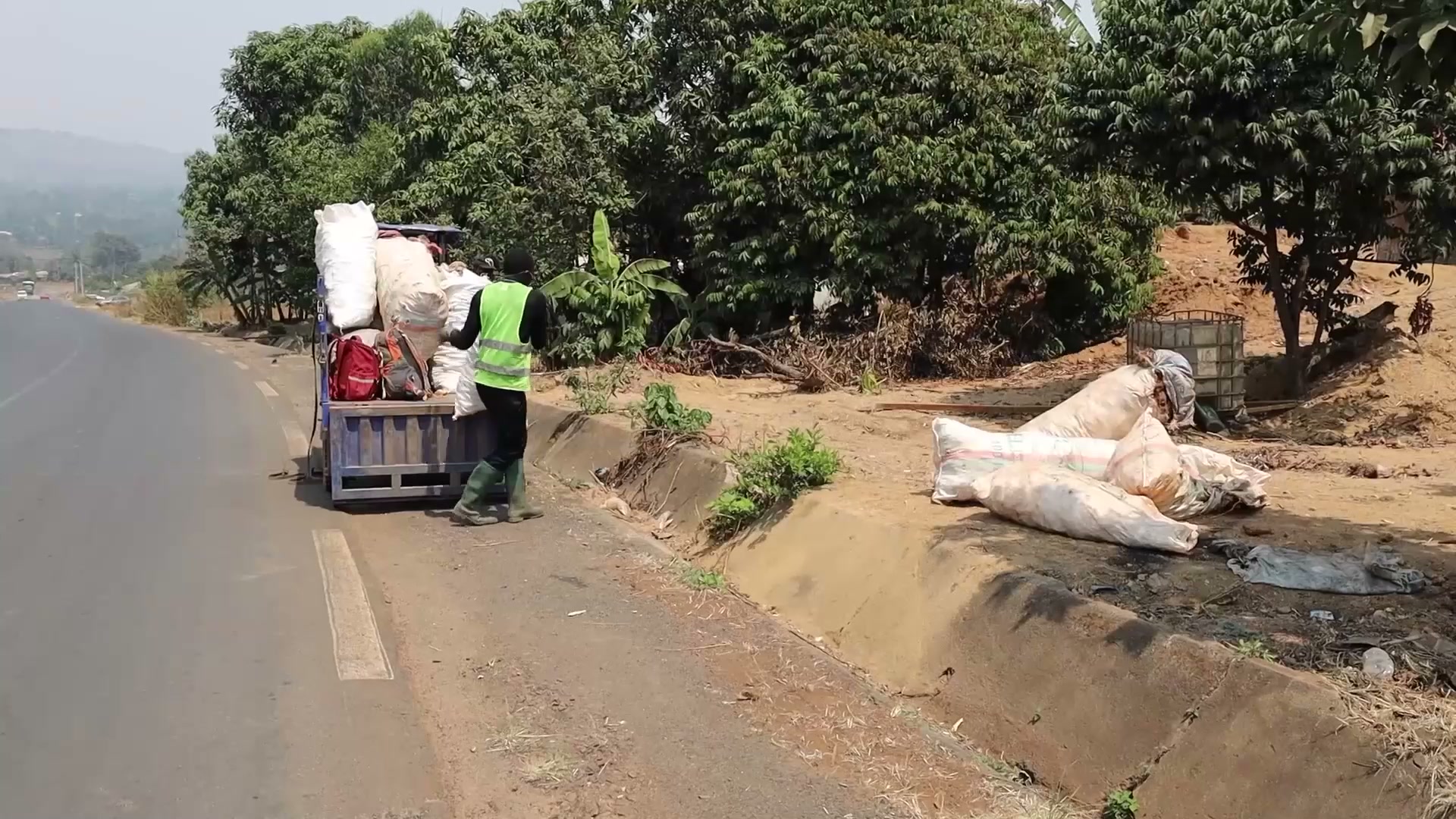
"In the heart of Yaounde, a pioneering environmental project is turning climate and health challenges into sustainable economic opportunities through the production of eco-friendly charcoal made from agricultural waste. Ursula Dountio, CEO of Paulownia Enterprise, launched a program that produces charcoal entirely from organic and agricultural residues, including coconut shells, banana peels, and corn stalks. Footage captured on Sunday shows workers collecting and sun-drying banana peels, coconut shells, and corn stalks. The material is also seen carbonised, ground, mixed with natural binders, and moulded into cubic shapes for household cooking. Dountio explained production of ecological charcoal involves several stages. The process begins with sun-drying agricultural waste, followed by carbonisation. This material is ground, blended with cassava starch, and compressed into cubic blocks. "It is economically accessible because it is half the price of traditional charcoal. It ensures food safety for consumers because it does not emit toxic fumes when burned," the project CEO said. "Furthermore, it preserves our magnificent carbon sinks, namely forests, because we avoid deforestation and therefore no longer need to cut down trees to produce charcoal," she added. Dr. Armando Kanouo, a researcher and environmental specialist, explains that 'biochar' is an ideal alternative to household firewood. "By using biochar, households help reduce pressure on forest resources because one kilogram of biochar is equivalent to two kilograms of forest wood," Kanouo said. In local markets, residents are noticing the difference. "Since I've been using this charcoal, it doesn't blacken the pot, it doesn't choke, and it doesn't make me sick," said a local. By turning waste into clean energy, this initiative provides a scalable model for Cameroon to protect its forests while offering a safe, affordable fuel alternative for its people."