


 Dawn.com
 Govt decides in principle to implement work-from-home, distance learning for fuel conservation
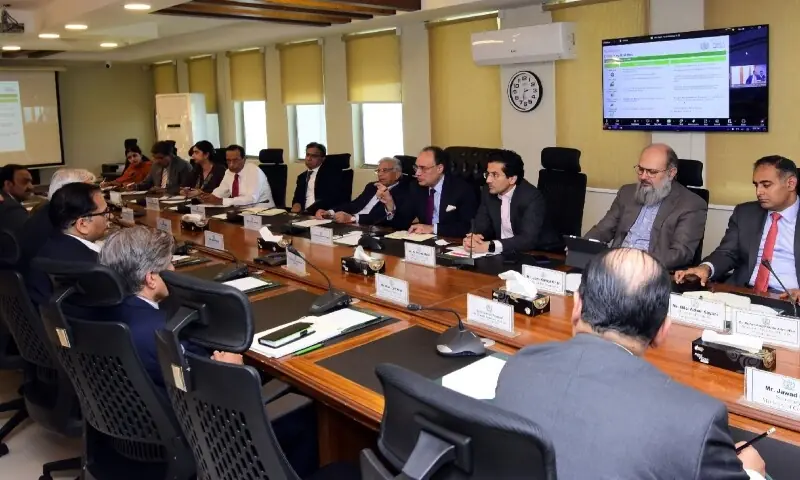
ISLAMABAD: The government on Thursday decided in principle to start weekly revisions for petroleum prices effective from March 8 and to implement measures such as distance learning and work-from-home for the conservation of fuel amid possible oil supply disruptions due to the ongoing conflict in the Middle East. The national action plan was crystallised in consultation with the provinces at a meeting of the cabinet committee formed by Prime Minister Shehbaz Sharif for monitoring petrol prices due to the regional situation. The action plan will be presented to PM Shehbaz on Friday. Subject to his clearance and fine-tuning, it will then be taken up by the federal cabinet’s Economic Coordination Committee for formal approval and implementation. Back-to-back meetings of the three forums are scheduled for Friday, in that order, given the urgency of the matter. According to informed sources, the contingency measures had also been discussed with the International Monetary Fund (IMF). During the meeting of the cabinet committee for monitoring petrol prices on Thursday, chaired by Finance Minister Muhammad Aurangzeb, federal ministries and provincial governments emphasised that they had faced a similar situation during the Covid-19 pandemic. Barring health-related precautions, almost all the contingency actions, including work-from-home, distance learning, and car-pooling, could be revived from next week to save fuel, energy and foreign exchange and minimise financial pressure on the budget and public purses. Meanwhile, according to an official handout, the meeting also reviewed developments in the energy sector and assessed national preparedness measures amidst the evolving regional and global energy situation, undertaking a detailed review of petroleum product stock positions across the country. “In line with broader preparedness planning, the committee examined a phased menu of fuel conservation measures drawing on institutional protocols implemented during prior national emergencies to support demand management if needed, while carefully calibrating communications to avoid any perception of undue alarm”, the statement said. It said it was further decided that the committee would finalise its recommendations by tomorrow and submit them to PM Shehbaz, together with a comprehensive implementation plan covering supply assurance, enforcement, pricing/governance mechanisms, and conservation measures, as appropriate. “The committee will continue to meet daily to monitor developments, review stock positions and supply chain movements, and ensure timely execution across all stakeholders,” the statement said. It added that the members were also apprised that the national reserves remained at comfortable levels, with sufficient cover available for key products, and that there was no immediate cause for concern regarding the availability of petroleum products. The committee, however, noted that the situation remained “fluid and uncertain”, requiring sustained vigilance and prudent planning as global supply chains and shipping routes face heightened risk and cost pressures, it said. A comprehensive briefing was also given on international oil market conditions, including movements in global benchmarks, freight and insurance costs, maritime and routing dynamics, and the risk of supply congestion at key chokepoints, the statement said. “The committee reviewed multiple supply and pricing scenarios to ensure preparedness under different contingencies and to maintain stability in domestic energy supplies.” In this context, the statement said the committee noted “war premium” dynamics and intensified competition for energy cargoes, particularly in Asian markets, could raise external account pressures if volatility persists. “The committee also reviewed ongoing efforts to strengthen supply assurance through diversified sourcing and logistics arrangements. Updates were shared on diplomatic and commercial engagements being pursued with friendly countries and partner suppliers to secure additional crude and refined product volumes through alternate routes and ports, including options outside high-risk corridors,” it said. “The committee also considered shipping and operational measures to reduce time lags, including facilitation of timely berthing and the use of available national shipping capacity where feasible,” the handout said. To safeguard orderly market conditions, the committee discussed measures to deter hoarding, illegal storage, and diversion, including coordinated enforcement actions by provincial administrations in close collaboration with the Oil and Gas Regulatory Authority (Ogra) and relevant agencies, it added. “The committee emphasised that preventing outward smuggling and ensuring uninterrupted domestic distribution will remain a top operational priority, and that real-time field intelligence and strict action against violations will be maintained,” the handout said. It also quoted the finance minister as saying that the government’s foremost objective was to ensure uninterrupted availability of petroleum products across the country, and that availability would remain the primary driver of all policy and operational decisions. “He stressed that the government is managing the situation responsibly through a structured governance mechanism, with daily monitoring, scenario planning, and coordinated decision-making,” it said. He further noted that where international price movements created unavoidable pressures, the government would respond through established and predictable mechanisms, with the aim of avoiding distortions and preserving market stability. “The committee also reviewed the liquefied petroleum gas and liquefied natural gas situation, including supply chain risks, shipment schedules, and terminal operations,” the statement said. Members discussed contingency options to manage demand efficiently if disruptions linger, while protecting priority sectors and maintaining orderly conditions, it concluded. The development comes as the United States and Israel’s war with Iran continues for a sixth day, disrupting supply chains as ships’ passage through the Strait of Hormuz remains paralysed . Pakistan has already formally requested Saudi Arabia to provide an alternative oil supply route through through the alternative Red Sea route to maintain its fuel supply chain.