


 Business Recorder
 Sovereignty deserves seriousness
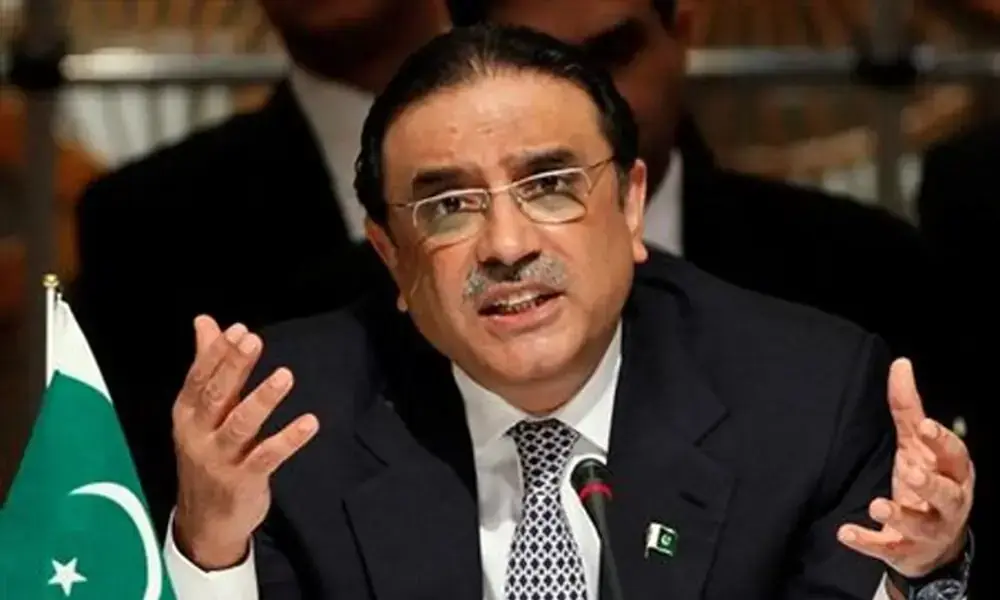
EDITORIAL: It is a recurring misfortune that the president’s traditional address to the joint sitting of parliament is routinely reduced to a spectacle of protest and interruption, regardless of which party occupies the treasury benches or the opposition rows. The consequence is predictable. The ceremonial head of state delivers a constitutionally significant message while slogans echo through the chamber, and the gravity of national issues competes with partisan theatre. And so it was again when President Asif Ali Zardari addressed parliament this week. The irony is that his central message warranted sober attention. Pakistan, he argued, stands firm in defending its sovereignty at a time when cross-border terrorism has re-emerged as an active security front. The president’s assertion that “Pakistan’s soil is sacred” was not rhetorical ornament. It was a reaffirmation of a principle that underpins the state’s security doctrine: no group, domestic or foreign, will be permitted to exploit Pakistani territory or use neighbouring territories to destabilise the country. The context is neither abstract nor distant. In recent months, Pakistan has faced intensified attacks attributed to groups operating from Afghan soil, including the Tehreek-e-Taliban Pakistan and the Balochistan Liberation Army. The state maintains that these outfits benefit from facilitation and sponsorship that extend beyond Afghanistan. Islamabad has repeatedly linked the resurgence of such violence to Indian backing, arguing that New Delhi seeks to weaponise instability along Pakistan’s western frontier. These allegations are not made lightly in the current climate. The region remains volatile, diplomatic trust is thin, and the security landscape has grown more complex since the Taliban’s return to Kabul. Pakistan’s leadership has consistently urged Afghan authorities to honour commitments made during the Doha process and to prevent their territory from being used for attacks against neighbours. The persistence of militant sanctuaries, despite repeated assurances, has hardened Islamabad’s position. The president’s reference to the United Nations Security Council’s concern about “extra-regional threats” emanating from Afghanistan signals an attempt to frame Pakistan’s grievances within an international legal context. This is important. Security challenges that cross borders cannot be addressed solely through bilateral rhetoric. They require recognition that unchecked militant networks destabilise not only immediate neighbours but wider regional order. At the same time, the domestic dimension cannot be ignored. Parliamentary protest is part of democratic expression. Yet when interruptions overwhelm a constitutional address focused on national security the optics are troubling. External adversaries observe these divisions closely. Internal cohesion strengthens deterrence; visible fragmentation weakens it. Political competition must not obscure shared national interests, especially when the state confronts sustained security threats. The president also characterised the persistence of militancy as part of a “war economy” that benefits only violent actors. This description merits reflection. Prolonged instability creates financial and political incentives for networks that thrive on disorder. Dismantling such structures requires not only military action but regional accountability and international scrutiny. Looking ahead, the clarity of Pakistan’s position leaves little room for ambiguity. The country has repeatedly stated that it seeks peaceful relations with its neighbours, including Afghanistan. It has also signalled that it will not tolerate the use of foreign soil for attacks against its citizens. The expectation from Kabul is straightforward: dismantle terrorist sanctuaries and prevent cross-border operations. Continued inaction will deepen confrontation and strain an already fragile regional environment. For Pakistan, vigilance must be matched with strategic patience. Diplomatic engagement, intelligence coordination and calibrated deterrence must proceed in tandem. Escalation serves no long-term interest, but complacency carries greater risk. The president’s address, despite the surrounding noise, reaffirmed a foundational principle. Sovereignty is not negotiable. National security cannot be subordinated to partisan rivalry. In moments of external pressure, political maturity at home becomes a strategic asset. Parliament’s highest forum deserves more than disruption; it deserves seriousness equal to the challenges the country faces. Copyright Business Recorder, 2026