


 Business Recorder
 Ehtesab Bill sails thru NA, Senate despite resistance
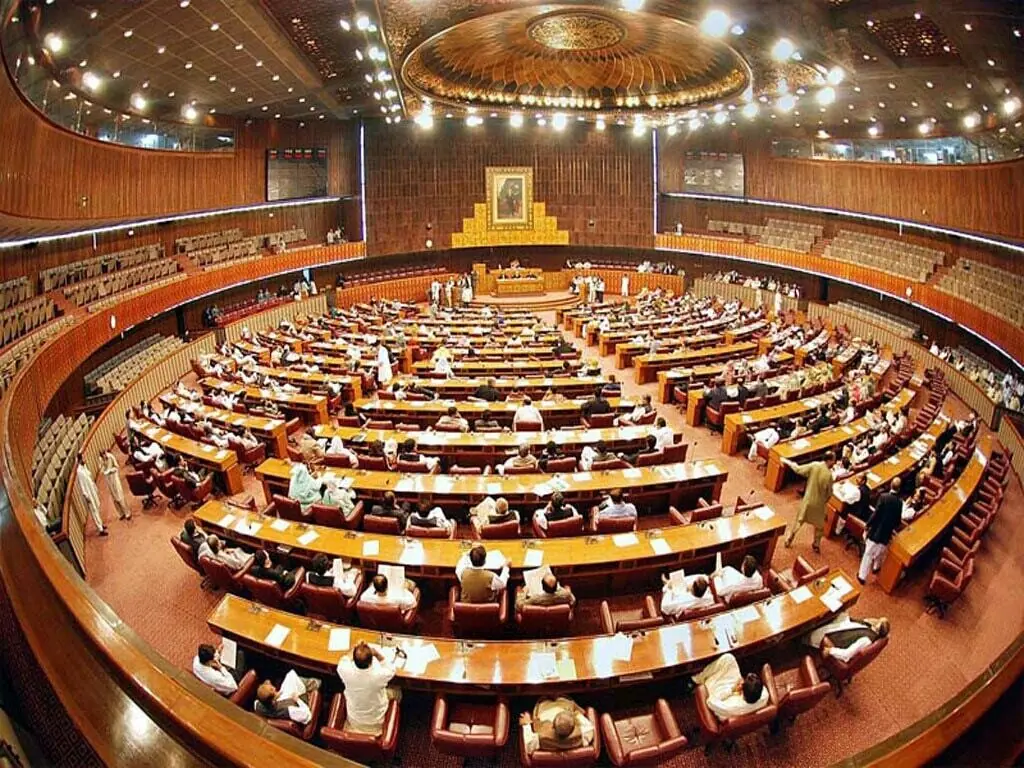
ISLAMABAD: Despite fierce opposition and heated protests in both legislative houses, the government successfully pushed the National Accountability (Amendment) Bill, 2026, through the National Assembly and Senate on Thursday, marking a significant and controversial shift in the country’s accountability framework. The bill, which was not part of the regular agenda, was introduced in the supplementary agenda in both the Senate and the National Assembly, a procedural move that drew sharp criticism from opposition lawmakers. Senator Mohammad Abdul Qadir moved the bill in the Senate, while Mahjabeen Abbasi tabled it in the National Assembly. The legislation proposes several major changes to the National Accountability Bureau (NAB) law, most notably allowing the NAB chairman to serve a three-year term with a possible one-time extension of an additional three years. Currently, the law prohibits reappointment or extension of the chairman’s tenure. Thursday’s passage clears the way for incumbent NAB Chairman Lt Gen Nazir Ahmed Butt (retd), whose term ended on March 4, to continue leading the anti-graft body for another three years following presidential assent. The bill also introduces procedural amendments aimed at strengthening legal safeguards. Under the proposed law, decisions of high courts in NAB cases can now be challenged via a second appeal before the Federal Constitutional Court within 30 days. Law Minister Azam Nazir Tarar described these measures as “constructive improvements,” clarifying that they address procedural ambiguities regarding bail powers and the handling of accountability proceedings. “Under the existing NAB law, only one appeal as of right is available before the concerned High Court,” he explained. “This amendment expands legal recourse and provides an additional appellate forum, responding to long-standing criticism that the accountability law is overly stringent and lacks adequate safeguards for fundamental rights.” The bill further empowers accountability courts and relevant high courts to grant bail or release accused individuals under the Code of Criminal Procedure (CrPC). It also mandates that procedural provisions governing trials under NAB law apply to appellate proceedings, removing prior interpretational ambiguities. Additionally, financial thresholds in NAB cases will now be adjusted annually based on inflation, ensuring monetary limits remain realistic over time. Leader of the House in the Senate, Ishaq Dar, defended the bill as a positive legal reform. “The constitution clearly states that the Federal Constitutional Court shall have jurisdiction to hear appeals from high courts’ judgments where parliament provides for it,” he said, emphasizing that legislation is an evolving process and that future amendments can be introduced if needed. However, opposition members denounced the measure as politically motivated. The acting PTI chairman, Barrister Gohar, criticized the extension of the NAB chairman’s tenure, alleging that the bureau has been used for “political engineering.” He questioned the fairness of providing two appeals in the Federal Constitutional Court for NAB cases while no such provision exists for serious criminal matters like murder. Alia Kamran of Jamiat Ulema-e-Islam (F) also opposed the clause on the chairman’s reappointment, calling it “against the principles of the Charter of Democracy” and expressing concern over excluding the Supreme Court from the appellate process. Opposition protests were particularly intense in the Senate, where members tore copies of the bill and engaged in loud sloganeering. Despite the uproar, the bill was carried by voice vote in both houses and will now be sent to the President for assent. The timing of the bill’s passage is notable, coinciding with the end of Lt Gen (retd) Nazir Ahmed Butt’s three-year term as NAB chairman on March 4. Once presidential assent is granted, incumbent NAB Chairman Lt Gen (retd) Nazir Ahmed Butt could continue for another three years, prompting fierce criticism from opposition parties – particularly JUI-F and PTI – which have openly accused the government of passing the legislation solely to extend Gen Butt’s tenure. Barrister Gohar urged the government and opposition to jointly decide on any extension of the NAB chairman’s tenure, stressing that such appointments should be consensual. The government, meanwhile, argued that the legislation strengthens due process protections and clarifies procedural matters that have long been contested in the courts. According clause four of the Bill, “amendment of section 6, Ordinance XVIII of 1999.- In the said Ordinance, in section 6, in sub-section (b), in clause (v), for the expression “non-extendable term of three years and shall not be eligible for subsequent appointment as Chairman”, the words “term of three years which may be extended once for a further period of three years by the Federal Government” shall be substituted.” The clause five of the Bill further describes as “A Court established under this Ordinance and the High Court having the jurisdiction in the area shall have the power to grant bail or order release of the accused under sections 439, 496, 497 and 498 of the Code.” About the extension of National Accountability Bureau (NAB) Chairman, the clause six of the Bill stated, “”A Second Appeal- Any person convicted or the Prosecutor General Accountability, if so directed by the Chairman NAB, aggrieved by the decision made by the High Court under section 32, may prefer a second appeal to the Federal Constitutional Court within a period of thirty days.” According to statement of Objects and Reasons of the Bill, “the Bill proposes amendments relating to jurisdiction, financial thresholds, tenure of the Chairman of NAB, bail powers of courts, and the introduction of a second appellate forum. The Bill proposes an amendment to section 4 of the Ordinance concerning the jurisdiction and functions of accountability courts. The amendment inserts the word “appeals” after the word “trials” in sub-section (6), clause (a). This change clarifies that the relevant procedural provisions apply not only to trials but also to appellate proceedings, thereby ensuring broader procedural application and reducing ambiguity in the interpretation of the law. The Bill further proposes an amendment to section 5, which contains definitions used in the Ordinance. Under the proposed change, the monetary threshold specified in clause (o) will be adjusted annually in accordance with the inflation index published by the Pakistan Bureau of Statistics. This measure ensures that the financial limits prescribed under the law remain realistic and relevant over time and are not diminished due to inflation. The Bill also amends section 6 regarding the tenure of the Chairman of NAB. Currently, the Chairman serves a non-extendable term of three years and is not eligible for reappointment. The proposed amendment allows the Chairman to serve a three-year term, which may be extended once for a further period of three years by the Federal Government, thereby providing administrative continuity and flexibility in leadership. Furthermore, the Bill amends section 9 by substituting sub-section (b) to clearly empower both accountability courts and the relevant High Courts to grant bail or order release of the accused under sections 439, 496, 497, and 498 of the Code of Criminal Procedure. Finally, the Bill inserts a new section 32A providing for a second appeal to the Federal Constitutional Court against decisions of the High Court within thirty days, thereby strengthening judicial oversight and the right of review in accountability matters.” Copyright Business Recorder, 2026