


 Forbes India
 The American will to bring global rulers to trial
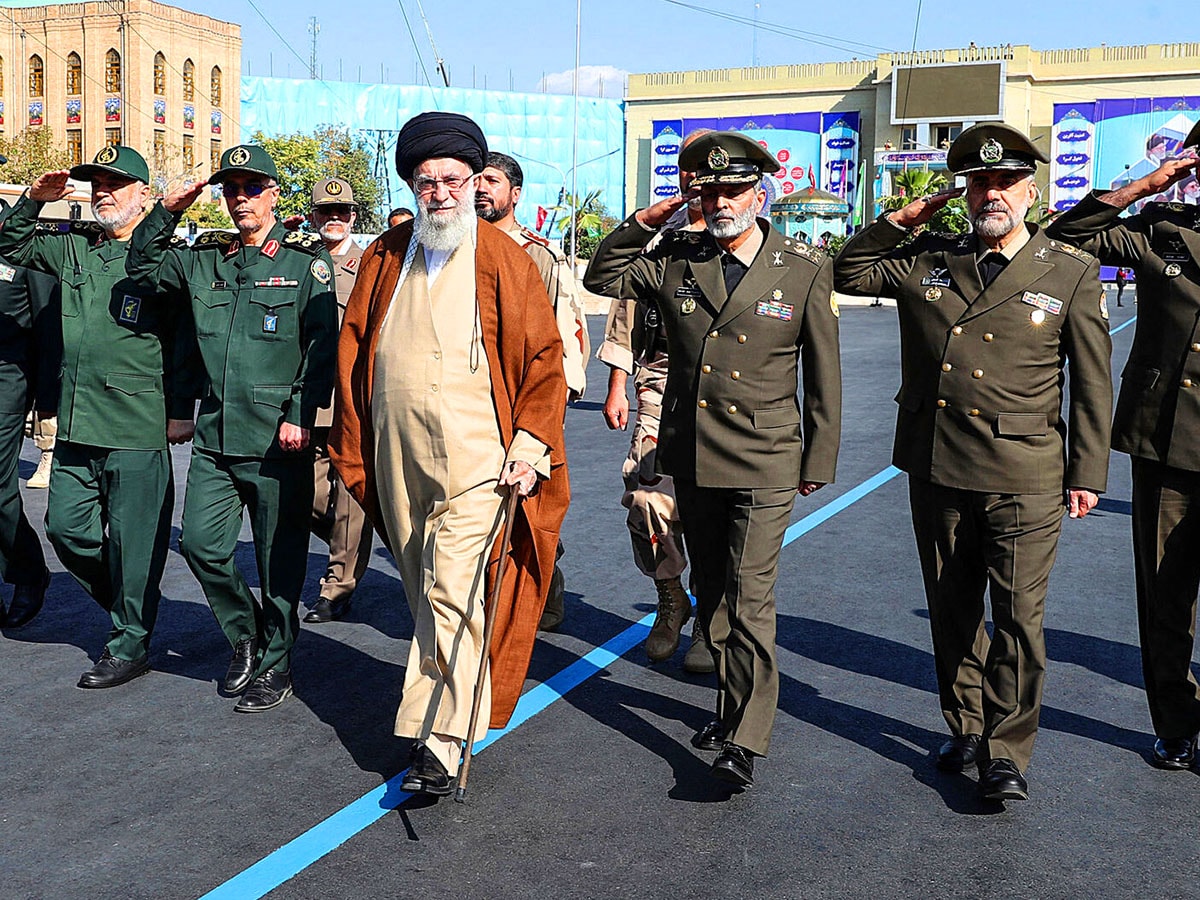
2026 - Ayatollah Ali Khamenei, Cleric and Supreme Leader, IranOn February 28, in a sudden lethal intervention by US and Israel, a dozen members of Khamenei’s family and close entourage were killed in near-simultaneous strikes within 60 seconds, a culmination of decades of painstaking intelligence gathering by Israeli secret services. As the ideological head of the ‘Axis of Resistance’, Khamenei created alliances with armed groups in Lebanon, Syria, Iraq and Palestine, fanning controversial nuclear and missile programmes, aiming to destroy enemies America and Israel, while suppressing brutally the protests across Iran for greater political and social freedoms, in a country reeling under social sanctions.Photo by khamenei.ir / AFP 2026 - Nicolás Maduro, President, VenezuelaExposing themselves to an extraordinary level of risk, US helicopters descended into a heavily fortified compound in Fort Tiuna during the wee hours of the morning on January 3 to extract Maduro and his wife as they lay asleep. They were taken to the US where Maduro has been indicted by the US on charges of narco-terrorism, cocaine trafficking and possession of destructive devices against the US to face charges.Photo by Eduardo Munoz / Reuters 2022 - Ayman al Zawahiri, al-Qaeda leaderZawahiri, who helped plan the 9/11 attacks, was among America's most wanted men. He was killed by a United States drone missile strike on the house he was hiding in in Kabul, Afghanistan.Photo by HO / SITE Intelligence Group / AFP 2020 - Qassem Soleimani, Commander, Quds Force, IranThe commander, who helped direct wars in Iraq, Syria, Lebanon and Yemen, was assassinated by a targeted drone strike while he was leaving Baghdad airport in a car.Photo by khamenei.ir / AFP 2019 - Abu Bakr al-Baghdadi, Leader, Islamic State in Iraq and SyriaArguably the world's most wanted man, Baghdadi detonated his suicide vest after fleeing into a tunnel, chased by US military dogs in a US special operations raid in northwestern Syria.Photo by AFP 2011 – Muammar Gaddafi, leader, LibyaDuring Libya's civil war that erupted following the 2011 overthrow of Muammar Gaddafi, the United States and allies intervened, carrying out a series of airstrikes and drone strikes. Gaddafi was captured and brutally killed by rebel forces.Photo by Ismail Zitouny / Reuters 2011 – Anwar Al-Awlaki, Islamic cleric and al-Qaeda leader“The main man who translated jihad into English”, according to a follower, the US-born Awlaki was linked to multiple terrorism plots. On September 30, 2011, the CIA used two Hellfire drones to target Awlaki in Yemen, killing him.Photo by Tracy Woodward/The Washington Post via Getty Images 2011 – Osama bin Laden, founder, al-QaedaThe mastermind behind the September 11, 2001, attacks that killed thousands of Americans, bin Laden formulated an agenda of violent struggle, declaring a holy war against the United States, aiming to overthrow the existing world order and establish a single Islamic state. On May 2, 2011, a small US force transported by helicopters raided a compound in Abbottabad, Pakistan, where Laden was hiding, and killed him, ending a decade-long manhunt.Photo by Jewel Samad / AFP 2006 - Abu Musab al-Zarqawi: Leader, al-Qaeda, IraqRegarded as one of the most destructive militants introducing beheadings and massive suicide bombings to the Iraqi insurgency, Jordanian-born Zarqawi was killed along with seven aides in a coalition bombing of his safehouse 50 km northeast of Baghdad.Photo by Ceerwan Aziz / Reuters 2003 - Saddam Hussein, President, IraqRuling Iraq with an iron fist for almost 30 years, Hussein used fear, intimidation and violence like few other dictators, while projecting an image of himself as a courageous moderniser. In 2003, coalition forces intervened, invading Iraq and helping rebel forces overthrow Hussein. He was executed in 2006 by order of an Iraqi court.Photos by Ramzi Haidar / AFP (left); HO / AFP 1989 - Manuel Noriega, Head, PanamaPanama’s military ruler was once a CIA asset until he became a force the US could not control. On December 20, 1989, thousands of US troops, supported by hundreds of helicopters and bombers, launched a full-scale invasion of Panama. Noriega sought refuge at the Vatican Embassy in Panama. The US military surrounded the embassy with loudspeakers and blared rock music round the clock until he surrendered. Noriega was indicted in the US for drug trafficking and money laundering.Photo by Bill Gentile/Corbis via Getty Images 1983 - Hudson Austin, Chairman, GrenadaHudson Austin was a general in the People's Revolutionary Army of Grenada, who led an October 1983 coup, executing the leadership, and formed a military government to rule Grenada. Less than a week later, a US and Caribbean-led invasion of the island overthrew the coup leaders and restored a constitutional government. Austin (right, blindfolded) was arrested and sentenced to prison.Photo Bettmann / Getty Images 1963 - Ngo Dinh Diem, President, South VietnamImpressed by his Christian and anti-communist beliefs, the US backed Ngo Dinh Diem to his position in South Vietnam in 1954. His decade-long rule quickly descended into nepotism, favouring family and Catholics. His brutal repression of dissenters and Buddhists led to large protest rallies. An alarmed US soon withdrew support and Diem was assassinated in 1963 in a CIA-backed coup.Photo by Keystone/Hulton Archive/Getty Images 1943 - Isoroku Yamamoto, Admiral, Imperial Japanese NavyThis Harvard educated Japanese Admiral—who was appointed commander-in-chief of Japan’s Combined Fleet—conceived of the surprise attack on the US Pacific fleet at Pearl Harbor on December 7, 1941. It had taken just two hours to severely cripple the might of US military aircrafts and battleships. In 1943, Yamamoto was on an inspection tour of Japanese bases in the South Pacific, flying in a G4M1 transport aircraft, when his plane was ambushed and shot down over Bougainville Island by US Air Force. It was an intercepted radio message indicating the itinerary of Yamamoto that had given him away. The US had aptly named it ‘Operation Vengeance’.