


 Business Recorder
 Petrol, HSD prices hiked by Rs55 per litre
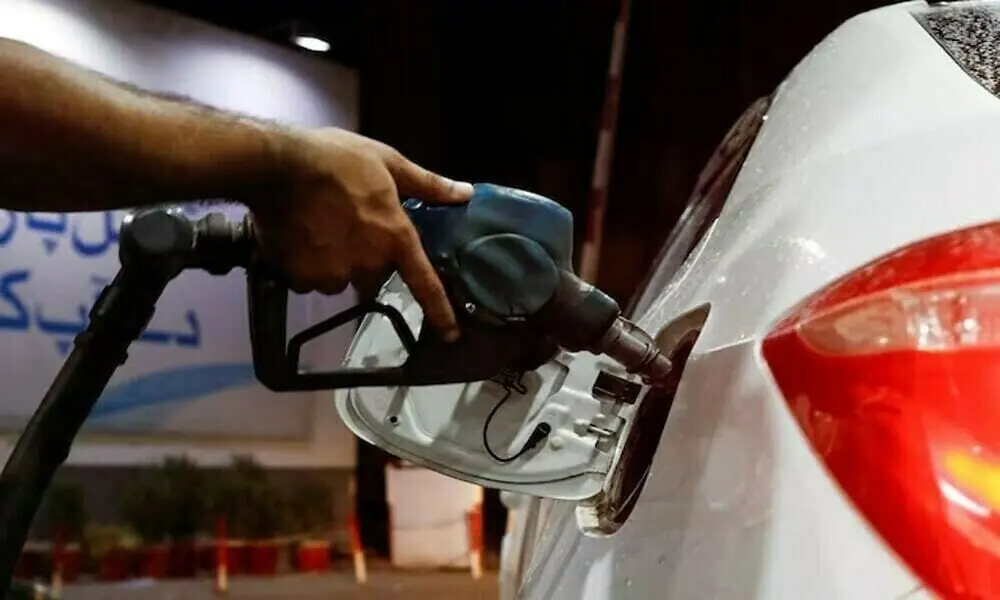
ISLAMABAD: Federal government on Friday announced a massive increase in the price of petrol and high speed diesel (HSD) by Rs 55 per litre for one week with effect from March 7, 2026. The decision was finalised during a high-level meeting chaired by Deputy Prime Minister Ishaq Dar. The meeting focused on reviewing the country’s petroleum reserves and fluctuations in global oil prices, amid ongoing volatility in international energy markets on daily basis. Federal Petroleum Minister Ali Pervez Malik announced to increase in the prices of petrol and HSD owing to a surge in petrol and HSD price internationally. He said since March 1, 2026, the price of petrol has increased from USD78 per bbl to USD106.80 per bbl and HSD from USD88 per bbl to USD150 per bbl. After an increase, the price of petrol is now available at Rs. 321.17 per litre while HSD for Rs. 335.86 per litre. Petroleum Minister was addressing in a press conference along with Deputy Prime Minister Muhammad Ishaq Dar and Finance Minister Muhammad Aurangzeb. The petroleum minister stated that while the global situation remains uncertain and was affecting countries in the region, Pakistan had reserves at its comfort level to ensure continuous crude oil supplies and is not facing an immediate energy crisis. He assured that the government would review these prices on a weekly basis and the prices would promptly reduce once the situation improved. He further said that authorities would take strict action against those involved in hoarding fuel to make illegal profits. Ishaq Dar said that the prices of petroleum products were soaring high. “There has been an increase of 50 per cent to 70pc in various products,” he noted, adding that in other countries, the trickle-down effect was visible with an “automatic increase in [petroleum] prices”. But in Pakistan, he said, Prime Minister Shehbaz Sharif had been “careful and deliberations have been ongoing for the past two to three weeks”. “There is a permanent committee that reviews [the situation] regularly under the leadership of Ali Pervaiz and Aurangzeb,” he said, adding that the PM had also held meetings and reviewed the global situation. “A committee led by me was then constituted,” he said, adding that it also included Malik and Aurangzeb. “We engaged the relevant stakeholders, and our objective was to pass the minimum effect [of the Middle East conflict on petroleum prices] to the end consumer.” PM Shehbaz and Chief of Defence Forces and Chief of Army Staff Field Marshal Asim Munir had also been in contact with the civilian and military leadership of other countries in this connection, he mentioned. Dar also noted that Pakistan had engaged with foreign counterparts in an effort to reduce regional tensions. “We have contacted the foreign ministers of other countries,” he said, adding that Pakistan was making every effort to work with partners to ease tensions. Dar added that it remained unclear how long it would take for the situation to stabilise. Finance Minister Aurangzeb said the committee has been closely monitoring daily developments in global energy markets, noting that the economy and energy sector are closely interconnected, requiring the government to assess both short-term and long-term implications, including potential effects on inflation. He emphasised that Pakistan currently remains in a stable macroeconomic position, adding that there was no panic within the government, though authorities were undertaking scenario planning to prepare for different outcomes if the crisis persists. The authorises also said that they would hold meetings with chief ministers and chief secretaries of provinces and discuss with them the fuel management measures. Copyright Business Recorder, 2026