


 The Better India
 Kolhapur Mom Turns Son’s Nutrition Quest Into Organic Farm Earning Rs 40 L/Year
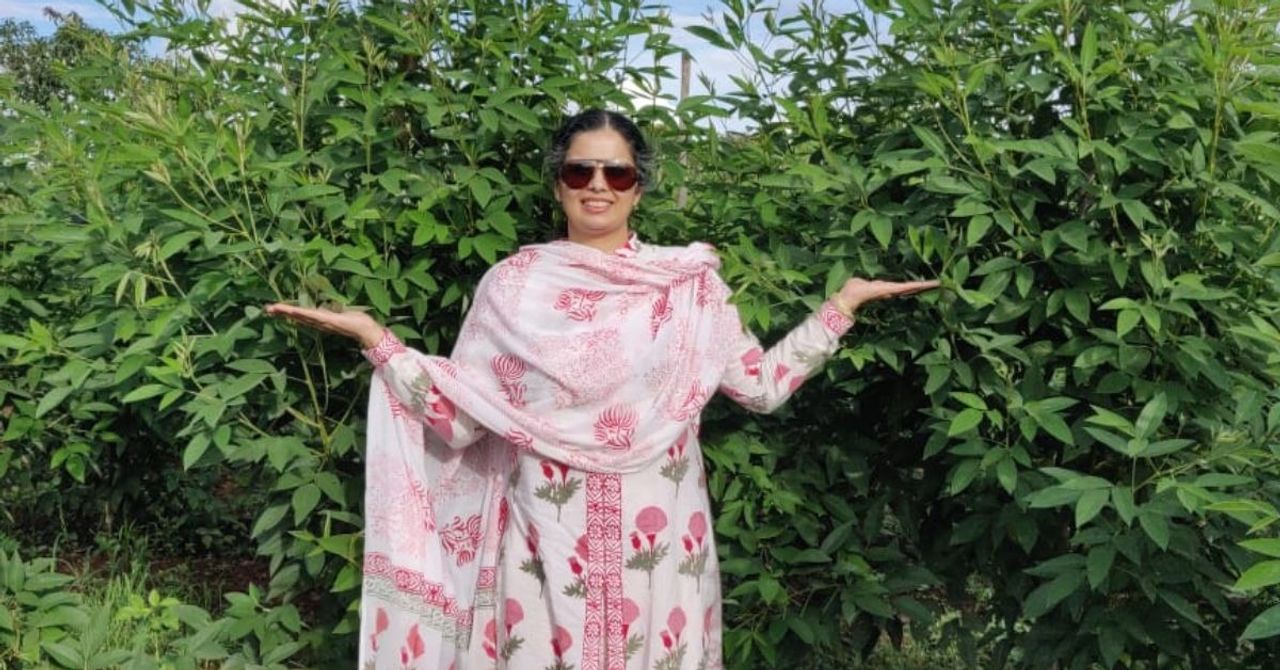
At Paarakhi Organic Farms, the morning sun cast a warm glow across rows of mango, sugarcane, and jowar. The air carries the earthy scent of freshly turned soil, sharpened by the fragrance of lemongrass and sweetened by mango blossoms. Women in vibrant saris move through the fields with baskets in hand , harvesting vegetables as their tools clink rhythmically against metal pails. “To farm organically is to honour the earth and our bodies,” says Monika Mohite, capturing the quiet conviction that shapes her work. At the centre of this bustling farm stands 51-year-old Monika Mohite — farmer, entrepreneur, and mother — guiding the work with steady purpose. In a farming landscape dominated by chemical inputs, Monika’s journey into organic agriculture began with something simple and deeply personal: a mother’s concern for her son’s health. What began as a deeply personal decision for her family has today grown into a 40-acre organic enterprise in Kolhapur, Maharashtra, demonstrating how sustainable farming can nourish both people and the land. A mother’s spark ignites change In a farming landscape dominated by chemical inputs, Monika’s journey into organic agriculture began with something simple and deeply personal: a mother’s concern for her son’s health. Her son Dhruv was pursuing professional motor racing, a demanding sport that required high physical endurance. During a routine consultation, a dietician pointed out nutritional gaps in the commercial energy foods available to him. When Monika searched for clean, nutrient-rich alternatives, she found very few options in the market. Instead of settling for what was available, she decided to create those foods herself. “It took a couple of years of workshops, field visits, and beginner mishaps to understand organic farming properly,” she recalls. What began as a small experiment soon grew into something much larger. Over time, Monika transformed the idea into a full-fledged organic farming venture spanning 40 acres, now generating up to Rs 40 lakh annually. Dhruv’s journey mirrored her determination. In 2019, he became the youngest winner of the Indian Touring Car Championship, going on to become a three-time national champion. Roots and resolve Though she is now deeply connected to farming, Monika did not grow up expecting to become a farmer. Originally from Gwalior, she holds a Master’s degree in English Literature, a postgraduate qualification in Computer Science, and a diploma in Creative Writing. She married into a family that runs a cotton yarn mill. Yet her childhood memories held quiet seeds of what was to come. In 2010, she established Paarakhi Organic Farms in Vadgaon village near National Highway 4 — a venture that would gradually become known for its commitment to clean, sustainable farming. “I grew up around mango and guava orchards,” she recalls. “Back then, farming was just a passing curiosity for me , like it is for many college students. The only hands-on experience I remember is harvesting fruits.” In 2010, she established Paarakhi Organic Farms in Vadgaon village near National Highway 4 — a venture that would gradually become known for its commitment to clean, sustainable farming. Building a self-reliant ecosystem Today, Paarakhi Organic Farms operates as a diverse and self-sustaining ecosystem. Across its 40 acres, the farm produces high-protein soy flour, jaggery made from sugarcane, mango and chikoo pulp, rice, jowar, pulses, fresh vegetables, and eggs. One of its most unexpected successes has been cow-dung dhoop sticks — a product that neighbours once mocked but which has since become popular among urban customers. The farm’s sales combine steady outlets with seasonal produce, allowing the business to adapt to changing climate patterns while maintaining consistent income streams. In the early days, scepticism from neighbouring farmers was common. Many dismissed her composting techniques and natural pest repellents. But when her fields began producing healthy yields, attitudes slowly changed. Today, Monika advocates for direct farmer-to-consumer connections through platforms such as Krishi Jagran’s Global Farmer Business Network (GFBN), helping farmers reduce dependence on middlemen and secure fair prices for organic produce. Cow-powered organic mastery A defining feature of Monika’s approach is her reliance on traditional cow-based organic practices. At Paarakhi, she avoids synthetic inputs across 35–40 acres and instead uses products derived from native Khillari cows — including gomutra (urine) and gomaya (dung) — to prepare natural fertilisers, sprays, and pest repellents. “As a farmer, my focus is on building soil carbon,” Monika explains. Beyond farming, Monika has also focused on creating opportunities for rural women. For her, soil carbon is more than a scientific metric. It represents the long-term health and resilience of the land. The most recent soil test at Paarakhi revealed a soil organic carbon (SOC) level of 1.3%, an indicator of healthy, fertile soil and the result of years of consistent organic practices. Soil carbon is a key measure of soil health — it reflects how much organic matter (like decomposed plants and microbes) is present in the soil. 1.3% is considered healthy, as it helps the soil retain nutrients, hold more water, and support better crop growth. Integrated farming practices Monika follows a carefully designed integrated farming system. Crop rotation and intercropping form the backbone of her fields. Vegetables such as spinach, beans, and brinjal grow alongside fruits like mango and chikoo, as well as grains such as jowar and soy. Livestock plays an equally important role in maintaining the farm’s nutrient cycle. Her free-range poultry currently includes about 700 chicks, with plans to expand to 2,000 birds. The farm also houses native Khillari and Devni cows. “I convert the cow dung into briquettes and dhoop sticks, which have become popular among buyers,” she says. “I currently have 12 cows.” A dedicated team of 12 workers manages harvesting, processing, and packaging. Today, Monika advocates for direct farmer-to-consumer connections through platforms such as Krishi Jagran’s Global Farmer Business Network (GFBN), helping farmersreduce dependence on middlemen and secure fair prices for organic produce. The farm produces a wide range of food products — including khandsari sugar, gulkand, groundnut oil, and Ajara Ghansal rice — all processed without chemical binders, artificial sweeteners, or synthetic additives. In addition, Paarakhi offers natural wellness products such as Panchgavya hair oil, haldi face cream, and Gomay ointment, along with eco-friendly cow-dung cakes and biodegradable planters. Sugarcane cultivation covers 12 acres of the farm, surrounded by marigolds and lemongrass that help deter pests naturally. “Sugarcane is a long-duration crop,” Monika explains. “It is residue-free and is grown with three cycles of flood irrigation.” Empowering women, feeding futures Beyond farming, Monika has also focused on creating opportunities for rural women. Through Paarakhi Organic Farms, she has supported hundreds of women farmers by sharing sustainable farming knowledge, providing market access, and ensuring fair pay. Her products are sold directly to consumers through her website, mobile app, WhatsApp orders, and local delivery networks. “I have built a customer base of more than 300 people,” she says. “Many of them are from Nashik, Pune, and Mumbai.” Her social media presence has also become a powerful tool. With over 420 posts documenting harvests, farm life, livestock care, and product processing, she has attracted more than 2,200 followers. These posts frequently lead to enquiries and orders for vegetable boxes, jaggery, grains, and other organic staples. A philosophy rooted in care As climate pressures grow and chemical dependence continues in agriculture, Monika believes that farming must return to its most fundamental purpose: nourishing people without harming the earth. Her farm stands as an example of how traditional knowledge, modern enterprise, and maternal instinct can combine to create a sustainable model for the future. For Monika, the philosophy guiding her work remains simple and deeply personal. “My motto is delivering health,” she says. “Whatever I cannot feed my own children, I will not feed any child.” In the fields where the morning once began with the scent of soil and lemongrass, that promise continues to take root — season after season.