


 Business Recorder
 Tax collections reach Rs8.1trn in Jul–Feb FY2025–26: Ahsan
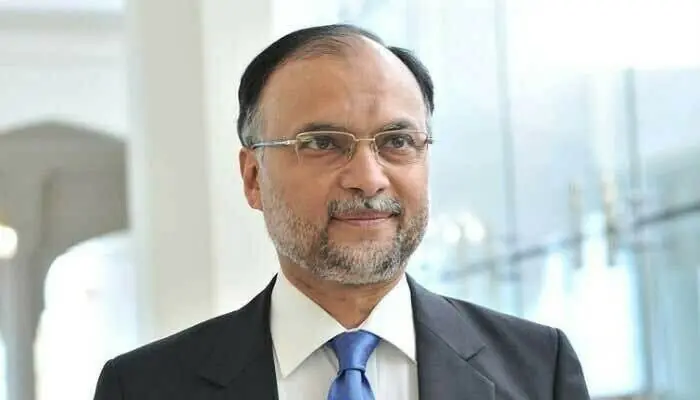
ISLAMABAD: Federal Minister for Planning, Development and Special Initiatives Ahsan Iqbal on Saturday said that tax collections reached Rs8.1 trillion during July–February FY2025–26, compared to Rs7.3 trillion during the same period last year, reflecting improved compliance, effective tax administration, and expanding economic activity. “However, inflation spiked in February to 7.0 percent compared to 1.5 percent in the same month last year, owing to a low base effect and adjustments in electricity tariffs. Average inflation eased to 5.5 percent during July–February FY2025–26, compared to 5.9 percent during the same period last year, while February 2026 inflation stood at 7.0 percent. Prices of several essential food items declined significantly, including eggs by 22.4 percent, chicken by 20.0 percent, and potatoes by 16 percent. However, tensions in the Middle East and developments in global energy markets remain potential risks for domestic inflation,” the minister said while addressing a news conference on the monthly development update for February 2026. READ ALSO: July-September 2025-26: FBR misses collection target by Rs197bn Overseas Pakistanis continued to demonstrate confidence in the national economy, as remittances increased by 11.3 percent to USD23.2 billion during July–January FY2026, compared to USD20.9 billion during the same period last year. Highlighting that Pakistan’s economy has demonstrated notable stabilization and is steadily moving on a recovery path during the first eight months of FY2025–26, he said the positive trends reflect the impact of prudent and well-coordinated macroeconomic management aimed at restoring economic stability and sustaining growth. Referring to the broader regional context, Ahsan Iqbal said the region is currently facing a major oil crisis, which is affecting both developed and developing economies. He noted that the coming months will determine how much oil prices may rise in the near future. He urged citizens to adopt responsible consumption practices, advising that unnecessary travel should be avoided and families should prefer using a single vehicle instead of multiple vehicles wherever possible. The minister further said that the Large-Scale Manufacturing (LSM) sector exhibited a sustained and broad-based recovery during July–December FY2025–26, recording 4.8 percent year-on-year growth, marking a sharp turnaround from last year. During this period, 14 out of 22 sectors recorded positive growth, including automobiles (67.2 percent), non-metallic mineral products (10.5 percent), beverages (5.4 percent), wearing apparel (7.5 percent), food (0.6 percent), textiles (1.5 percent), and tobacco (8.7 percent). Discussing the external sector, the minister said that exports of goods and services reached USD24 billion during July–January FY2025–26, while imports increased to USD44.4 billion. He explained that the rise in imports was driven by stronger demand for intermediate and capital goods, along with import tariff rationalization aimed at reducing trade distortions and enhancing competitiveness. Services exports also recorded strong growth during July–January FY2025–26, increasing by 18.8 percent to USD5.7 billion, largely driven by the expansion of Information and Communication Technology (ICT) exports by 20 percent. He said services imports increased by 17.4 percent to USD7.7 billion due to the expansion of remote digital services, financial and transport services, as well as increased international financial and insurance services. Providing an update on development spending, Ahsan Iqbal said that during the eight months (July–February) of the current fiscal year, Rs585 billion were authorized and Rs403 billion sanctioned, reflecting steady progress in the execution of development projects. He said Public Sector Development Programme (PSDP) utilization during July–February FY2025–26 reached 36 percent of the total allocation of Rs1 trillion (Rs361 billion), compared to 20 percent (Rs312.3 billion) during the same period last year, indicating a significant increase in development activities. On the planning side, he said the Central Development Working Party (CDWP) approved four projects (including position papers) and recommended five projects (including position papers) to the Executive Committee of the National Economic Council (ECNEC), demonstrating the government’s commitment to accelerating key development initiatives. The minister noted that the recently approved projects are expected to generate around 18,366 direct jobs and 7,320 indirect jobs across different sectors as development activities expand. He also highlighted that during July–January FY2025–26, the government’s focus on cost rationalization in development projects resulted in savings of Rs9.9 billion, reflecting a prudent approach to planning and improved project efficiency. He added that in January 2026, 16 projects were monitored and five projects evaluated to ensure efficient implementation and achievement of targeted development outcomes. Sharing updates on international engagements, the minister said that following the Pakistan–Kazakhstan Strategic Partnership Joint Declaration of February 4, 2026, work has been initiated on a five-year roadmap to enhance economic cooperation between the two countries. A Joint Working Group was constituted on February 23, 2026, and its first meeting was held on February 24, 2026 to identify priority areas for trade and economic collaboration. He further said that a virtual meeting with the Islamic Development Bank (IsDB) Group was held on February 16, 2026, to discuss preparation of the Member Country Partnership Strategy (MCPS) 2026–2030, aligned with Uraan Pakistan and Pakistan’s development priorities. Additionally, he said that a meeting held in Dhaka on February 17, 2026, with the Prime Minister of Bangladesh focused on strengthening Pakistan–Bangladesh relations and enhancing regional cooperation. Concluding his briefing, Ahsan Iqbal emphasized that strengthening Pakistan’s economy requires collective national responsibility. He urged every Pakistani to play their role in supporting economic stability so that the country can successfully overcome global economic challenges and emerge stronger from the current crisis. Copyright Business Recorder, 2026