


 Business Recorder
 When power overrides principle
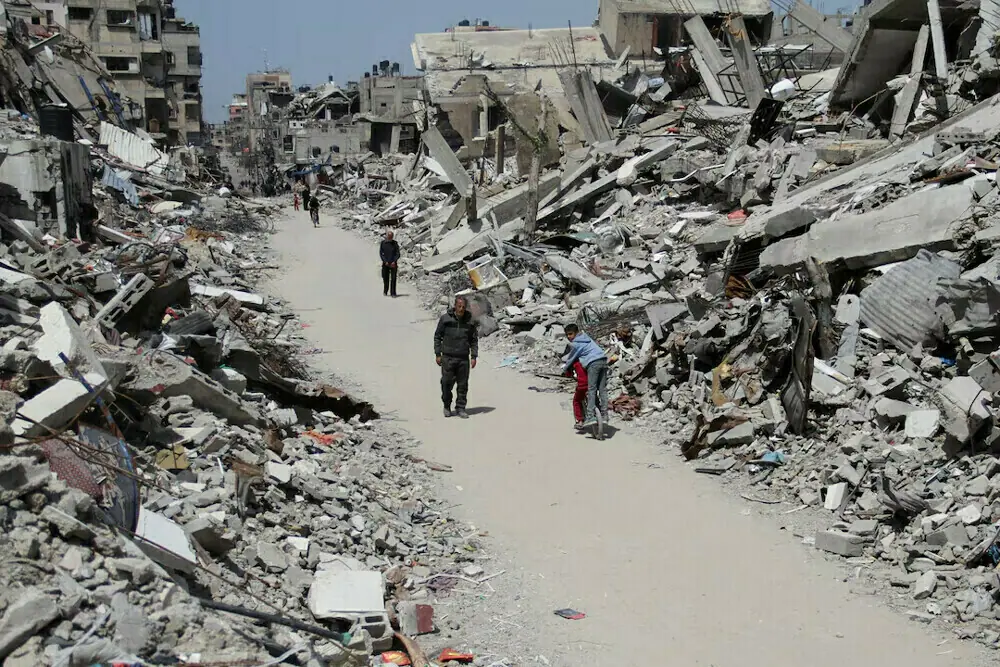
EDITORIAL: UN Secretary General Antonio Guterres has put into words what many governments prefer to avoid stating plainly: the international system is tilting towards coercion, and the guardrails that once constrained power are weakening. Speaking at the UN Human Rights Council in Geneva, the secretary general warned that the rule of law is being displaced by the rule of force. That assessment is not dramatic flourish. It is a diagnosis of a structural shift already visible across conflict zones, diplomatic forums and economic relationships. The concern is not confined to any single theatre. The war in Ukraine continues to extract a heavy civilian toll. The trajectory in the Occupied Palestinian Territory, especially the genocide in Gaza, has deepened alarm over the erosion of the two-state framework. Major powers increasingly act first and litigate later, if at all. International law, once invoked as a shared reference point, is now often treated as a negotiable instrument. This pattern is corrosive because smaller and middle powers rely disproportionately on predictable rules. When those rules bend for the strong, they weaken for everyone. The secretary general’s warning carries weight precisely because it addresses a broader trend. Across continents, the use of force to settle disputes is becoming normalised. Diplomatic language has hardened. Strategic competition is framed less around coexistence and more around dominance. The vocabulary of supremacy and exceptionalism has re-entered mainstream political discourse. When leaders argue that they stand above constraints, the message travels well beyond their domestic audiences. For countries like Pakistan, this environment presents layered risks. The erosion of global norms does not remain abstract. It affects how borders are respected, how disputes are mediated and how economic leverage is deployed. Financial systems, trade flows and even aid commitments can be weaponised. As donor fatigue sets in and major economies recalibrate priorities, developing states confront sharper volatility. When powerful capitals reduce assistance or condition cooperation on shifting political calculations, vulnerability increases. There is also a technological dimension that deepens the concern. Guterres warned that artificial intelligence and related technologies are being used in ways that suppress rights and magnify inequality. In practice, digital tools can amplify surveillance, distort information ecosystems and intensify social fractures. States that lack robust institutional safeguards find themselves navigating these pressures with limited regulatory capacity. The asymmetry between technological power and governance capacity widens. The secretary general’s intervention therefore reflects more than moral anxiety. It is an appeal to restore balance before instability hardens into precedent. Once force becomes an accepted instrument of routine statecraft, incentives change. Arms spending rises. Trust erodes. Diplomacy becomes reactive rather than preventative. Economic planning grows more defensive. In such a system, even rational actors behave more aggressively because they assume restraint will not be reciprocated. Pakistan’s interest lies in pressing for reinforcement of the multilateral framework rather than watching it fray. A world governed by predictable norms offers smaller states room to manoeuvre. A world governed by impulse and coercion compresses that space. Consistency in upholding international law, support for negotiated settlements and investment in regional confidence building are not abstract ideals. They are practical shields in an uncertain order. At the same time, external turbulence underscores the need for domestic coherence. When global competition intensifies, internal fragmentation becomes a liability. Economic resilience, institutional credibility and disciplined foreign policy messaging matter more when the international climate grows harsher. States that project clarity and steadiness navigate volatility better than those that mirror the chaos around them. Guterres’s warning is therefore a reminder that the international system is only as strong as the collective will to sustain it. If powerful countries continue to stretch norms to suit immediate objectives, the cumulative effect will not be stability. It will be a world in which disputes escalate faster, alliances shift more abruptly and smaller states face higher costs for defending their interests. The drift towards a politics of force is neither inevitable nor irreversible. But reversing it requires acknowledgement that the trend is real. That acknowledgement has now been made at the highest level of the United Nations. The question is whether those with the greatest influence will treat it as counsel or ignore it as cautionary rhetoric. Copyright Business Recorder, 2026