


 Axios
Axios Trump's energy chief: "No guarantees" gas prices will fall in weeks
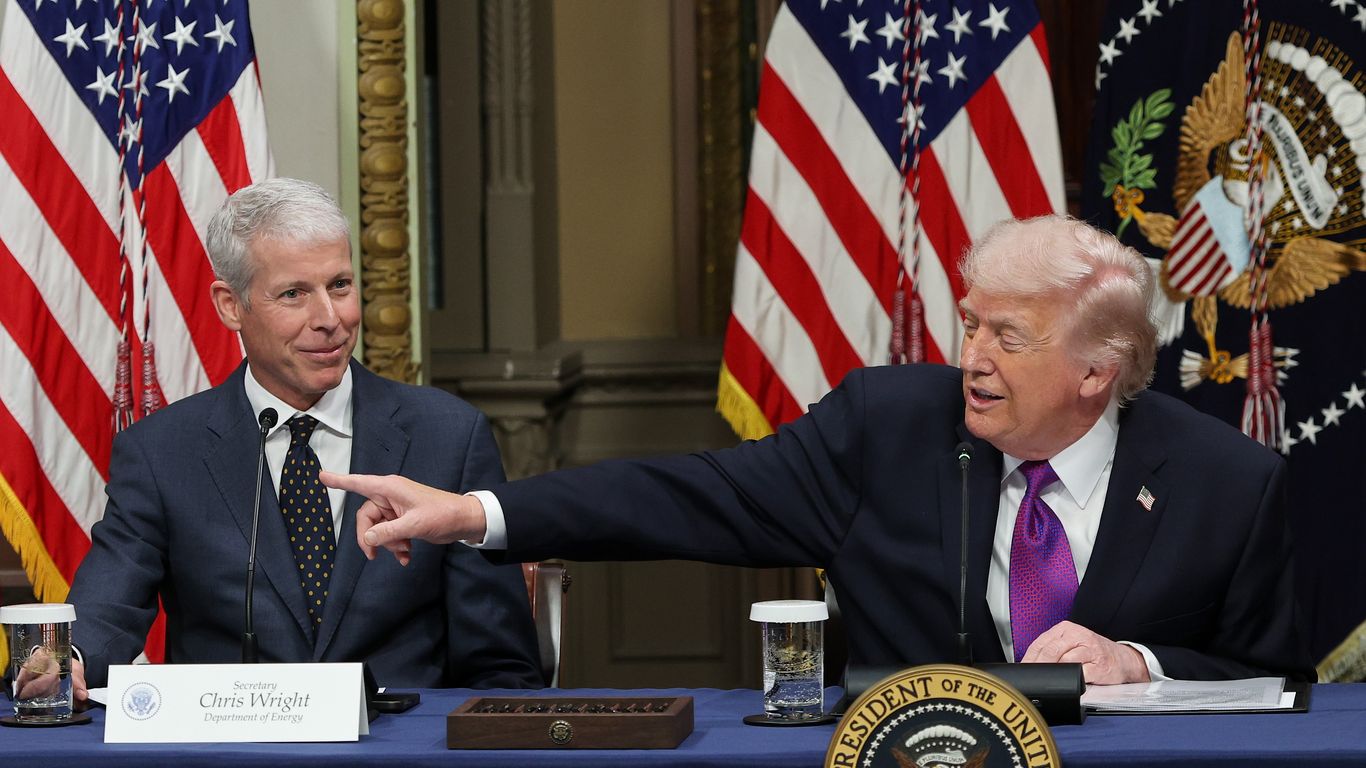
Energy Secretary Chris Wright said Sunday there are "no guarantees" when gas prices will fall , acknowledging the Strait of Hormuz remains unsafe. The big picture: Administration officials are adamant the pump price shock will be short-lived pain for a geopolitical gain. But the spike in prices threatens to become a political liability . Yet the Energy Information Administration in Wright's own department forecasts gas won't fall back to pre-conflict levels before the end of 2027. Driving the news: After he said there would be a "period of short-term disruption," Wright said on ABC News' "This Week" that there are "no guarantees in wars at all." He continued, "I can guarantee the situation would be dramatically worse without this military operation to defang the Iranian regime." Wright said he hopes prices don't reach the $5-a-gallon peak hit under Biden, but even if it does, he argued "at least this increase in gasoline prices is for something that's going to change the geopolitical situation in the world forever." Zoom out: Asked on NBC News' "Meet the Press" whether Americans should brace for the $200-per-barrel oil Iran warned of, Wright replied, "I would pay no attention to what Iran says." But Wright acknowledged there will be "some elevated pricing" until the war ends. By the numbers: National average gas prices hit $3.699 Sunday, per AAA — up from $2.927 a month ago. Earlier this month, oil prices hit triple digits for the first time since 2022. The conflict has highlighted just how much the global economy relies on the Strait of Hormuz . Yes, but: It will take "quite a while" to restart production, Diane Swonk, KPMG's chief economist, told ABC's Martha Raddatz. She also predicted a risk premium would linger even after the strait reopens. "They may come down, but they're going to be coming down from a higher plateau," she said. "And that means still very high prices rippling through the global economy but through the U.S. economy as well." The latest: Trump said on Truth Social Saturday that "Many Countries" would be sending "War Ships" to the Strait, later adding that " Hopefully China, France, Japan, South Korea, the UK, and others" participate. U.S. Ambassador to the UN Mike Waltz said on CNN's "State of the Union" that the U.S. would "certainly welcome, encourage and even demand their participation to help their own economies." Between the lines: Trump timeline for ending the war keeps shifting. Speaking with Axios' Barak Ravid, he said , "Any time I want it to end, it will end." He told NBC News on Saturday he doesn't want to make a deal with Iran yet. Trump also told NBC that "we totally demolished Kharg Island," where the U.S. struck 90 Iranian military targets, "but we may hit it a few more times just for fun." Go deeper: Iranian oil squeeze tests Trump's war plans