


 Daily Finland
 Israeli says fight against Iran to continue, Iran not asking for ceasefire
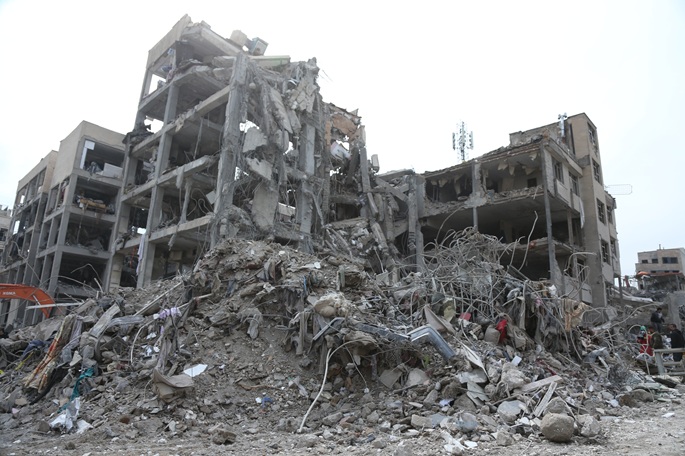
Israeli Foreign Minister Gideon Saar said Sunday that Israel does not intend to hold direct talks with the Lebanese government in the coming days, reported Xinhua. His remarks contradicted a Saturday report by the Israeli daily newspaper Haaretz, which said representatives from Israel and Lebanon were expected to meet for a round of talks within days amid the intensified fighting between Israel and Hezbollah. The newspaper cited two sources familiar with the matter. Speaking to reporters during a visit to the Bedouin town of Zarzir in northern Israel, where 58 people were reportedly injured by an Iranian missile strike on Thursday night, Saar said Israel expects "the Lebanese government to take serious steps to stop Hezbollah from firing at Israel." Regarding the war with Iran, Saar said "Israel and the United States have a shared determination to continue the fight against Iran until our goals are achieved." He added that, contrary to several media reports, Israel has no shortage of missile interceptors. According to the Haaretz report, the talks between Israel and Lebanon could take place in Cyprus or Paris, with U.S. involvement. The development came amid heightened regional tensions after joint U.S.-Israeli strikes on Iran starting from Feb. 28, to which Iran and Iran-aligned groups, including Hezbollah, responded with attacks on Israeli and U.S. interests across the Middle East. Hezbollah announced the launch of rockets from Lebanon toward Israel on March 2 for the first time since a ceasefire took effect on Nov. 27, 2024. Israel subsequently launched an offensive military campaign against the group, carrying out intensive airstrikes on multiple areas in southern and eastern Lebanon, as well as Beirut's southern suburbs. Meanwhile, Iranian Foreign Minister Seyed Abbas Araghchi has said that the country is not asking for a ceasefire or negotiations with the United States, stating that Tehran is prepared to defend itself "as long as it takes" against what he described as an "illegal war." In an interview with CBS News aired Sunday, Araghchi rejected claims that Iran has sought an end to hostilities. "We never asked for a ceasefire, and we have never asked even for negotiations. We are ready to defend ourselves as long as it takes," said the minister. He noted that Iran will continue its operations until U.S. President Donald Trump "comes to the point that this is an illegal war with no victory." "We don't see any reason why we should talk with Americans, because we were talking with them when they decided to attack us, and that was for the second time," Araghchi added. As for the Strait of Hormuz, the minister stressed that Iran has not closed this waterway. "This is up to our military to decide, and they have already decided to let a group of vessels belongs to different countries to pass," he noted. Speaking about the nuclear issue, Araghchi reiterated that Tehran has never sought nuclear weapons. Revealing that Iran had agreed to dilute its enriched uranium during pre-attack talks with the United States, the minister said that those enriched materials are now "under the rubble" following strikes on its nuclear facilities. "Everything is under the rubble," he said, adding that Iran has no current plans to recover enriched uranium stockpiles from the damaged sites. Meanwhile, Araghchi said Tehran has information the United States and Israel are launching attacks from certain locations against Arab states in the West Asia region. He made the remarks in an interview with pan-Arab news outlet Al-Araby Al-Jadeed, parts of which were published Sunday, questioning the origin of attacks on regional Arab states that have been blamed on Iran. Araghchi said Iran is ready to meet with regional states and form a joint committee to investigate the nature of the attacked targets. Iran's strikes only targeted U.S. bases and interests in retaliation for attacks launched from those sites, he added. Araqchi said the United States has developed a drone similar to Iran's Shahed 136, named "LUCAS," to target locations in Arab countries. He also accused Israel of targeting Arab civilians to sabotage their relations with Iran, adding, "Iran has not targeted any civilian or residential areas in the region so far." He said contacts continue with neighbors like Qatar, Saudi Arabia and Oman, and that regional countries are mediating to reduce tensions and propose ideas to end the war. Commenting on the Strait of Hormuz, Araghchi said it is open to all except U.S. and U.S.-allied ships. He described Iran's situation as "stable," noting no defections in state or military institutions, and that Supreme Leader Mojtaba Khamenei is in good health and fully in charge. Meanwhile, Iran's Islamic Revolution Guards Corps said Sunday that a recent drone attack on Riyadh region and the Eastern Province in Saudi Arabia was not related to Iran, according to the semi-official Fars news agency. Also on Sunday, the Iranian Foreign Ministry said Araghchi spoke by phone Saturday night with his French counterpart Jean-Noel Barrot to discuss the regional situation. Araghchi said the United States and Israel are the sole causes of insecurity in West Asia and the Strait of Hormuz, calling on all countries to condemn the "aggressors' criminal act" of attacking Iran and avoid escalating the conflict. He also said Israel's "aggression and hegemony" are the root cause of instability in Lebanon, noting that peace there depends on ending Israel's "occupation, attacks and aggressions." Meanwhile, shrapnel from an Iranian missile fired into central Israel has hit the residential building used by the U.S. consul in Israel, reported Xinhua, quoting Israel's state-owned Kan TV News on Sunday. 10 killed in Israeli airstrikes on S. Lebanon At least 10 people were killed and 13 others injured on Sunday as Israel continued its attacks on areas in southern Lebanon, according to statements issued by the Lebanese Health Ministry's Emergency Operations Center. Two people were killed and four others wounded in an Israeli airstrike on the town of Majdal Selm in the Marjayoun district, the center said. In another strike, three people were killed and three others injured in the town of Aaitit in the Tyre district. Moreover, an Israeli airstrike on the town of Qatrani in the Jezzine district late Saturday night left five people dead and six others wounded, according to the ministry's final toll. Earlier on Sunday, Israeli army spokesperson Avichay Adraee warned residents of Beirut's southern suburbs to leave certain locations. However, no Israeli strikes were reported in the area later in the day. Meanwhile, the death toll from ongoing Israeli attacks on Lebanon has risen to 850 since March 2, the Lebanese Health Ministry said on Sunday. In its daily report, the ministry's Emergency Operations Center said 2,105 people were injured during the same period. The report also noted an increase in child casualties, with the number of children killed reaching 107. Hezbollah announced the launch of rockets from Lebanon toward Israel on March 2 for the first time since a ceasefire was declared on Nov. 27, 2024. Israel subsequently launched a military campaign against the group, involving intensive airstrikes on several areas in southern and eastern Lebanon, in addition to Beirut's southern suburbs. Rocket attacks hit Baghdad int'l airport area, wounding 5 Five rockets attacked Iraq's Baghdad International Airport and its surrounding area on Sunday evening, wounding five people, the Iraqi Joint Operations Command reported. Saad Maan, head of the command's Security Media Cell, said in a statement that the attack occurred at 7:00 p.m. local time (1600 GMT), wounding four airport employees, security personnel and an engineer. Security forces subsequently launched a search operation and seized the rocket launcher hidden inside a vehicle in the al-Radwaniyah area, west of the capital Baghdad, Maan said. In response to the attack, orders were issued to dismiss the sector security commanders and intelligence officers in the targeted area, he noted. "The competent authorities have begun taking the necessary legal measures, while tightening security measures in the vicinity of the targeted areas," Maan added. The attacks came amid heightened tensions following joint U.S.-Israeli strikes on Iran starting Feb. 28, to which Iran and its regional allies responded with attacks on Israeli and U.S. interests across the Middle East. On Feb. 28, Israel and the United States launched joint attacks on Tehran and other Iranian cities, killing Iran's then Supreme Leader Ali Khamenei, senior military commanders, and civilians. Iran responded with waves of missile and drone strikes targeting Israeli and U.S. bases and assets across the Middle East.