


 iefimerida
 Delacroix’s ‘Greece’ Returns to Missolonghi for 200th Bicentennial of Heroic Exodus
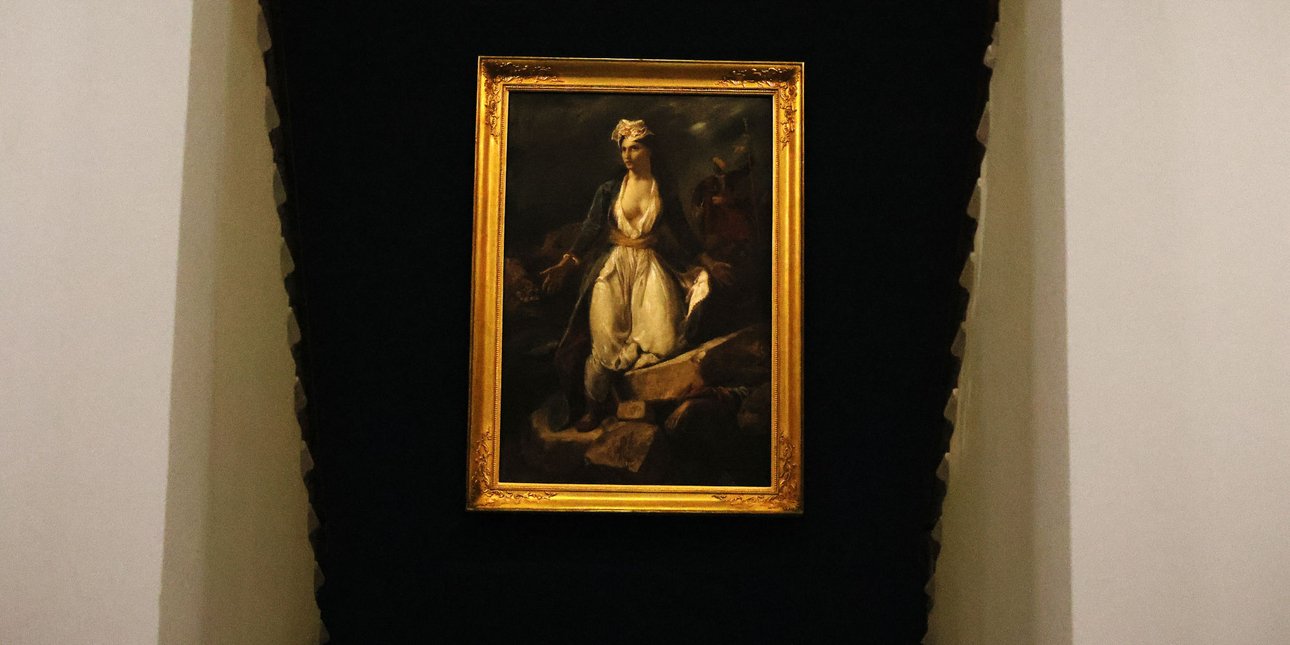
Eugène Delacroix’s romantic masterpiece Greece on the Ruins of Missolonghi has returned to the city that inspired it for the first time in two centuries, marking a emotional centerpiece for the 200th anniversary of the 1826 Exodus. The iconic oil painting, on loan from the Museum of Fine Arts of Bordeaux, went on public display Saturday at the Xenokratio Archaeological Museum. It will remain in the "Sacred City" through November 2026 as the focal point of the bicentennial commemorations. The work personifies Greece as a grieving woman in traditional dress, standing amidst the rubble of a city that chose self-sacrifice over surrender following a year-long Ottoman siege. “Today is a profound milestone for both Missolonghi and our nation," Culture Minister Lina Mendoni said during the unveiling. "The arrival of this work carries immense historical weight, returning a timeless symbol of resistance and rebirth to its original soil. "Ms. Mendoni was joined by local officials and journalist Nikos Aliagas for the ceremony, which officially launched the 200th-anniversary commemorative year. The exhibition also features the "Daughter of Greece" statue by David d’Angers and the ceremonial attire of national benefactor Konstantinos Xenokratis. The 1826 "Exodus"—a desperate breakout by starving residents—shocked 19th-century Europe and galvanized the Philhellenic movement. Two centuries later, the painting’s presence is being hailed as a "symbolic homecoming" for an artwork that helped turn a local tragedy into a universal emblem of the struggle for freedom. Διαβάστε περισσότερα στο iefimerida.gr