


 Ruptly
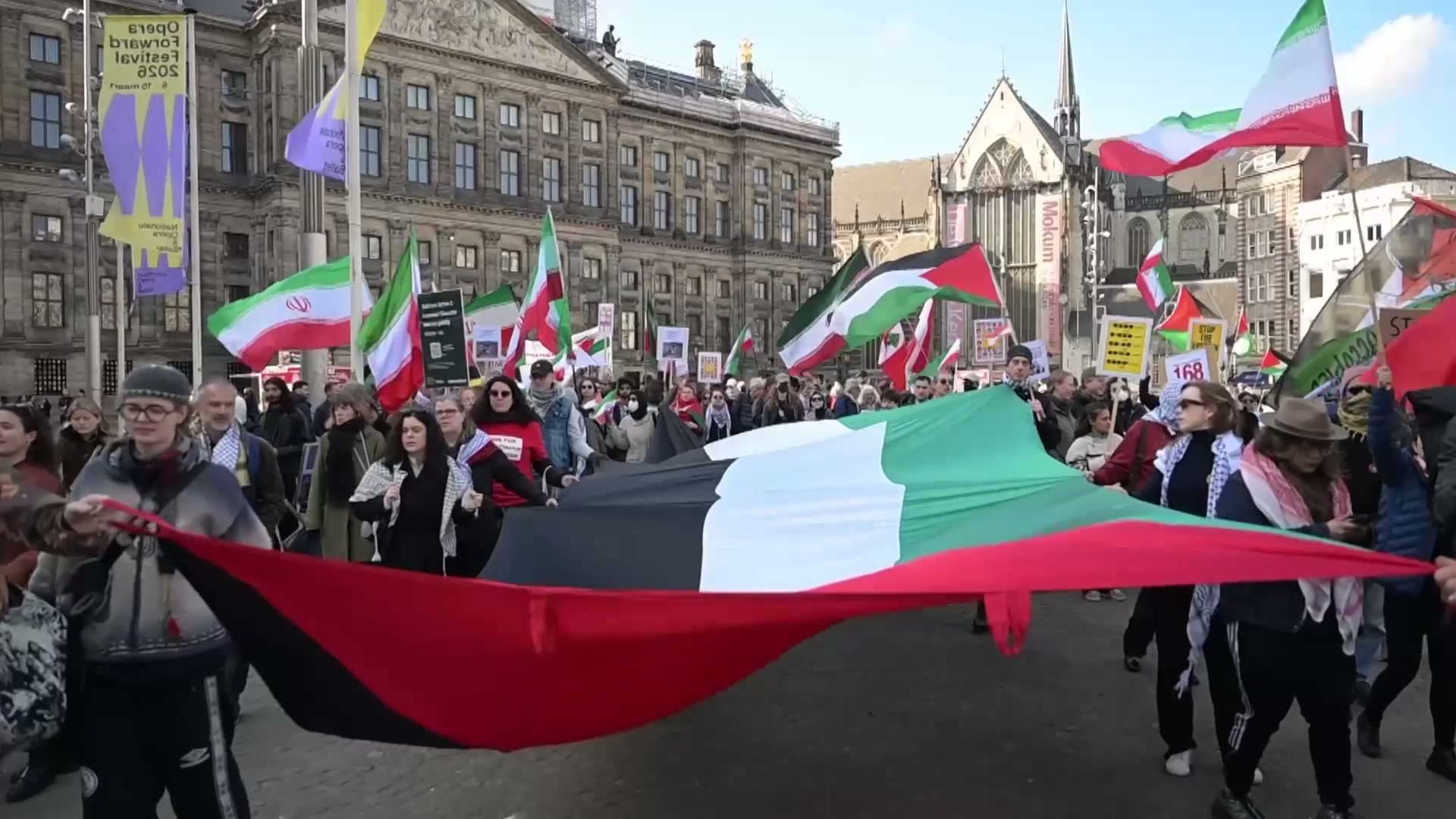
 'Protest the massacres, killing of children, sick people, doctors' - Hundreds demand cessation of US, Israel ops in Iran and Lebanon at Amsterdam rally
"Hundreds of people gathered in Amsterdam on Sunday to demand an end to US-Israeli military actions against Iran and the Israeli operation against Hezbollah in Lebanon. Footage shows protesters chanting ‘Hands of Iran’ as they march through the city. Many carried Iranian, Lebanese, and Palestinian flags and signs bearing messages such as 'Stop war with Iran' and 'Killed by USA and Israel 168 little schoolgirls', among others. "I'm from the Iraqi community in the Netherlands. We have been protesting the Gaza massacre for three years. And now we will also protest the massacres of Israel in Lebanon and Iran, the Islamic Republic, and the killing of children, sick people, doctors, and health workers in Iran," a protester said. "This is a protest about basically against war in Gaza, war in Iran, and war in Lebanon," another rally participant with a Spanish flag shared, adding, "For me, Pedro Sanchez is very special in that he is the only European leader who is actually saying something against the breaches of international law, against killing people, and against the US deciding to bomb places in Iran and Israel." Spanish Prime Minister Pedro Sanchez condemned US-Israeli actions inside Iran, calling them 'unilateral' and denying access to the Rota and Moron bases. In response, US President Donald Trump labelled Spain as a 'terrible' and 'unfriendly' ally and threatened to cut off all trade between the two nations. The United States and Israel launched joint military operations against Iran on February 28, with President Trump vowing to 'raze their missile industry to the ground'. Tehran said it was responding with strikes on Israel and US assets in the region, with explosions reported in countries right across the Gulf region. Supreme Leader Ayatollah Ali Khamenei was confirmed dead in a strike on the first day. His son, Mojtaba Khamenei, has since been selected as his successor. Meanwhile, Trump said the new Iranian supreme leader would not 'last long' if elected without US approval. The escalating conflict has sent global energy prices soaring and led to the effective closure of the Strait of Hormuz, which handles 20 per cent of global oil traffic."