


 Dawn.com
 Tehran thanks Islamabad for extending ‘strong solidarity’ with Iranian govt, people facing US-Israeli aggression
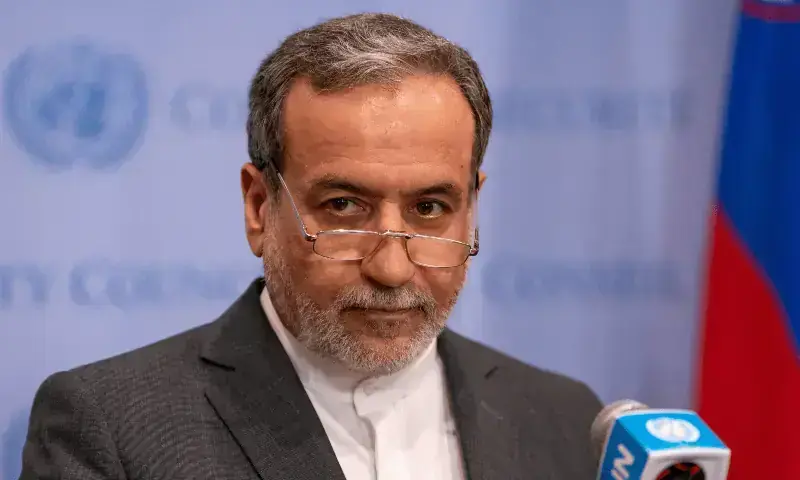
Iran’s Foreign Minister Abbas Araghchi on Monday thanked the government and people of Pakistan for extending their “strong solidarity and support” with Iran and its people who were facing aggression from the United States and Israel. In a post in Urdu on X, Araghchi said: “On this blessed, divine, and spiritual day and hour, I extend my heartfelt gratitude to the government and people of Pakistan for their strong expression of solidarity and support with the people and government of the Islamic Republic of Iran in the face of the aggression by America and the Zionist regime.” Araghchi added that Iran stood with “steadfastness and perseverance in defence of its sovereignty and territorial integrity, with complete reliance on Allah Almighty”. The war began as the US and Israel launched strikes on Tehran on February 28, which also resulted in the assassination of Iranian supreme leader Ayatollah Ali Khamenei. In retaliatory strikes, Iran has targeted US assets and bases in Gulf countries. The Foreign Office (FO) has termed Pakistan’s role as a “ bridge builder ” during the ongoing conflict in the Middle East. Most notably, as revealed by Deputy Prime Minister Ishaq Dar, Islamabad invoked its “Strategic Mutual Defence Agreement” signed with Riyadh last year to help deter heavier Iranian strikes on Saudi Arabia. Prime Minister Shehbaz Sharif and Dar, who also serves as the foreign minister, have been holding phone calls with dignitaries from relevant countries since the war began, repeatedly calling for de-escalation . PM Shehbaz even made a brief visit to Saudi Arabia on March 12, where he held a “ restricted meeting ” with Saudi Crown Prince Mohammed bin Salman and discussed regional developments. At the United Nations Security Council (UNSC), Pakistan has maintained a delicate balance , condemning unwarranted attacks on Iran, expressing solidarity with Gulf states, and urging an immediate return to negotiations and diplomacy. Last week, Pakistan supported a Bahrain-led resolution condemning Iran’s retaliatory attacks, which was adopted by the UNSC. It also voted in favour of a draft resolution presented by Russia on the military escalation, but the US vetoed it.