


 GB News
 Anas Sarwar tells SNP to end 'dither and delay' over NHS plans
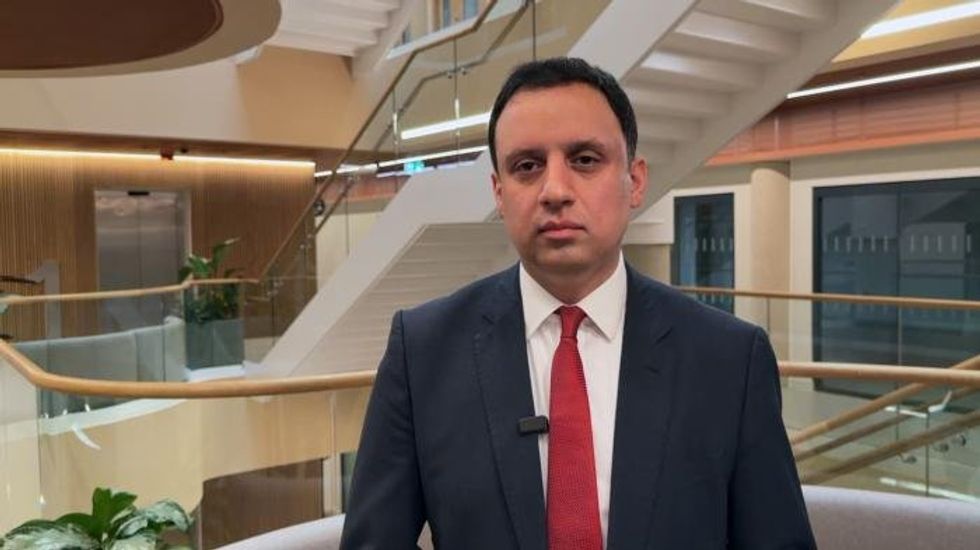
Scottish Labour has opened up a fresh front in the SNP’s handling of the NHS, by pledging to bring an end to the “dither and delay” of the minority government’s plans for a patient mobile app. Anas Sarwar and his deputy Jackie Baillie visited the Govan Health Innovation Hub in Glasgow to set out his party’s plans for a modernised Scottish National Health Service if his party is elected to government in May. The Scottish government’s NHS app project has been forced to the sidelines after years of delays, despite NHS England patients having mobile access since the mobile service launched in 2019. Functionality south of the border has expanded in the years since, servicing prescriptions, checking waiting times and viewing test results. TRENDING Stories Videos Your Say Anas Sarwar blamed the lengthy delay of the app on John Swinney being “an analogue First Minister in a digital age” and says any mobile application must meet the public’s most desirable features such as easy access to health records, electronic prescriptions and managing GP appointments. The Labour leader says he wants to “build a better future for the NHS by embracing technology”. He said: “These are all things that we need to embrace in Scotland, rather than the sticky plaster approach that we have from this SNP Government.” In order to get a Scottish NHS app into the hands of patients, Scottish Labour has said it is willing to fast track app development by working with Westminster and Senned Cymru to utilise their apps in Scotland if necessary. Criticising Scottish hospital staff still reliant on pagers, Dame Jackie Baillie claimed, “SNP failure to modernise our NHS is piling pressure on services,” blaming two decades of SNP Government indirection for "making it harder for patients to access the care they need". Scottish Labour were not the only party sharing harsh criticism of the SNP’s NHS record on Monday. In a live-streamed interview with the Institute for Government, Reform UK Scotland leader Lord Malcolm Offord shared his view that NHS Scotland requires “a complete reset”. "In Glasgow," he said, "you can turn a mile and go to the West End and have a life expectancy of 86 or you walk a mile to the East End and I’ve got a life expectancy of 66 in the same city, which is just extraordinary." LATEST DEVELOPMENTS Labour minister insists ‘we are not protagonists’ in Iran war during GB News grilling Labour and Reform face key test in Wales ahead of Senedd elections 'Step up to the plate!' Keir Starmer urged to support Donald Trump in the Strait of Hormuz Under Reform, he says “the principles remain - that it’s free at the point of need and paid for from general taxation but the rest does need to be looked at.” The attacks from the SNP’s political opponents come on the same day that John Swinney publicly backed Health Secretary Neil Gray, despite the likelihood of missing waiting time targets. Last year the SNP set out to eradicate 12-month appointment waiting times by the end of March, but figures suggest some 50,000 patients aren’t seen by clinicians within 12 months. Asked by the Press Association if missing the target should be cause for Neil Gray’s resignation, the First Minister simply responded, “No.” Despite asserting that “progress has been made” with Neil Gray at the helm of Scottish healthcare, Mr Swinney refused to confirm whether he would keep his position of Health Secretary if the SNP is elected for a fifth consecutive time. The First Minister said: “For eight months in a row we’ve seen a fall in long waits in outpatients and for treatment time guarantee patients. “There is clearly progress been made as a consequence of the focus that we’ve put on reducing long waits and ensuring that people are getting the treatment they require and that’s evidence of the solid progress that we’re making running the National Health Service.” The Health Secretary says the “MyCare[dot]scot” app is still on track to begin rolling out in April, while accusing Labour of “desperately promising something the SNP is already set to deliver”. Our Standards: The GB News Editorial Charter