


 Ruptly
 'Bringing our economy and country to a stable position' - Sri Lanka implements fuel rationing, four-day work week to alleviate long queues amid rising demand
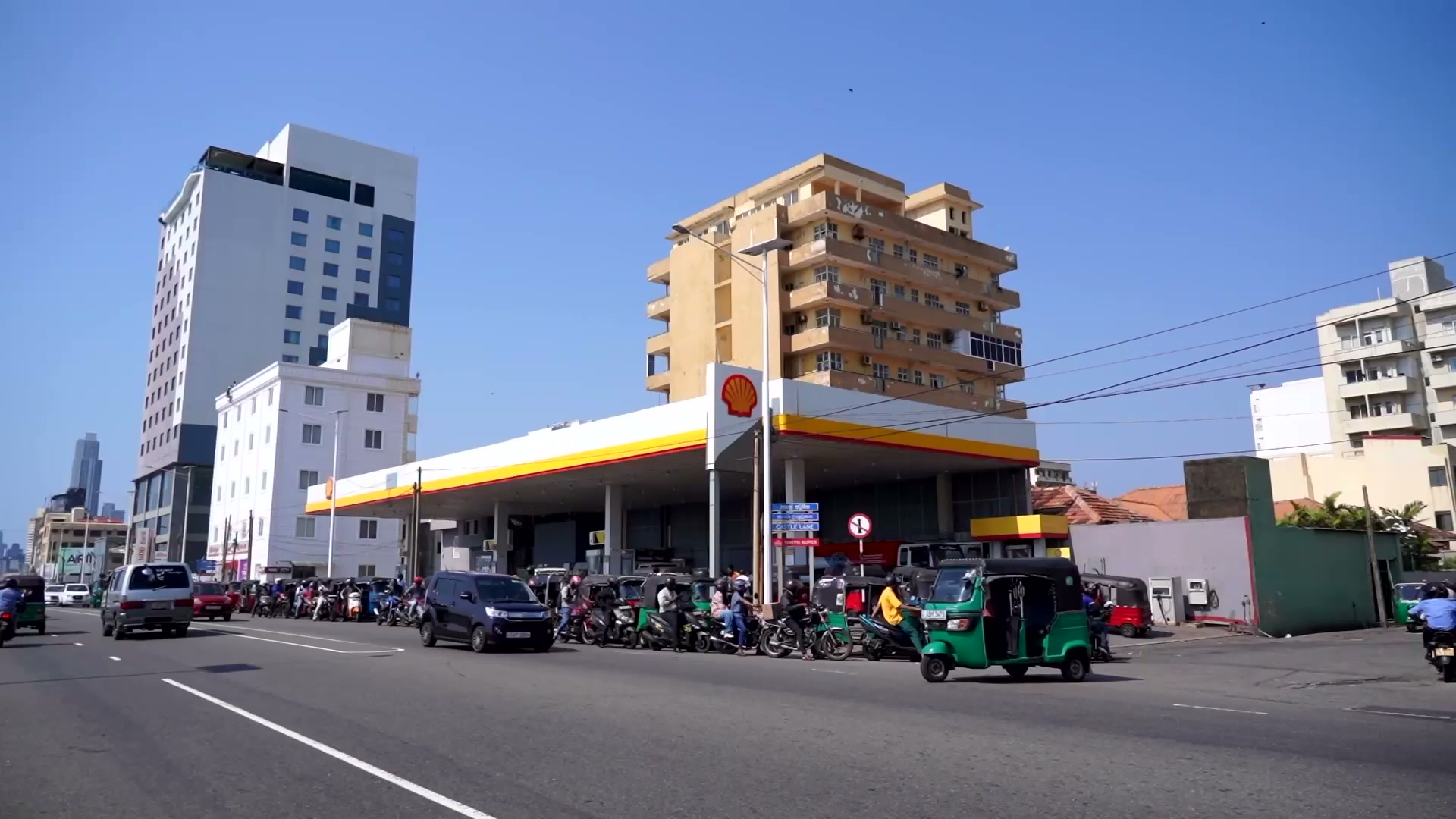
"Dozens of drivers queue outside petrol stations in Colombo as Sri Lanka has moved to a four-day work week and QR system to manage limited fuel supplies and surging prices due to the Middle Eastern war. Footage filmed on Monday shows a long queue of motorcycles, auto rickshaws and other vehicles snaking under the scorching sun near a local Shell petrol station. The price board reads 317 rupees (about 3.43 USD, 2.98 EUR) per litre. "This [QR system] is not a bad thing. This is happening because of the war situation. The petrol was sold like this because of the war. This is a normal thing. We can't blame the government for this. All are putting their efforts into bringing our economy and country to a stable position," Tuk Tuk driver Selva shared. To safeguard fuel reserves amid ongoing global supply disruptions in the Middle East due to the US-Israel conflict with Iran, fuel is sold exclusively to vehicle owners with a valid QR code registered on a government portal. Vehicle owners must register online to obtain a QR code, which is then scanned at filling stations to authorise a fixed quota of fuel. Wednesday was also introduced as an additional day off. The day was chosen so that government offices would not be closed for three days in a row. However, opinions over the quantity and sufficiency of necessary fuel reserves on the island has divided amid locals. "We don't think that the government is lying about fuel stocks; all of a sudden, there is a war situation. We never thought such a situation would arise," motorist Mohammed Faiz commented. "I think there is enough petrol in the country." "We can't say whether the government is speaking the truth or not," Selva argued. "We can't go and see the stocks by ourselves. We can only listen to them." Sri Lanka is heavily reliant on Middle East energy, importing almost all of its oil and gas from the region, with a large part coming through the Strait of Hormuz. To ration the fuel consumption, weekly fuel quotas have been set on the island according to vehicle categories: motorcycles are allowed five litres per week, while motor cars and three-wheelers are limited to 15 litres. Vans are permitted 40 litres, buses 60, and motor lorries up to 200. Tehran closed the Hormuz in response to the joint US-Israel attacks on its territory. Blockade of the important marine route, which normally carries around 20 per cent of global oil shipments, triggered surging energy prices and raised fears of economic fallout. A joint US-Israeli operation against Iranian targets started on February 28. Tehran responded with missile and drone strikes on Israel and US military positions in the region, while explosions were reported across Gulf countries. "