


 Business Recorder
 PQA to initiate open bidding for stevedoring cos to reduce high charges
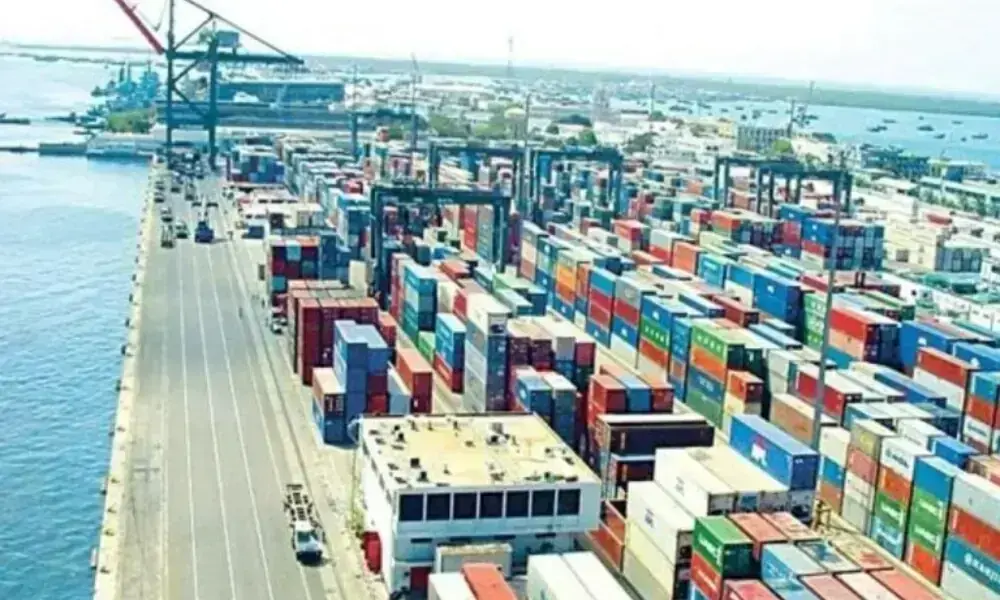
ISLAMABAD: The Port Qasim Authority (PQA) has decided to initiate open bidding for stevedoring companies in a bid to reduce high charges stemming from the existing monopoly, official sources told Business Recorder. The assurance was given by Director General (Operations), PQA, during an inter-ministerial and industry meeting convened to address issues faced by exporters and importers in the transportation of goods. During the meeting, Asif Ali, CEO of Asif Rice, highlighted that shipping companies have begun imposing war surcharges, even on shipments already in transit, significantly increasing costs for traders. He urged the government to engage with shipping lines to resolve the issue. He further pointed out that some shipping lines have issued notifications allowing them to discharge cargo at any port, creating uncertainty for traders. In one instance, cargo was offloaded at KhorFakkan terminal after a voyage was prematurely ended, exposing traders to potential losses. The forum was informed that the Director General Ports and Shipping has held meetings with shipping lines, Customs, and the shipping association; however, participants agreed that further efforts are required. Participants also raised concerns over Bills of Lading being withheld by shipping companies due to third-party disputes, leading to delays and increased demurrage costs. It was proposed that the Ministry of Maritime Affairs (MoMA) issue a notification clarifying that such documents cannot be held in third-party disputes. Asif Ali also highlighted vessel berthing constraints at Port Qasim, noting that importers are forced to pay significantly higher stevedoring charges at the FAP terminal — around USD 8 per ton compared to USD 3 per ton at Karachi Port Trust—along with prolonged waiting times. He requested that berthing be allowed on a first-come, first-served basis. MoMA has reportedly approached the Pakistan High Commission London and the Ministry of Foreign Affairs to engage with Lloyd’s of London, particularly after Pakistani ports were included in a list of unsafe ports by a joint war committee. The forum suggested leveraging legal provisions such as issuing show-cause notices and even arresting vessels to negotiate equitable terms with shipping agents. The DG (Operations), PQA, assured that the implementation agreement with the FAP terminal covers rice exports and is not limited to import cargo. He added that maximum facilitation would be extended for vessel handling, subject to space availability, with priority given to rice shipments. Export cargo charges at PQA and Karachi Port have already been reduced by 50 percent. The meeting decided that PQA would engage terminal operators to rationalise stevedoring charges and handle incoming vessels if prior intimation is given in case of space constraints at the FAP terminal. It was also confirmed that a study on night navigation has been completed. On foreign investment issues, MoMA stated that companies may submit business plans for industrial land acquisition, clarifying that port land cannot be sold but only leased and returned to the port authority. The Finance Ministry suggested that the Pakistan Industrial Development Corporation, Board of Investment Pakistan, and Special Economic Zones Authority hold a separate meeting to address procedural hurdles in foreign direct investment (FDI). A sub-committee has been constituted to address shipping-related issues, comprising representatives from Customs, Ports and Shipping, PQA, Karachi Port, National Logistics Corporation (NLC), Pakistan National Shipping Corporation, and the private sector. The committee will focus on war surcharges, Bills of Lading disputes, and premature termination of voyages. Fawad Anwar, Chairman of the Pakistan Textile Council (PTC), stated that war surcharges have significantly increased costs, even on westbound cargo. He urged the government to engage with shipping and insurance companies, noting that National Insurance Company Limited currently offers limited coverage restricted to the public sector and lacks sufficient capacity for private-sector needs. The Ministry of Commerce cautioned that subsidies may not be feasible under the IMF’s Extended Fund Facility (EFF), suggesting instead that engagement with Lloyd’s be intensified. NLC informed the meeting that two 25,000 TEU vessels have been chartered and will soon be available for export consignments. Adnan Afridi highlighted supply disruptions, noting that Kuwait had declared force majeure. Although alternative supplies from Oman have been arranged, vessel availability remains a challenge. He emphasised that Pakistan-flagged vessels have better chances of navigating high-risk waters. PNSC stated that no chemical vessels are currently available but could be acquired as part of a long-term strategy. The Ministry of Commerce offered to connect traders with State Life Insurance Corporation and NICL for possible insurance solutions, while noting that such matters largely fall within the private sector domain. Jawed Bilwani pointed out that rising fuel costs have increased freight and input expenses. He proposed several measures, including duty collection on CNF value instead of FOB, a 50 percent reduction in toll charges, exemption from provincial taxes such as SRB and PRA, and freight subsidies for exporters. He also suggested exploring overland trade routes from China to Europe to reduce delivery times. Chief Collector (South) cautioned that shifting duty collection from FOB may not be feasible, though temporary relief on toll and transport taxes could be considered upon a federal proposal. Zaheer Allana highlighted rising freight costs and supply chain disruptions, noting that containers were stuck due to road closures linked to security arrangements in Karachi. The officials from Karachi Port Trust informed the meeting that a 100 percent waiver of demurrage on auctionable containers (if cleared within seven days of auction) has been announced to ease congestion. They urged the Federal Board of Revenue to expedite auctions of pending containers. Customs officials stated that around 2,000 containers are currently under auction and the process will be accelerated, while only about 405 containers remain stuck due to litigation. A joint committee comprising Customs, KPT, and terminal operators has been formed to resolve outstanding issues. It was also confirmed that the Pakistan Navy’s Muhafiz-ul-Bahr operation has commenced to ensure maritime security in the region. Copyright Business Recorder, 2026