


 GB News
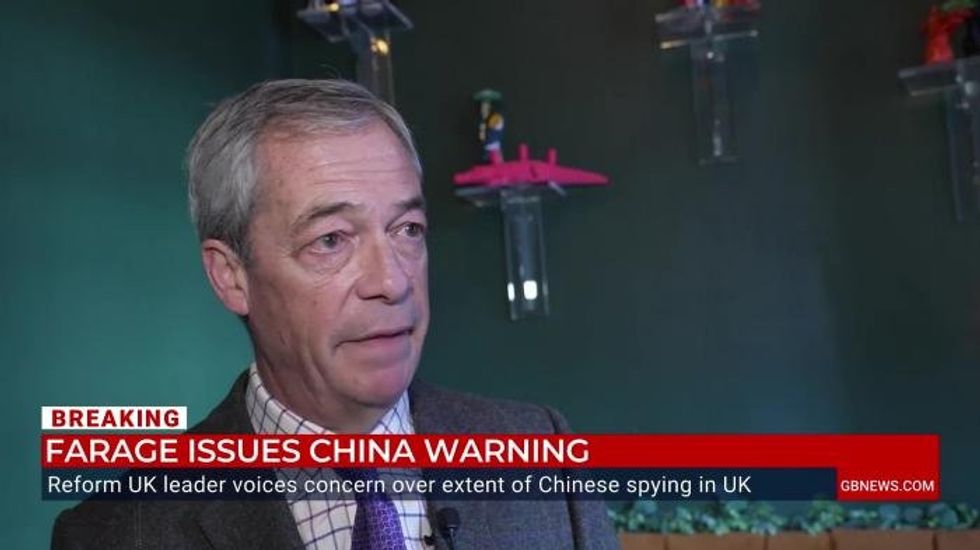
 China could be exploiting Britain's laws to 'piece together classified intelligence' on UK security
British government officials have grown increasingly alarmed that China may be weaponising the UK's transparency laws to accumulate unclassified intelligence on defence and national security matters. According to individuals with knowledge of the situation, government figures have identified what appears to be a coordinated pattern of freedom of information requests targeting sensitive areas. Suspicions have mounted that Beijing could be responsible for a substantial portion of these enquiries. The concern centres on how seemingly innocuous pieces of publicly available data might be combined to expose classified information when viewed collectively. Officials believe hostile actors are systematically probing government departments to extract details that, while individually harmless, could prove valuable when assembled together. Tony Blair's Freedom of Information Act, enacted in 2000, requires applicants to provide their genuine name and a correspondence address when submitting requests. However, government bodies rarely verify these details in practice, and proof of identity is not mandatory under the legislation. This weakness makes tracing the actual source of enquiries extremely difficult for authorities. Conservative MP Alicia Kearns, who serves as shadow national security minister, has demanded ministers close this vulnerability in the system. She urged action to catch out "any Tsarist, Ayatollah-linked or Little Red Book-carrying man pretending to be a Tom, Dick or Harry". Although the legislation already contains multiple exemptions, including provisions protecting national security, and only obliges departments to release unclassified material, officials remain troubled by the potential for exploitation. Intelligence professionals refer to this technique as the "mosaic effect" – where individual data points, harmless in isolation, can be pieced together to reveal sensitive information. LATEST DEVELOPMENTS Iran war likely to create 'surge of illegal migrant crossings into Britain' Iran takes revenge over top security chief death as Israeli couple killed in deadly strikes Trump administration puts ALL US embassies on alert as Washington braces for Iran retaliation strike Within Whitehall, there is particular anxiety about narrowly focused enquiries targeting specific defence programmes, cyber security infrastructure, and the state's relationships with universities and private industry. "There's a growing awareness that FOI is being used by hostile states — and China in particular — specifically in relation to defence matters," one official told the FT. The Ministry of Defence has taken precautionary steps, halting publication of all FOI responses on the government website in February last year. Defence officials attributed this suspension to awaiting a new online publishing system, describing it as a temporary measure whilst continuing to process individual requests directly. Security minister Dan Jarvis addressed Parliament last November, warning that "China has a low threshold for what information is considered to be of value, and will gather individual pieces of information to build a wider picture". Parliament's joint intelligence and security committee highlighted Beijing's "considerable appetite for collecting unclassified information" in its landmark 2023 China report, noting such activity would often fall outside UK criminal law and prove harder to detect. Luke de Pulford, who leads the Inter-Parliamentary Alliance on China, pointed to the "irony" of "a notoriously opaque country using UK transparency laws to find out sensitive information". However, Maurice Frankel of the Campaign for FOI expressed doubt, noting civil servants already reject requests on "jigsaw effect" grounds when they suspect potential misuse. A government spokesperson stated: "National security will always come first." Our Standards: The GB News Editorial Charter