


 GB News
 'Simply unprepared for the chaos!' Keir Starmer handed blunt assessment of 'diminished' UK defences amid Iran war
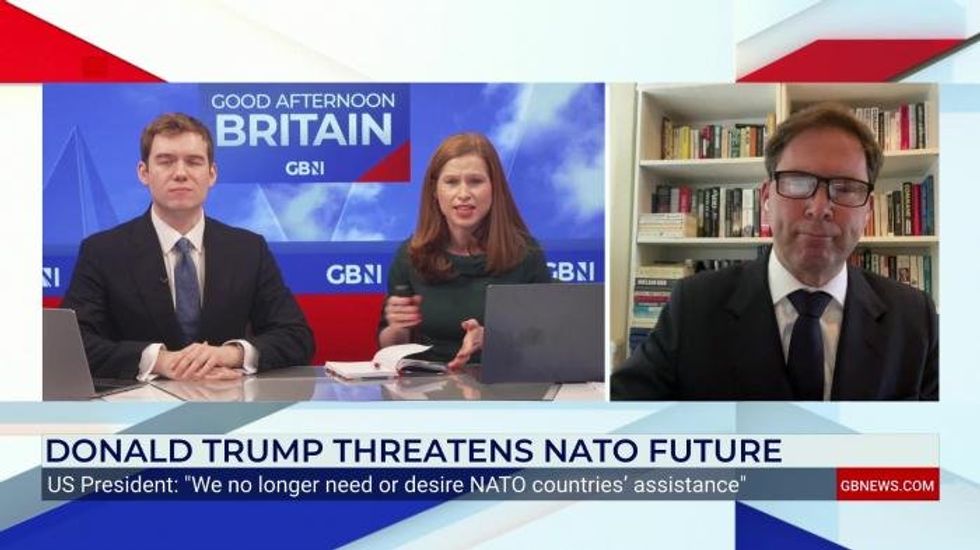
Tobias Ellwood has criticised Britain's involvement in the Iran conflict, arguing the country "cannot blindly follow America" into military action. Speaking to GB News, the former Conservative defence minister expressed concern that the war still lacks any defined strategic aim. "We cannot blindly follow America every time they want to go to war," he said. "That's not what the special relationship is all about." The ex-minister argued Britain's foreign policy should be guided by national interest when international consensus proves elusive. TRENDING Stories Videos Your Say "When you can't have a cohesive foreign policy, you do what is best for all of Britain," he stated. Mr Ellwood emphasised the current Middle East crisis demands skilled diplomacy rather than reactive policymaking. "Ultimately, we're facing a war in the Middle East, and that requires statecraft," he told GB News. The former minister dismissed the relevance of public opinion surveys in shaping Britain's response to the conflict. "You can pluck up polls all you like, but ultimately, we need to explain to the British people, all the British people, the wider context of what's going on in the Middle East," he said. He added: "Let's not get distracted by particular polling. Let's do what's best for Britain, best for Europe, and best for our relationship with America." Mr Ellwood suggested domestic political considerations had compromised the Government's handling of the situation. "I suspect it has been, because some of the decision-making has been poor," he said when asked whether internal politics had influenced ministers. "There was a massive hesitance." LATEST DEVELOPMENTS Nigel Farage makes fresh energy demand to Keir Starmer in fiery PMQs exchange UK chemicals industry in 'fight of its life' as Keir Starmer issued 3 demands to stop plant closures 'Weak and spineless!' Keir Starmer's 'wobbly' position on Iran torn apart by top Tory The former defence minister also offered his assessment of how the conflict began, suggesting the US President had been pressured into military action. "As much as I disagreed with Donald Trump going in in the first place, I think he was pushed himself by Benjamin Netanyahu," Mr Ellwood said. He acknowledged once military operations commenced, a new reality emerged requiring support for American efforts. Mr Ellwood made clear his preferred outcome for the conflict: the removal of Iran's religious leadership. "I want to see the Ayatollah, the theocratic leader, removed," he stated. "I want to see that as an objective, to allow Iran to develop a new chapter in its history." He noted Iran's religious rulers had spent four to five decades destabilising the wider region. However, Mr Ellwood warned of a potential worst-case scenario where the current regime survives in weakened form. "I fear we're going to get a Venezuela light outcome here whereby the regime stays, there's new leadership. They are bruised, they're pummelled, but over time, they get to re-arm, re-group and do it all over again," he cautioned. Our Standards: The GB News Editorial Charter