


 Business Recorder
 When prejudice becomes policy
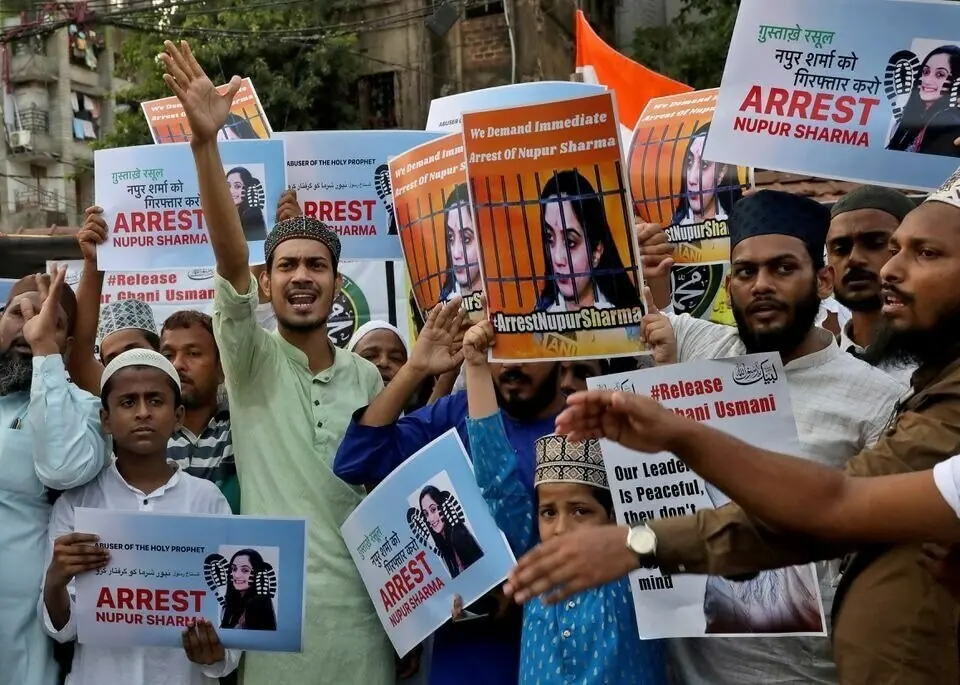
EDITORIAL: The United Nations marked March 15 as the International Day to Combat Islamophobia with Secretary-General António Guterres warning of a “rising tide of anti-Muslim bigotry and hate” worldwide, a concern that reflects a reality many governments have been reluctant to confront with the seriousness it demands. Nearly two billion Muslims continue to face discrimination, exclusion, and, increasingly, violence, both online and in public life, as narratives once confined to the fringes gain legitimacy in mainstream political discourse. The significance of the UN chief’s warning lies in where he locates the problem. Anti-Muslim prejudice is no longer limited to isolated incidents or extremist groups. It is being amplified by political rhetoric, reinforced through policy choices and normalised when echoed by those in positions of authority. When such narratives go unchallenged, they move beyond opinion and begin shaping institutions, laws and public behaviour. Recent global developments have accelerated this trend. The ongoing conflict in Gaza and broader tensions in the Middle East have fed into an already volatile environment where Muslims are increasingly portrayed through the lens of security threats and geopolitical hostility. Monitoring groups in the United States have documented a surge in anti-Muslim incidents, while public discourse has at times slipped into language that generalises and dehumanises entire communities. Such rhetoric, when repeated by lawmakers and influential figures, carries consequences that extend well beyond political debate. Europe presents a similar pattern. The steady rise of far-right political movements has been accompanied by a sharpened focus on immigration and Islam as central themes of political mobilisation. Policies framed around identity and cultural preservation often translate into measures that disproportionately target Muslim communities, reinforcing perceptions of exclusion. In India, the erosion of rights for Muslims under a majoritarian political framework has drawn international concern, particularly in the context of discriminatory legislation and the marginalisation of minority populations. What distinguishes the current phase is the speed and scale at which these attitudes spread. Social media platforms have become powerful amplifiers of misinformation and hate speech, allowing stereotypes and conspiracy theories to circulate widely with little or no accountability. As Guterres noted, when online spaces reinforce prejudice rather than challenge it, they contribute to a broader environment in which discrimination becomes normalised. The consequences are not abstract. Anti-Muslim rhetoric translates into real-world harm, including harassment, vandalism of mosques and targeted violence. The 2019 Christchurch attacks, which led to the establishment of the International Day to Combat Islamophobia, remain a stark reminder of how unchecked hatred can culminate in tragedy. Yet the persistence of such incidents suggests that the underlying drivers of intolerance have not been adequately addressed. Governments bear primary responsibility for reversing this trend. Legal frameworks must protect individuals from discrimination without stigmatizing entire communities. Security policies must be grounded in evidence rather than prejudice. Public officials, in particular, have a duty to avoid language that fuels division or legitimises exclusion. Silence in the face of such rhetoric only deepens the problem. Technology companies also have a critical role. The algorithms that shape online discourse often prioritise engagement over accuracy, allowing inflammatory content to spread more rapidly than factual information. Efforts to moderate hate speech have remained inconsistent, and the balance between free expression and accountability continues to be contested. Without stronger oversight, digital platforms will remain conduits for the very narratives that governments claim to oppose. The observance of March 15 is therefore more than a symbolic gesture. It is a reminder that the principles of equality, dignity and coexistence require active defence. For countries like Pakistan, which played a leading role in establishing this international day, the challenge is to translate advocacy into sustained engagement at global forums while promoting tolerance within their own societies. Islamophobia is not an isolated prejudice. It is part of a broader pattern in which fear and exclusion are increasingly used as tools of political mobilisation. Addressing it requires more than declarations of intent. It demands consistent policy action, responsible leadership and a willingness to confront narratives that divide rather than unite. Copyright Business Recorder, 2026