


 Business Recorder
 Arab-Islamic countries call on Iran to halt attacks against brotherly states
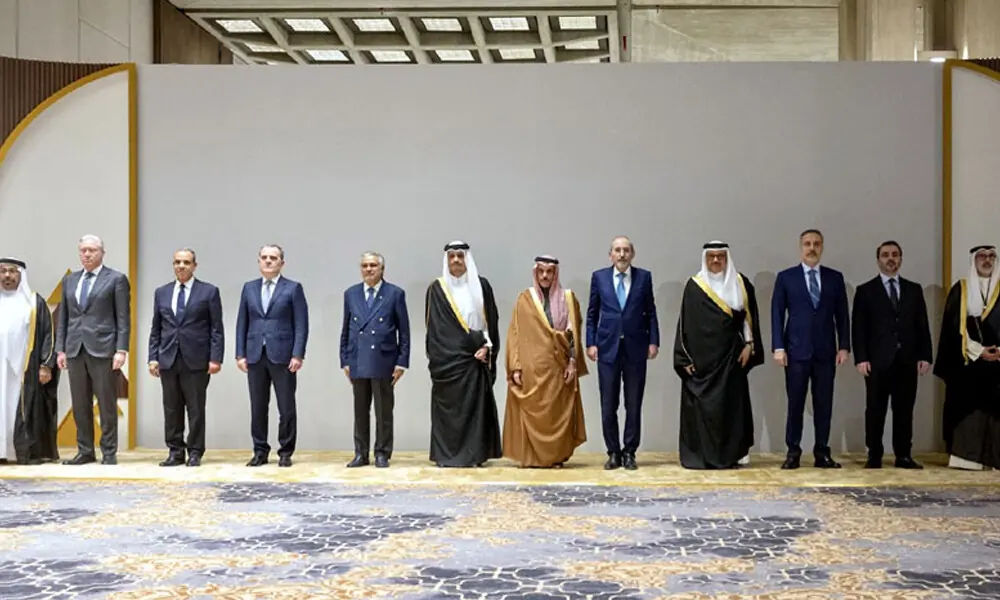
A Consultative Ministerial Meeting of Foreign Ministers of Arab-Islamic countries, held in Riyadh, has called on Iran to immediately halt its attacks against Gulf Cooperation Council countries, Jordan, Azerbaijan and Turkiye. In a joint statement issued after the meeting, the Foreign Ministers affirmed the necessity of respecting international law, international humanitarian law, and the principles of good neighborliness, as a first step toward ending the escalation, achieving security and stability in the region, and promoting diplomacy as a means to resolve the crisis. The foreign ministers reaffirmed support for the security, stability and territorial integrity of Lebanon. They also condemned Israel’s aggression against Lebanon and its expansionist policy in the region. Meanwhile, Deputy Prime Minister Ishaq Dar has expressed complete support for the territorial integrity, sovereignty, and political independence of all brotherly regional countries. Speaking at a meeting of the Foreign Ministers of Arab-Islamic countries in Riyadh, he emphasised the need to end all attacks against their respective territories. Underscoring the importance of preserving the unity of the Muslim Ummah, the Deputy Prime Minister called for a swift end to the ongoing conflict and reiterated Pakistan’s call for dialogue and diplomacy. Dar stressed the need to address the root causes of the ongoing crisis affecting the wider region and, in this regard, condemned in the strongest possible terms Israel’s continued aggression and provocations against regional countries. He also condemned the unwarranted attacks on civilians, as well as on energy and critical infrastructure in the region, calling for an end to all such attacks. He urged refraining from any actions that may undermine the energy security of the region and beyond, thereby exacerbating global economic challenges. The Deputy Prime Minister apprised the participants of Pakistan’s ongoing diplomatic efforts to resolve the crisis and reaffirmed Pakistan’s desire to continue playing a constructive role in helping overcome regional security challenges.