


 Business Recorder
 Al-Quds Day
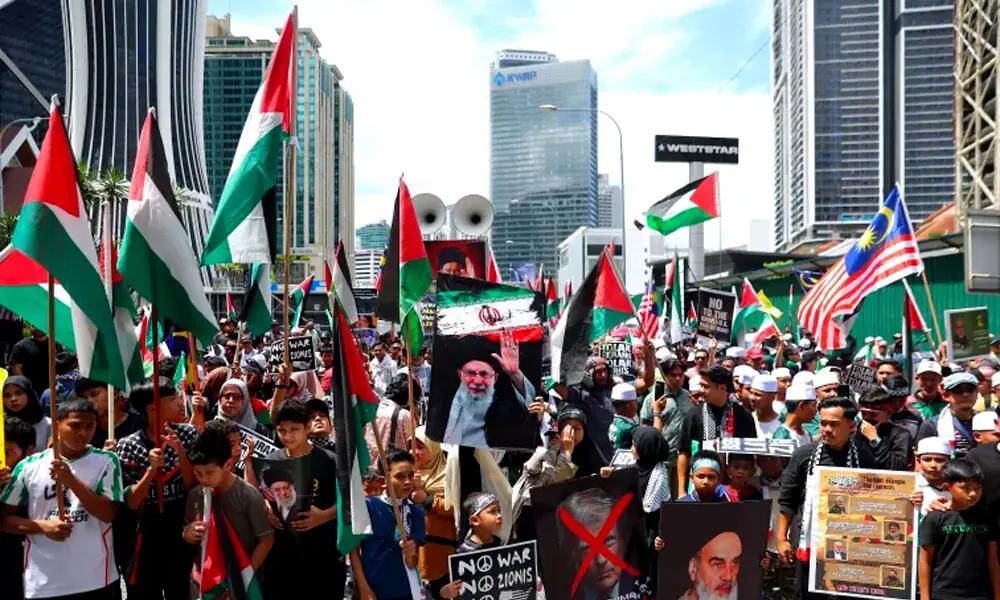
International Al-Quds Day, first proclaimed in 1979 by Ayatollah Ruhollah Khomeini in the aftermath of the Iranian Revolution, has evolved into one of the most visible global expressions of solidarity with the Palestinian struggle. Observed annually on the last Friday of Ramazan, the event draws attention to the continuing occupation of Palestinian lands by Israel, particularly the status of Jerusalem—known in Arabic as Al-Quds. For millions across the Muslim world and beyond, the day represents a moral and political reminder that the Palestinian question remains unresolved despite decades of diplomacy and numerous UN resolutions. This year’s (March 13) observance carried unusual urgency. The genocide in the Gaza Strip, along with escalating settler violence in the occupied West Bank, has intensified global outrage. Images of humanitarian catastrophe, devastated neighbourhoods, and mass displacement have reinforced the sense that the Palestinian people remain trapped in a cycle of occupation, blockade, and impunity. Against this grim backdrop, Al-Quds Day rallies have become a vehicle not only for solidarity but also for moral protest against what is seen as the failure of the international system, and the duplicity of Western powers in upholding justice and human rights. The regional context added another dimension to this year’s demonstrations. The escalating confrontation involving Iran and the strategic axis of Israel and the US turned Al-Quds Day into a broader symbol of resistance to Western-backed Israeli aggression in the Middle East. In this climate, Iran is increasingly viewed as a state willing—and capable—of challenging Israeli military dominance and championing the Palestinian cause at a time when many Arab governments appear hesitant or divided. For many across Asia, Africa, and the wider Muslim world, the Palestinian struggle is understood through the lens of anti-colonial resistance and self-determination. Within that framework, Iran’s opposition to Israeli policies is viewed less as ideological expansionism and more as defiance against a regional order that favours an occupying state over an occupied people. This geopolitical tension partly explains Britain’s decision to ban this year’s Al-Quds Day march in London, an event held annually for more than four decades. Authorities cited fears of serious public disorder and clashes between rival demonstrators amid heightened Middle East tensions. Although a stationary protest was allowed, the unprecedented ban reflects the sensitivity of the moment and underscores the concern voiced by many observers that advocacy for Palestinian rights—or criticism of Israel’s military actions—is increasingly constrained in Western societies. It is important to note that hundreds gathered in central London for the annual Al-Quds Day demonstration under a heavy police presence. At the same time, the Jewish state continues to pursue its ambition of creating a Greater Israel through military control of Gaza, expansion of settlements in the occupied West Bank, and the broader goal of annexing territory from neighbouring Arab countries. Whether in the streets of Tehran, Karachi, or London, the Al-Quds Day observance continues to embody a simple but powerful message: justice for Palestine, and resistance to those who deny it. Copyright Business Recorder, 2026