


 Business Recorder
 Iran urged to halt all attacks on Gulf states
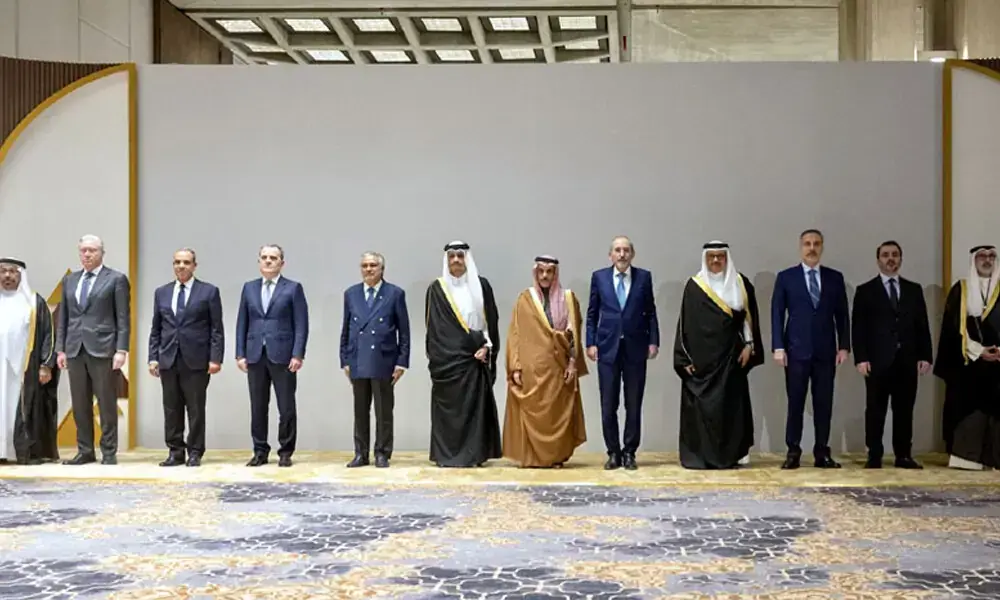
ISLAMABAD: Arab and Islamic ministers for foreign affairs on Thursday unanimously called on Iran to immediately halt all attacks and unconditionally cease any provocative acts or threats against neighbouring states. In a joint statement issued at the conclusion of a two-day consultative ministerial meeting in Riyadh, the ministers stressed the need for Iran to comply with United Nations Security Council Resolution 2817 (2026). The resolution demands an immediate halt to all attacks, an unconditional cessation of provocative acts, and the termination of support, financing, and arming of affiliated militias in Arab countries. The statement noted that Iran’s actions serve its own objectives while undermining the interests of neighbouring states. The ministers also urged Tehran to refrain from any measures or threats that could obstruct international navigation in the Strait of Hormuz or jeopardise maritime security in the Bab al-Mandab strait. Foreign ministers from Azerbaijan, Bahrain, Egypt, Jordan, Kuwait, Lebanon, Pakistan, Qatar, Saudi Arabia, Syria, Turkiye, and the United Arab Emirates (UAE) participated in the consultative meeting, which was hosted by Saudi Arabia on March 18-19. Deputy Prime Minister and Foreign Minister, Ishaq Dar, attended the sessions. During the meeting, ministers discussed Iranian attacks on Gulf Cooperation Council countries, Jordan, Azerbaijan, and Turkiye, condemning the use of ballistic missiles and drones targeting residential areas, civilian infrastructure – including oil facilities, desalination plants, airports, residential buildings – and diplomatic premises. The joint statement said such attacks “cannot be justified under any pretext or in any manner whatsoever.” The ministers reaffirmed the right of states to self-defence under Article 51 of the United Nations Charter and called on Iran to respect international law, international humanitarian law, and the principles of good neighbourliness. They emphasised that compliance is a first step towards ending the escalation, ensuring regional security and stability, and promoting diplomacy as a means to resolve the crisis. The statement also highlighted that future relations with Iran would depend on its respect for the sovereignty of states, non-interference in their internal affairs, and refraining from using military capabilities to threaten regional countries. In addition, the ministers reaffirmed support for Lebanon’s security, stability, and territorial integrity, backing the government’s decision to limit weapons to the state. They also condemned Israel’s aggression against Lebanon and its expansionist policies in the region. The ministers committed to continued consultation and coordination to monitor developments, assess emerging issues, and adopt legitimate measures to protect their security, stability, and sovereignty while halting Iranian attacks on their territories. Copyright Business Recorder, 2026