


 The Advocate
 Struggling with daily HIV meds? Monthly shots may be the answer
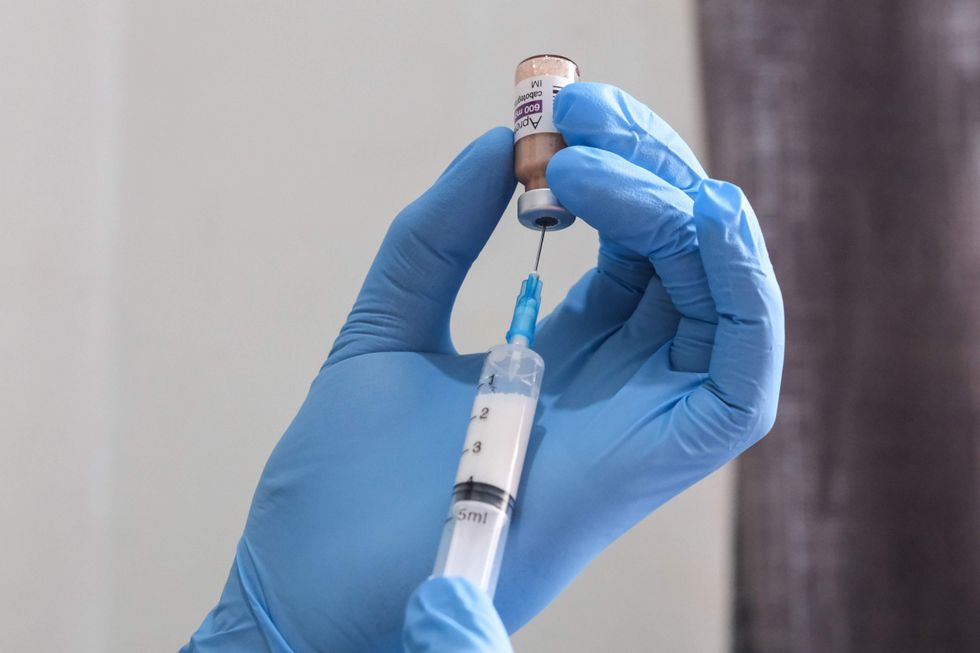
For many people living with HIV , staying healthy depends on something deceptively simple: taking a pill every day. But for those navigating unstable housing, stigma, mental health challenges, or addiction, that daily routine can be hard to maintain. A new study suggests there may be a better option. Keep up with the latest in LGBTQ + news and politics. Sign up for The Advocate's email newsletter. Researchers found that long-acting HIV injections given once a month helped people stay on treatment far more consistently than daily pills, cutting treatment failure nearly in half among patients who had previously struggled to keep up with medication. “These are people who have struggled with daily adherence for years and years,” Aadia Rana, a University of Alabama researcher who led the study, told The Advocate . Despite these challenges, participants getting shots “still came, showed up and got their injections.” Related : Twice-yearly injectable lenacapavir, an HIV-prevention drug, reduces risk by 96% Related : An HIV breakthrough is here. Let's not let it go to waste The study, published by the New England Journal of Medicine , involved 453 people living with HIV who had a history of difficulty sticking to daily treatment. After helping participants stabilize on oral medication, researchers randomly assigned some to remain on pills and others to switch to monthly injections of cabotegravir and rilpivirine. People taking daily pills fell off their treatment plans nearly twice as often as those receiving injections, researchers found. They suggested that HIV care today is highly effective, but only if people can stay on it. Treatment suppresses the virus, protects the immune system, and prevents transmission. Missing doses, even intermittently, can allow the virus to rebound, making it harder for the body to resist infection and some cancers. People fall out of care for all kinds of reasons: forgetting doses, struggling to afford and access prescriptions, or avoiding pharmacies and clinics because of stigma. For people dealing with mental health conditions or substance use, the challenges can be even greater. “We saw that there is a cadre of individuals who consistently are struggling,” Carl Fichtenbaum, a University of Cincinnati researcher who worked on the study, told The Advocate . Fichtenbaum said the gap urged the research team to “look for other solutions.” Long-acting injections may be one of them. In March 2019, the research team began enrolling people in the study who had previously struggled with daily HIV treatment. Eventually, 306 participants were enrolled in a successful medication plan. Over time, people taking the pills fell off track nearly twice as often as those getting shots, the researchers said. The shots were “superior in preventing regimen failure,” Rana said. “There was a lot more success in those people who were taking the monthly injectables.” Related : The HIV response on a cliff-edge: advocacy must drive urgent action to end the epidemic Related : FDA approves breakthrough drug that reduces risk of contracting HIV by 96 percent In fact, the injection-based plan worked so much better that the research team chose to modify their experiment. Originally, participants had to take daily pills for six months before switching to shots. But since participants were much less likely to keep up with the pills, the researchers shortened that initial window to just 12 weeks, Fichtenbaum said. Participants didn’t leave these appointments empty-handed. To motivate them to keep coming, the researchers offered small payments each visit, with the dollar amount determined by how many appointments they made and how well their treatment plan was working. Christian Grov, an HIV prevention researcher at the City University of New York who was not involved in the study, told The Advocate that there is a “consistent finding” that people are more likely to stay engaged in care when treatment is delivered through periodic injections. As both HIV treatment and prevention shots are further developed, the time between doses is widening. One HIV prevention shot formulated by Gilead Sciences, known as lenacapavir, only needs to be administered twice a year, according to the World Health Organization . Between both treatment and prevention, long-acting forms of HIV care are “very promising,” with “the potential to be game changing for HIV prevention,” Grov said. That is, “if we can get it into the hands of people.” But getting medication that prevents or treats HIV out to those who need it is not always simple. Many participants in the study, for example, reported mental health issues or engaged in hazardous alcohol use. Dozens tested positive for drugs, including cocaine and methamphetamine. Related : How an Injectable HIV Treatment Would Change Lives Related : 'New pathway' to cure for HIV discovered using tech from COVID-19 vaccine “This was a group that really struggles with not just taking their medications, but often engaging with care,” she said. “This is a population that could benefit from this medication.” What completes the puzzle for comprehensive HIV care, Rana said, is addressing real-world factors that contribute to the spread of HIV and prevent people from accessing the care they need. “Whether it’s transportation, lack of insurance, or challenges with substance use or mental health, those will still need to be addressed,” she said. “Need for that doesn’t disappear with these injections.” This article was written as part of the Future of Queer Media fellowship program at The Advocate, which is underwritten by a generous gift from Morrison Media Group . The program helps support the next generation of LGBTQ+ journalists.