


 Business Recorder
 Cuba refuses to negotiate president’s term in talks with United States
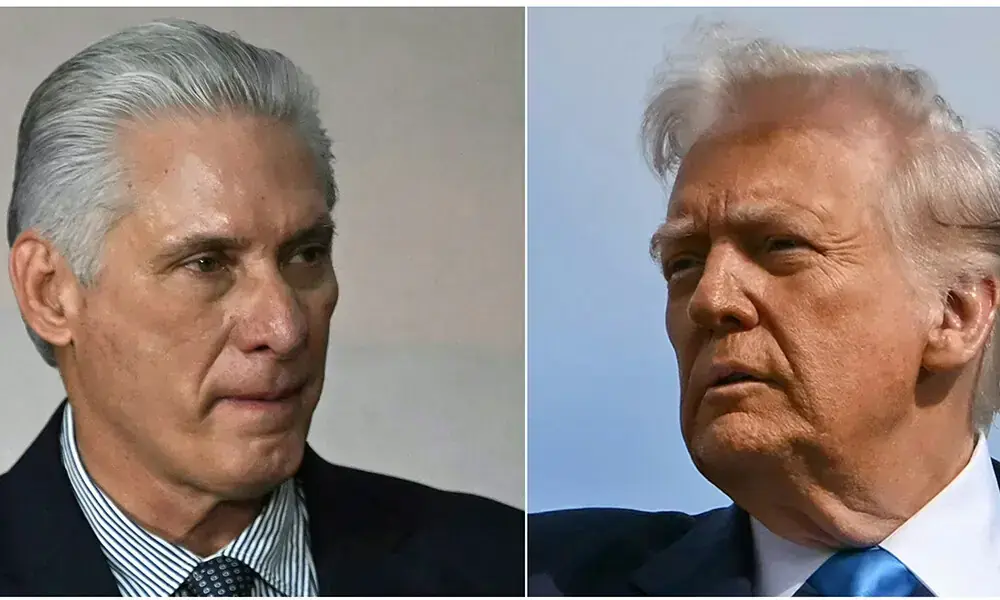
HAVANA: Cuba on Friday rejected any suggestion that its political system or the term of its president were subject to negotiation in talks with the United States, following reports that Washington sought to remove Cuban President Miguel Diaz-Canel from power. “I can categorically confirm that … the political system of Cuba is not up for negotiation, and of course neither the president nor the position of any official in Cuba is subject to negotiation with the United States,” Deputy Foreign Minister Carlos Fernandez de Cossio told a press conference. Cuba said a week ago that it had entered talks with the U.S. government as an oil blockade imposed by US President Donald Trump pushes the Communist-run nation deeper into economic crisis, and as Trump has said he can do “anything I want” with Cuba, a sovereign neighbor. Speaking later to a group of foreign activists bringing humanitarian aid to Cuba, Diaz-Canel said Cuba was preparing for a possible US “aggression.” “We’re not just crossing our arms. In the first place, we recognize that there could be aggression against Cuba,” said Diaz-Canel, who has struck a more defiant tone recently. He said on social media on Tuesday that “any external aggressor will face an impenetrable resistance.” USA Today, citing two sources with knowledge of the Trump administration’s plans, reported before Cuba’s announcement that Trump was preparing an economic deal with Cuba that would relax trade restrictions but include an “off-ramp” for Diaz-Canel. The New York Times , citing four people familiar with the talks, later reported that the Trump administration was seeking to push Diaz-Canel from power with two years remaining on his term as president and five years left as leader of the Communist Party. Both reports said the US proposal would leave untouched the family of former presidents Fidel and Raul Castro. Fidel Castro died in 2016 but Raul Castro, 94, remains highly influential eight years after handing the presidency over to Diaz-Canel, 65. Such a deal would resemble what has happened in Venezuela, where the United States deposed President Nicolas Maduro on January 3. Rather than attempt to install an opposition government, the U.S. has cooperated with acting President Delcy Rodriguez, Maduro’s former vice president who took power when US forces whisked away Maduro in an early morning raid. Authority spread widely Authority in Cuba is spread widely among senior Communist Party leaders, other government officials and the armed forces, unlike the concentration of power that characterized the Castro years from the start of the 1959 revolution until Diaz-Canel’s term began in 2018. De Cossio, who has led the foreign ministry’s office on U.S. relations, declined to offer further details of the bilateral discussions, leaving unanswered the questions of where and when they are taking place. Cuba says 32 of its citizens killed in Maduro extraction But he did say there were plenty of topics of mutual interest, including trade between the two countries that has been severed by the comprehensive U.S. economic embargo against Cuba. He also mentioned longstanding economic compensation that each country seeks. Cuba has claims against the United States for damages caused by the embargo, while there are 5,913 claims from Americans whose properties were nationalized in Cuba after the 1959 revolution that brought Fidel Castro to power. “These are very complex issues that can be discussed, but they require dialogue,” de Cossio said. “They require sitting down and are legitimate matters.”