


 iefimerida
 Koons Meets the Stone Age: 40,000 Years of the Female Form at Athens’ Cycladic Museum
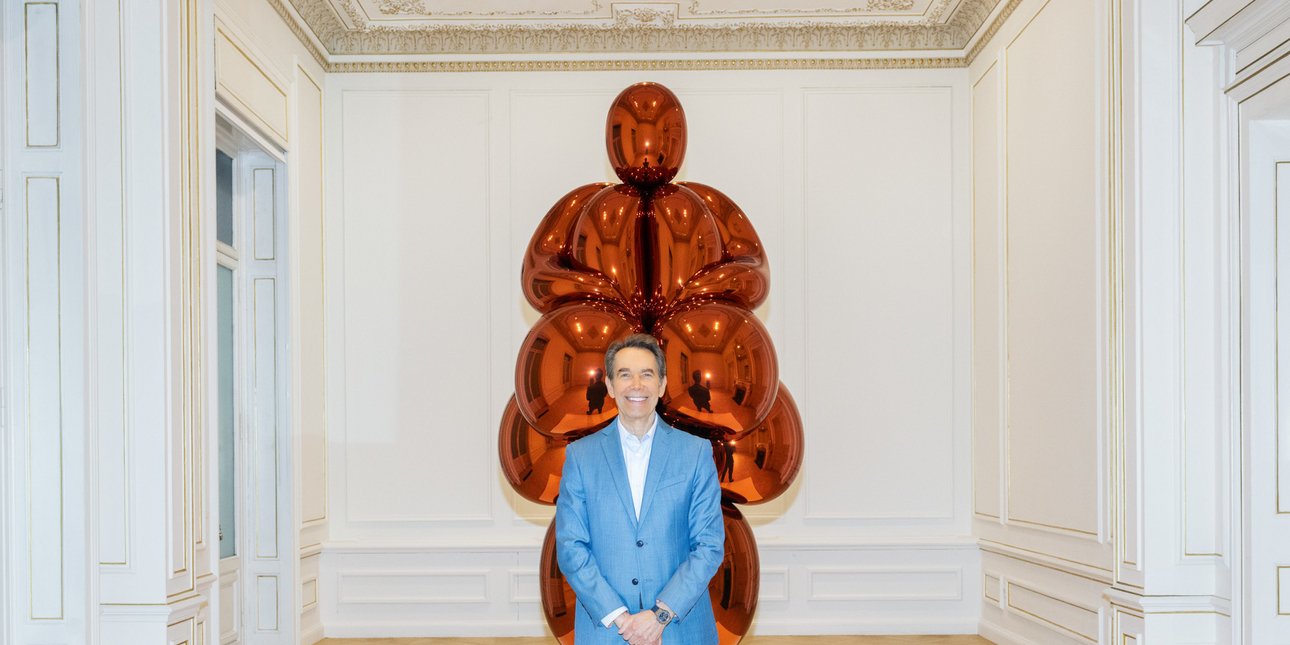
A monumental stainless steel sculpture by American artist Jeff Koons went on display Friday at the Museum of Cycladic Art, anchoring a new exhibition that traces the evolution of the female archetype from Paleolithic ivory carvings to 21st-century high-gloss metal. The exhibition, which runs through August 31, features Mr. Koons’ 2.5-meter-tall "Balloon Venus Lespugue (Orange)" in a cross-temporal dialogue with replicas of "Venus" figurines dating back nearly 30,000 years. By placing a contemporary masterpiece alongside palm-sized prehistoric icons, curators aim to explore universal themes of fertility, beauty, and the enduring power of the human form. "It is a great honor to exhibit this work in dialogue with these ancient figures," Mr. Koons said at the opening. He noted that his "Balloon Venus" was directly inspired by the original Venus of Lespugue, a mammoth-ivory carving from approximately 26,000 B.C. Mr. Koons added that his artistic lineage extends through the minimalist silhouettes of the Cycladic era to modernists like Brancusi and Giacometti. Curators Panagiotis Iosif and Ioannis Fappas have eschewed a traditional, linear art history narrative. Instead, Mr. Iosif and Mr. Fappas focused on the shared visual language of the Paleolithic era, featuring certified replicas of the Venus of Willendorf and the Venus of Dolní Věstonice. The ancient works, characterized by exaggerated hips and breasts, reflect a prehistoric focus on vitality that Mr. Koons reinterprets through the lens of pop culture and industrial precision. The exhibition comes as Athens cements its status as a year-round cultural hub, blending its deep archaeological roots with high-profile contemporary installations. Organizers said the show highlights how the female body has remained art’s most consistent "vessel of meaning" across 400 centuries. "The body is a bridge across time," Mr. Fappas said, noting that the exhibition provides a rare opportunity to see how the exaggerated symbolism of the Stone Age continues to influence the aesthetics of the postmodern world. Διαβάστε περισσότερα στο iefimerida.gr