


 Ruptly
 Solution for pollution - Giant air purifying towers rolled out in Jaipur amid rising emission levels
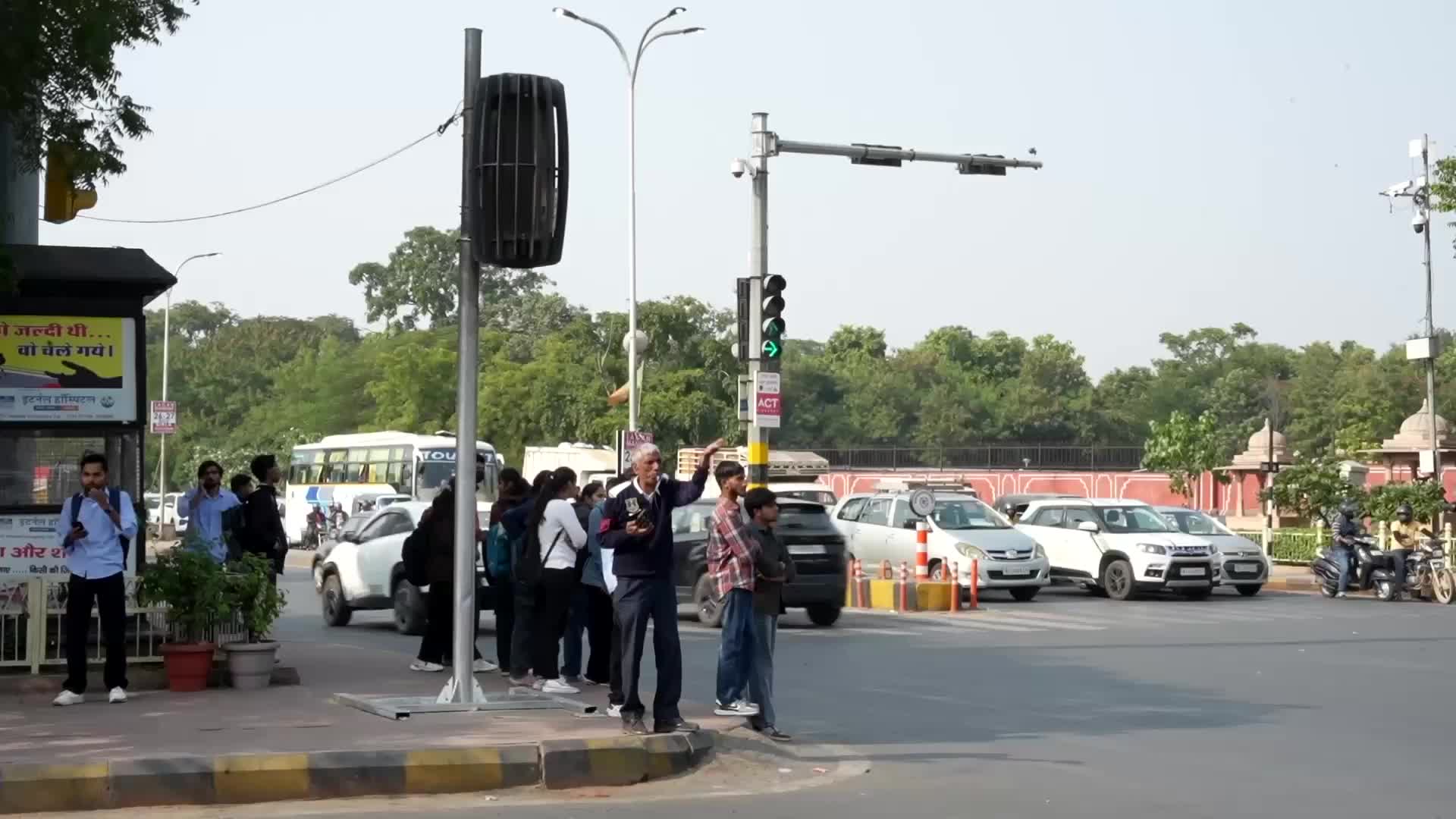
"Large air purifying units were installed across Jaipur in a first-of-its-kind national initiative to tackle worsening pollution, as poor air quality continues to grip several Indian cities. Footage filmed on Wednesday shows the air-cleaning systems mounted at busy traffic junctions and pedestrian zones. The Particulate Matter Reduction System (PAMARES), standing around 8 feet tall (2.4 metres), will run continuously to filter dust, smoke, and harmful pollutants at ground level, cleaning nearly one million cubic metres of air per hour. "In a radius of 20 metres, 360 degrees, the positive ions go away. All the particulate matter is of minus. The positive ions pull the negative ions towards them and deposit them in this unit. The fine dust gets deposited here. The air becomes clean," explained Kanwar Kanak Singh, an air purifier supplier. Many residents welcomed the initiative and believe the systems should be installed city-wide. "It is a good thing. But it should be increased. The air dust particles stick to it. It should be cleaned every month. So that it can function properly," said a local. "The more it is installed, the more surface area will increase, and the more things will be cleared. The pollution will be reduced," added another. Devendra Goyal, Enviro Concept, argues the programme is one of several measures introduced by the Indian government amid worsening air quality. "The government is going to minimise the [use of] fossil fuels like coal and diesel. Start the work on solar green energy, also because the main source of air pollution is the thermal power plant and automobile pollution and some steel industries. That's why the government and we are also doing so many improvements and innovations to improve the air quality," he said. It comes as Jaipur's Air Quality Index (AQI) reading surpassed 190, designating it as 'unhealthy', increasing the likelihood of health risks. Air pollution in India is estimated to contribute to around 1.7 million deaths annually, according to health researchers. The impact is especially severe during winter, when stagnant winds and cooler temperatures trap pollutants close to the ground."