


 Ruptly
 Final furlong! Uruguay receives go-ahead for export of top race horses to China
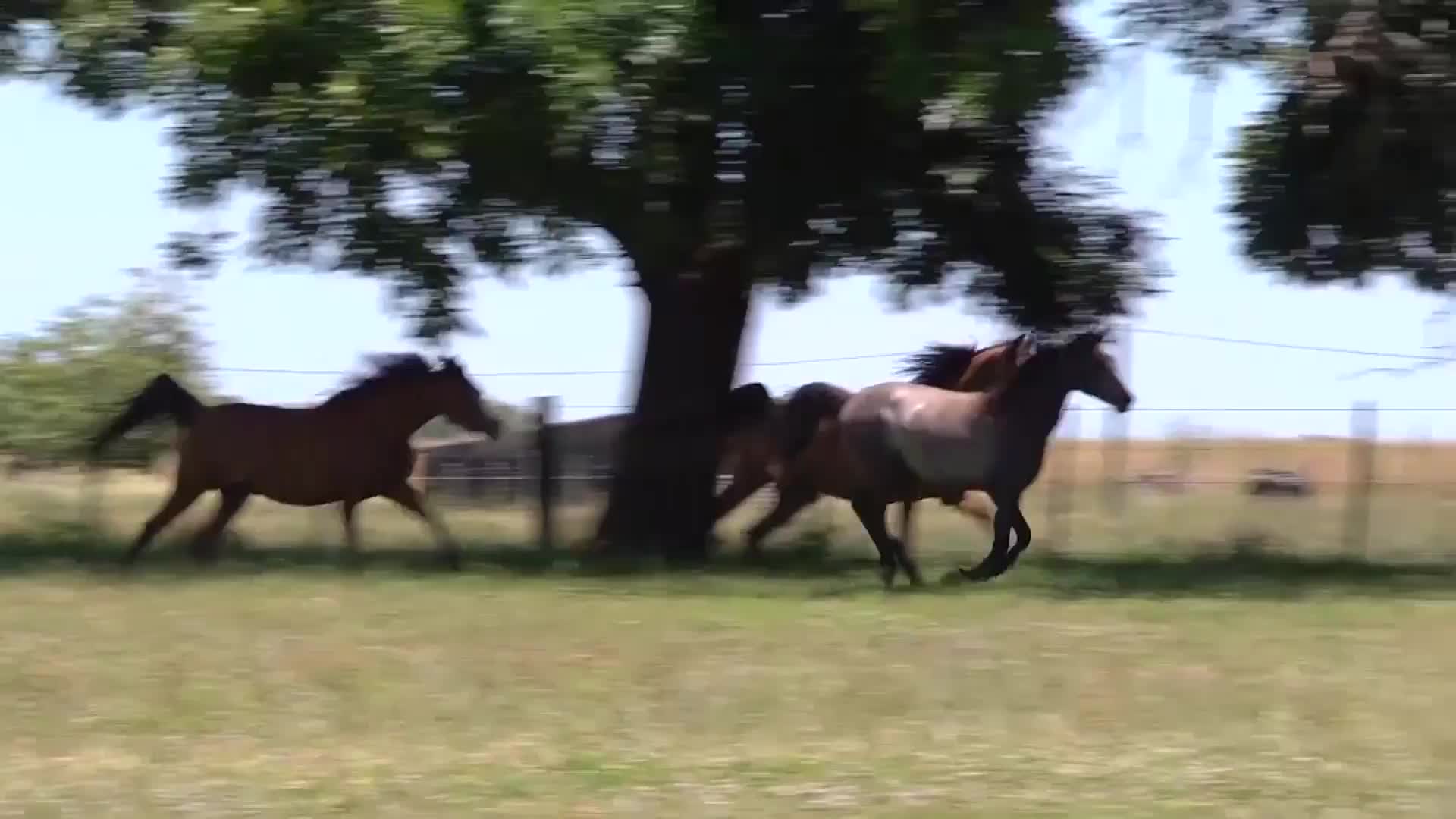
"Uruguay took a strategic step in expanding its equestrian industry with the export of sport horses to China. These are mainly equines intended for the discipline of endurance, a modality in which the South American country has built an international prestige thanks to the genetic quality, resistance and preparation of its animals. In the footage filmed on Thursday, horses can be seen running as part of their training at the La Rabida equestrian center in Montevideo, Uruguay, where they also receive medical and psychological treatment. As part of the family business, Luis Puig, breeder and exporter of Arabian Horses in Uruguay, highlights that the opening of the Chinese market will further boost demand and they project exponential growth in the coming years. "Without a doubt for Uruguay it will be a before and after. China is very interested in buying horses, specifically from Uruguay", said Luis Puig. Endurance horses are those that participate in endurance races, an equestrian discipline that tests the speed and resistance of the horse and the strategy of the rider over long-distance routes. The main objective is not only to win but to finish the race in good physical condition, which requires extensive physical and psychological preparation and a deep knowledge of the animal by the rider. Uruguay has consolidated itself as an elite country in horse breeding. Its natural pastures, open sky breeding and extensive management favor the development of resistant horses, with great bone capacity and a physique highly valued around the world. "We are a very tiny country and we produce many good horses. Other countries are much bigger and they do not achieve this quantity in proportion", explained Paula Etchamendi, administrator of La Rabida, one of the most traditional ranches in the country in the breeding of Arabian horses. The ability of Uruguay to produce elite horses, despite its territorial size, is a source of pride for breeders and a differential recognized worldwide. Uruguay began exporting sport horses to China in October 2025, after the Ministry of Livestock, Agriculture and Fisheries (MGAP) confirmed the completion of the sanitary authorization process. The official opening of the market became effective once China approved the International Veterinary Certificate, even though the initial sanitary agreement had already been reached in 2024."