


 Ruptly
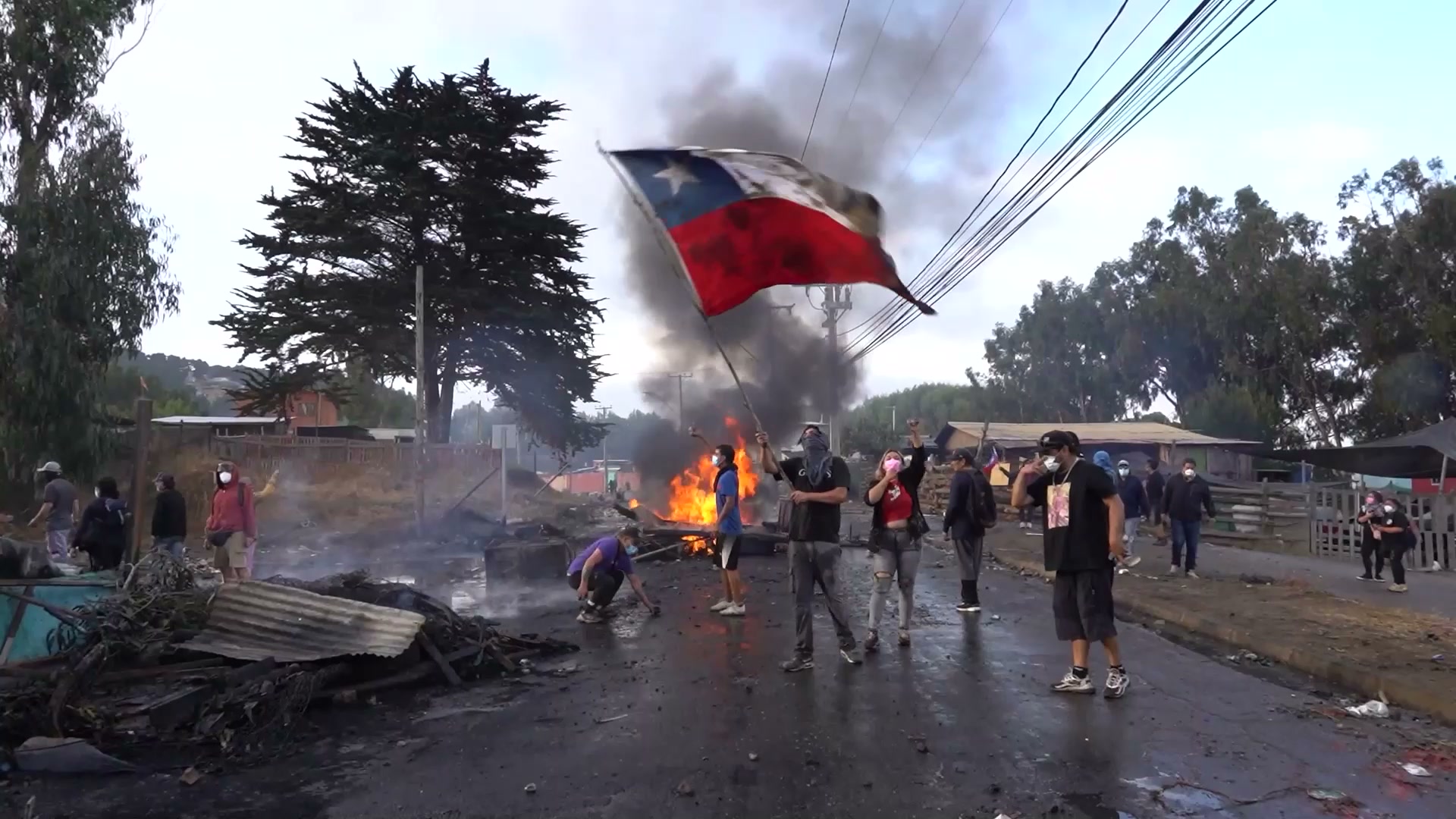
 Barricades set on fire as protesters clash with police during violent settlement eviction in Chile
"Hundreds of residents of the megatoma (informal settlement) in San Antonio province in the Valparaiso region of Chile confronted riot police on Monday to prevent the eviction of land owned by Inmobiliaria San Antonio S.A., which for years has been occupied by hundreds of families without legal permission. Footage filmed on January 12 shows a confrontation between San Antonio residents and Chilean National Police riot officers. Using stones, wood, and firecrackers, the residents managed to push back the security forces. An estimated 2,000 families are facing eviction. According to residents, occupying the land is a desperate measure due to the lack of access to dignified housing. 'We have to have housing. Just as the State does not give us housing, we have to take it (the land). But the rich have everything fenced in this country,' said Marco Aurelio Gonzalez, a San Antonio resident. The government and the owners tried to negotiate a solution so that part of the land could be sold and developed for formal housing through cooperatives. However, these negotiations were not successful, and it was decided to expropriate 100 hectares for a housing project, while the remaining 115 hectares will be subject to eviction. Residents insist that their struggle is not about illegality, but about necessity. 'We are fighting for land since the State does not give it, does not give a plot, does not give us a dignified house. Because here the rich are the ones who rule this country,' argued Marco Aurelio Gonzalez. The housing deficit in Chile and the high cost of buying or renting pushes low-income citizens to seek irregular housing alternatives through the occupation of public or private land. In Chile, these are known as tomas or camps, mainly located on surrounding hills, which develop improvisationally and over time become large residential areas without public services and outside State control. According to data from the organization Techo Chile in 2024, there are 1,428 settlements of this type in the country where 120,584 families live, almost half a million people. "