


 Daily Finland
 Finland rules out military role in Persian Gulf: FM
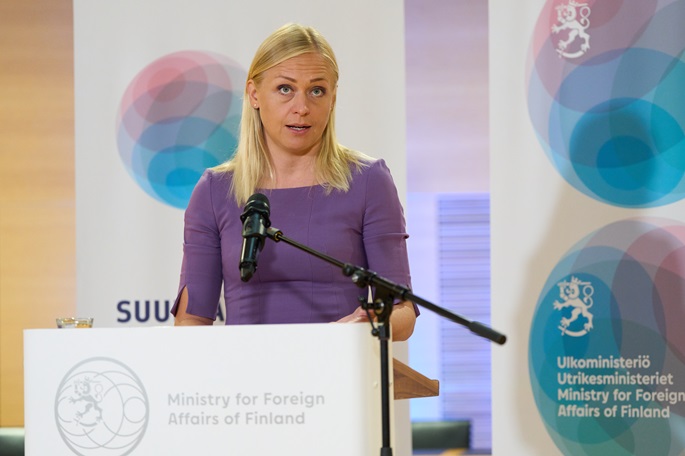
Foreign Minister Elina Valtonen said on Saturday that Finland has no intention of engaging in military activity in the Persian Gulf, reported Xinhua, quoting national broadcaster Yle. Speaking to Yle, Valtonen underlined that Finland would not send equipment to the region, although she said a staff officer contribution could be considered. "Finland hopes that military action will end as soon as possible, and that violence against civilians and attacks on civilian infrastructure will stop immediately," she said. Valtonen said the parties should return to negotiations, warning that, at worst, prolonged instability could further disrupt global trade, drive up prices, and weaken international security more broadly. Valtonen also stressed that NATO countries would not take part in the Middle East conflict alongside the United States. Her remarks were widely seen as a clarification of a post published late Friday on X by President Alexander Stubb, who said Finland had joined a statement by several European countries expressing support for efforts to facilitate secure transit through the Strait of Hormuz. Stubb wrote on X that Finland, together with its close partners, had joined a joint statement on the situation in the Persian Gulf, particularly the Strait of Hormuz. The statement calls on all countries to respect international law and uphold the principles of international security. It adds that the participating countries stand ready to contribute to appropriate efforts to ensure safe passage through the strait. Earlier this week,Stubb said that as a defensive alliance NATO should stay out of the war in Iran. On Feb. 28, Israel and the United States launched joint strikes on Tehran and several other Iranian cities, killing Iran's then Supreme Leader Ali Khamenei, along with senior military commanders and civilians. Iran responded by launching waves of missile and drone strikes targeting Israel as well as U.S. bases and assets in the Middle East, effectively closing access to the Strait of Hormuz, a key waterway through which about 20 percent of the world's oil passes. On March 15, U.S. President Donald Trump said he had "demanded" that several countries heavily reliant on Middle East oil join a coalition to escort vessels through the Strait of Hormuz. Multiple European countries and the European Union have since voiced reluctance or outright opposition to Trump's call. Stressing the need for a diplomatic solution and warning against further regional escalation, European leaders have underscored that the current conflict should not evolve into a NATO mission or draw Europe into a broader war.