


 Business Recorder
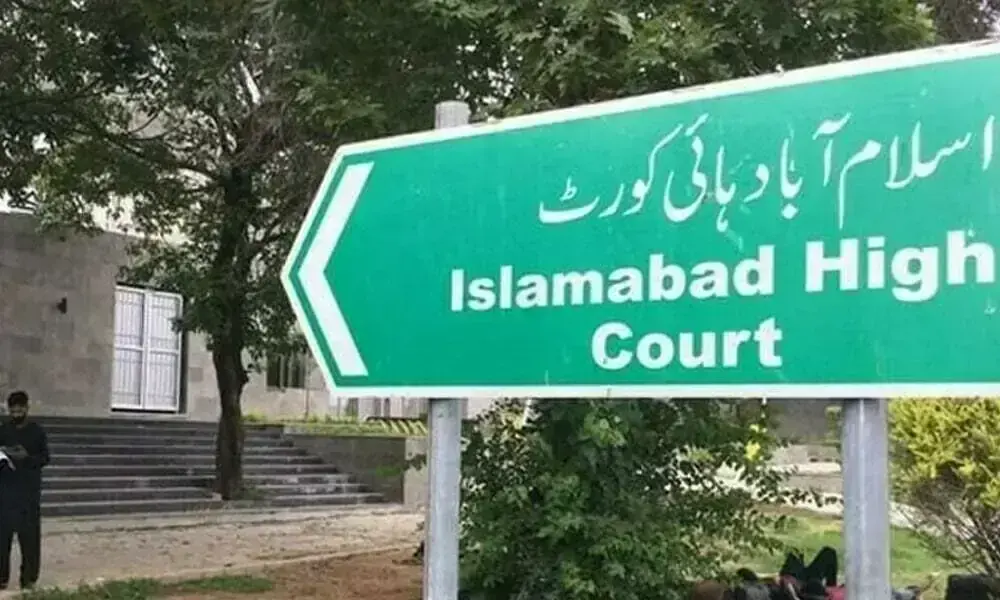
ISLAMABAD: The Islamabad High Court (IHC) will take up petitions of Pakistan Tehreek-e-Insaf (PTI) founder Imran Khan and his spouse Bushra Bibi against their conviction in the £190 million Al-Qadir Trust case on March 31. According to the cause list for next week, a division bench of IHC comprising Chief Justice of IHC Justice Sardar Muhammad Sarfraz Dogar and Justice Muhammad Asif will hear the appeals, seeking suspension of Imran and his spouse’s sentences. An accountability court in Islamabad had sentenced Imran and Bushra Bibi to 14 and seven years in prison, respectively, on Jan 17, 2025. The bench, in the last hearing, imposed Rs 100,000 fine on the National Accountability Bureau (NAB) for using “delaying tactics” in the corruption case. The NAB had submitted an application raising a preliminary jurisdictional objection, arguing that the appellants’ application under Section 426 of the Criminal Procedure Code (CrPC) was premature. It stated that in view of the foregoing legal submissions, binding judicial precedents, and the express language of Section 426, Cr.P.C., 1898, it is most respectfully prayed that this court may graciously be pleased “to dismiss Crl. Misc. No. 340/ 2025 being not maintainable in the eye of law, on the ground that Criminal Appeal No. 64/ 2025 has yet not been admitted for regular hearing and therefore does not constitute a pending appeal within the meaning of Section 426, Cr.P.C., 1898.” The NAB also requested to “declare that in the absence of admission of the criminal appeal for regular hearing, this Honorable Court does not possess jurisdiction to entertain or adjudicate upon an application for suspension of sentence under Section 426, Cr.P.C., 1898.” In the last hearing, Barrister Safdar, the petitioners’ lawyer, pointed to a precedent set by IHC Chief Justice Dogar himself, noting that a few years ago, the judge had provided relief to a condemned prisoner over an eye infection — a remark seemingly aimed at highlighting Imran’s own reported eye ailment. On the other hand, NAB’s prosecutor, Muhammad Rafay, attempted to counter the defence’s urgency, arguing that the plea for suspension of sentence was not maintainable as the main appeals against the conviction had not yet been formally admitted for hearing. He requested the court to first decide on the admissibility of the acquittal pleas before proceeding further. However, the proceedings took a turn when the court inquired about the absence of NAB’s special prosecutor. Rafay replied that the special prosecutor was not in attendance because the prosecution wanted a decision on the maintainability application first. When pressed further, he added that the special prosecutor was busy with “religious rituals”, an explanation that drew the bench’s ire. IHC CJ Dogar remarked that the Supreme Court had already taken cognizance of Imran’s health-related issues, rendering the matter subjudice before the apex court. Copyright Business Recorder, 2026
Go to News Site