


 Dawn Business
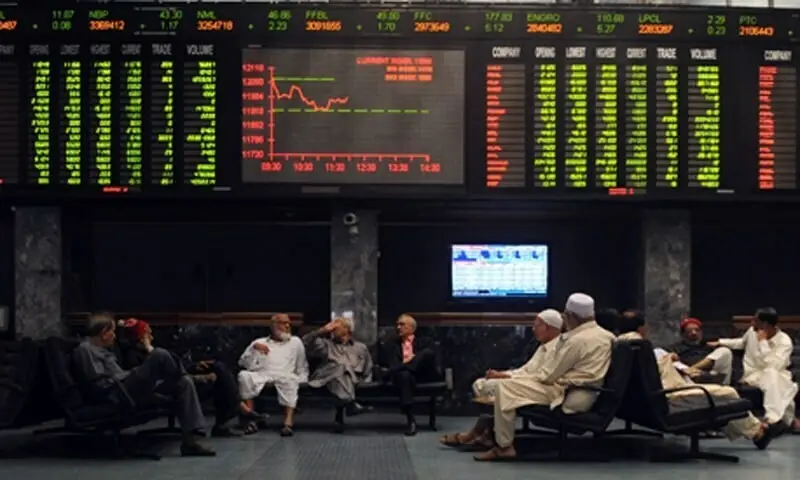
KARACHI: The Pakistan Stock Exchange (PSX) extended its losing streak to a ninth consecutive week, as ongoing geopolitical tensions and the absence of positive economic triggers continued to dampen investor sentiment. A brief recovery earlier in the week, fuelled by ceasefire negotiations and mediation efforts involving several countries, including Pakistan, was short-lived. With no breakthrough in talks, global markets stayed under pressure, especially as oil prices rose after Tehran rejected a 15-point US proposal and vessel movements through the Strait of Hormuz remained restricted, a vital route for a large portion of global oil supplies. According to Topline Securities Ltd, the benchmark KSE-100 index declined 0.68 per cent week-on-week, reflecting sustained investor caution as inflationary pressures linked to the conflict began to filter through to the broader economy. The market was further unsettled by developments in the fixed-income space. In the latest treasury bill (T-bill) auction, cut-off yields rose by 90 to 225 basis points, signalling expectations of a possible increase in the policy rate at the upcoming monetary policy review. Weak sentiment persists as Middle East tensions and rising T-bill yields weigh on investor outlook Investor activity remained mixed. Foreign corporates, insurance companies and banks emerged as net sellers, offloading equities worth $10.5 million, $8.24m and $4.37m, respectively. In contrast, individuals and mutual funds absorbed the selling pressure, with net purchases of $12.63m and $4.6m. Trading activity showed some improvement, with the average daily volume and value recorded at 486 million shares and Rs27 billion, respectively. Arif Habib Ltd (AHL) noted that the KSE-100 index closed at 151,708 points, down 1,033 points week-on-week, amid continued volatility driven by geopolitical uncertainty. As the conflict entered its fourth week, Pakistan’s diplomatic positioning as a mediator was seen as a constructive development, although its impact on market sentiment remained limited. On the macroeconomic front, progress was reported in negotiations with the International Monetary Fund (IMF), which shared a draft of the Memorandum of Economic and Financial Policies (MEFP). The development marks an important step towards a staff-level agreement as part of ongoing programme reviews, pending consensus on policy measures and macroeconomic targets. Meanwhile, disruptions in Gulf shipping routes led to cargo rerouting, resulting in a surge in transhipment activity at Pakistani ports. In the debt market, the government raised Rs503.1bn against a target of Rs400bn, with total bids amounting to Rs818.4bn. The bulk of the borrowing was concentrated in long-term instruments, particularly 15-year Pakistan Investment Bonds (PIBs). Sector-specific developments offered limited support to the market. Exploration and production companies benefited from fresh oil and gas discoveries at multiple sites, including Shams-1, Sahito-1, Bilitang-1 and Pasakhi-13. However, gains were offset by broader market weakness. Pakistan National Shipping Corporation contributed Rs4bn to the Prime Minister’s Austerity Fund 2026, while Barrick Mining slowed development work at the Reko Diq project, citing evolving security conditions and regional uncertainties. The rupee remained largely stable against the US dollar, appreciating marginally by 0.02pc week-on-week to close at Rs279.17. AKD Securities Ltd attributed the week’s volatility primarily to fluctuations in international oil prices and conflicting signals from global stakeholders, particularly the United States and Iran. The index started the week on a positive note but lost momentum in the final sessions as uncertainty intensified. Rising yields in the PIBs auction, including a 12.5pc return on five-year paper, added to investor concerns. Banking and exploration sectors were the main laggards, collectively dragging the index lower. Additional fiscal pressures also weighed on sentiment. The government reduced its Public Sector Development Programme allocation by Rs100bn to accommodate fuel subsidies, as it continued to shield consumers from rising petroleum prices. Despite these challenges, participation improved post-Ramazan, with average daily volumes rising sharply compared to the previous week. The State Bank of Pakistan’s foreign exchange reserves also increased slightly by $22m to $16.4bn. Among sectors, technology, investment banks, and cement stocks posted modest gains, while the refinery, power, and exploration sectors declined. Looking ahead, analysts expect market direction to remain closely tied to geopolitical developments. Inflation data for March and the upcoming monetary policy decision will also be key factors shaping investor sentiment. While near-term risks persist, analysts note that valuations have become increasingly attractive, with the KSE-100 trading at a price-to-earnings ratio of around 7.5 times and offering a dividend yield of approximately 6.8pc. Over the medium term, any easing of geopolitical tensions could trigger a meaningful market recovery. Published in Dawn, March 29th, 2026
Go to News Site