


 Business Recorder
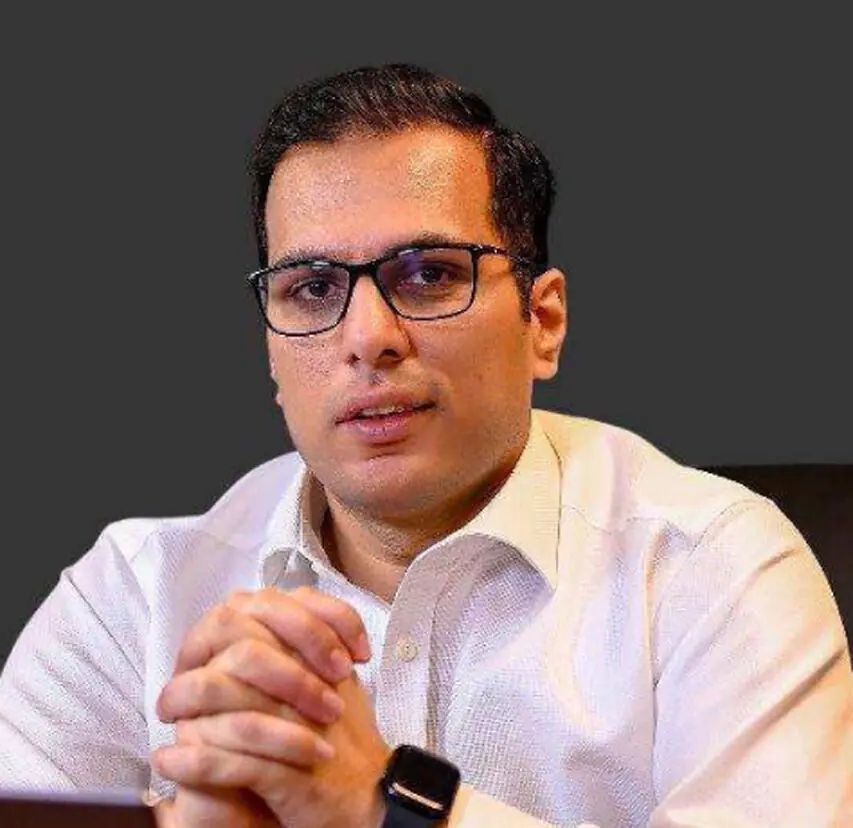
Noman Azhar is the Chief Officer of Zindigi, one of Pakistan’s leading youth-focused fintech platforms. He has played a central role in building and scaling the neobank since its launch in 2021, helping expand its reach through digital payments, savings, investment products, and freelancer-focused financial services. With nearly two decades of experience in financial services, he is known for driving digital transformation, advancing financial inclusion, and developing customer-centric financial products. He has also led initiatives to support entrepreneurship, including the Zindigi Prize for startups across Pakistan. Following are the edited excerpts of a recent conversation BR Research had with him: BR Research: Can you introduce us to Zindigi? What needs do you address, and what services do you offer? Nauman Azhar: Zindigi, powered by JS Bank, is Pakistan’s first purpose-built digital banking experience. From day one, our intent was not to digitize traditional banking, but to reimagine it for a new generation of users. Zindigi was created to serve Gen Z and millennials, customers whose expectations from financial services are fundamentally different. While banking already operates across conventional and Islamic banking, we identified a clear gap: younger consumers do not relate to brick-and-mortar banking or legacy brand structures in the same way. They expect speed, transparency, personalization, and seamless digital journeys. Structurally, Zindigi operates as an independent organization within JS Bank, leveraging both a full banking license and a branchless banking license. This allows us to innovate at startup speed while remaining fully regulated. Our core mission is to make banking intuitive, inclusive, and relevant bringing young Pakistanis into the formal financial system through a single platform that integrates payments, savings, investments, and everyday financial needs into a simple, lifestyle-first experience. BRR: How are the financial behaviors, preferences, and expectations of Gen Z and millennials reshaping financial services in Pakistan, and how is Zindigi responding? NA: Serving Gen Z and millennials requires a long-term perspective. While many currently operate with smaller ticket sizes today, we see them as the primary wealth creators of the next decade. Their expectations from finance are fundamentally different, highly digital, intolerant of friction, and driven by relevance, intuitiveness, and speed of evolution. For this generation, experience is not a differentiator; it is the baseline. At Zindigi, this has shaped both our operating model and our product philosophy. We place customer experience at the center of everything we build and remain deeply agile, constantly listening, iterating, and improving based on real user behavior and feedback. Innovation, for us, is not episodic; it is continuous.This approach has led us to introduce services that lower traditional barriers to financial participation. We were among the first in Pakistan to enable fully digital stock account opening and in-app equity investments, along with simplified access to mutual funds through micro-investments, reflecting this generation’s strong appetite for early wealth creation. More recently, we have placed a strong focus on freelancers, a rapidly growing segment within Gen Z and millennials. By enabling USD-based digital accounts and features such as Pay Link, we are addressing their need for seamless global payments. This is a demand-led segment that consistently brings forward new use cases, and our role is to respond with solutions that are relevant, scalable, and future-ready. BRR: How exactly are you facilitating freelancers, particularly through Dollar Accounts and the Pay by Link service? NA: Freelancers are a critical yet historically underserved segment of Pakistan’s economy. Despite contributing valuable foreign exchange, many have faced structural barriers in accessing formal banking primarily due to rigid documentation requirements around proof of income that were designed for traditional employment models. At Zindigi, we approached this challenge by aligning product innovation with regulatory progress. Leveraging recent State Bank of Pakistan initiatives aimed at easing access for freelancers, we built a fully digital onboarding framework that recognizes the nature of freelance work. Instead of conventional income proofs, freelancers can provide basic information about their profession and client activity, enabling seamless account opening without branch visits. Through the Zindigi app, freelancers can open both a PKR account and a USD-based Foreign Currency account. This directly addresses a longstanding pain point. Previously, freelancers were forced to convert foreign earnings into PKR immediately. Under updated SBP regulations, freelancers are now permitted to retain a portion of their foreign income locally, and our platform has been purpose-built to support this flexibility in a compliant and secure manner. Beyond accounts, we have digitized the entire supporting ecosystem, tax certificates, account maintenance letters, and other financial documentation, so freelancers can manage their financial lives end to end, without operational friction. BRR: Given that Gen Z and Millennials may have limited financial knowledge, how are you helping them understand complex products like mutual funds and investments? NA: Engaging Gen Z and millennials requires speaking their language and meeting them on the platforms they use daily, traditional financial jargon simply doesn’t resonate. At Zindigi, we focus on simplifying complex products like mutual funds and investments through intuitive app design, step-by-step onboarding, and educational content that guides them confidently through each step. This includes branded tutorials, engaging content, and gamified learning experiences designed to make investing approachable, relevant, and aligned with Zindigi’s identity as a modern, customer-first digital bank. We also believe the most powerful form of marketing today is the consumer. One positive social media post can reach thousands or millions, far beyond conventional campaigns. By building genuinely easy-to-understand products and seamless experiences, customers naturally become our strongest advocates. For this generation, education, clarity, and authentic experience are just as important as the product itself. BRR:How is Zindigi supporting local startups in Pakistan, beyond facilitating freelancers? NA: At Zindigi, we recognize that a thriving digital economy requires a strong startup ecosystem. Our support operates along two strategic tracks. First, Banking-as-a-Service (BaaS) is an open banking initiative by Zindigi that enables non-banking companies to embed financial services directly into their platforms. Through Zindigi’s secure APIs, businesses can offer digital accounts, instant payments, debit cards, and micro lending empowering any business to act like a fintech and better serve their customers. It provides a financial backbone for businesses, fueling innovation, unlocking new revenue streams, and enabling startups and SMEs to compete with larger players. This allows them to launch quickly without securing their own banking or EMI licenses, reducing costs, cutting time-to-market, and bypassing the lengthy 2–3-year licensing process that would otherwise be required. Second is Zindigi Prize. We run an annual nationwide competition across more than 180 universities to encourage “good-for-profit” ideas, business models that are both commercially viable and socially impactful. Winners receive equity funding, mentorship, and international exposure to learn how to transform ideas into sustainable ventures. Our goal is to inspire young entrepreneurs to build companies that go beyond traditional employment and contribute meaningfully to their communities. BRR: From a regulatory and policy standpoint, what is the most pressing need to make Pakistan’s digital financial environment more conducive? NA: The State Bank of Pakistan has been proactive and forward-looking in advancing the country’s digital financial ecosystem. Initiatives such as digital banking licenses, end-to-end digital onboarding, innovative account categories, and the launch of Raast clearly reflect a strong regulatory commitment to accelerating financial inclusion and digital adoption. In many respects, the state bank is ahead of the curve and firmly focused on building a digitally enabled economy. That said, the most pressing need now is the complete digitization of person-to-government (P2G) payments. I have consistently emphasized this in various forums. The State Bank has rightly prioritized this area and is actively working toward broad-based implementation. If executed effectively, this single intervention could significantly expand account ownership and drive meaningful digital transaction volumes across the country. Beyond infrastructure, sustained public–private collaboration is critical. Policymakers and industry players must work together to design smart tax incentives, supported by robust KYC frameworks and seamless onboarding processes, to encourage the formation of long-term digital habits rather than short-term spikes in usage. Tax incentives for digital payments, in particular, remain an underleveraged policy tool. When structured correctly, they can accelerate behavioral change at scale. We have already witnessed this impact: when a 50% tax discount was introduced for card payments at restaurants, digital transaction volumes increased substantially. Scaling similar measures nationally — for example, offering a three-year tax relief window for retailers that fully transition to digital payments — could create lasting structural change in Pakistan’s payments landscape. The opportunity is clear. With the right policy alignment and execution, Pakistan can rapidly move toward a more inclusive, transparent, and digitally empowered financial ecosystem. BRR: Beyond regulation, what are Pakistan’s core strengths and opportunities that could help it compete regionally in Fintech with countries like India or the UAE? NA:Pakistan possesses several structural strengths that are often underestimated. We have a centralized digital ID system through NADRA, enabling reliable verification of every citizen, established well before many regional peers, including India. Our banking infrastructure is highly advanced and interconnected. Banks, Payment Service Providers, Payment System Operators, and Telcos operate on a sophisticated, many-to-many model that runs seamlessly every day, providing a strong backbone for innovation. We also have exceptional local talent and development capabilities. At Zindigi, we deliberately built our entire digital banking tech stack in-house with Pakistani developers rather than relying on international vendors. The result is the country’s first fully domestic digital banking platform, now serving over 6 million customers within its first three years. Another key advantage is cost efficiency: our development and operations are in PKR, while the potential value and impact are in USD. This allows platforms like Zindigi to be built at relatively low local cost yet scale regionally or globally with high value creation. In essence, Pakistan can produce world-class fintech solutions at a fraction of the cost of many competitors, positioning the country to compete effectively across the region. BRR: Which technology advances do you believe will most significantly shape digital payments and financial services in Pakistan over the next few years? NA: Two technology areas will be particularly transformative for banking and digital payments in Pakistan, depending on how seriously institutions embrace them. First, Artificial Intelligence (AI): Banks must integrate AI across the entire value chain, from process automation with agentic AI to generative and descriptive AI, including AI-assisted coding. Institutions that fail to adapt risk being outpaced by more agile competitors. AI is no longer an optional enhancement; it will define operational efficiency, personalization, and innovation in financial services. Second, Cybersecurity: As AI adoption accelerates, the complexity and scale of cyber risks also grow. Financial institutions must rethink security frameworks for a post-AI world, understanding where to “stop AI” and how to protect digital assets in an increasingly automated environment. Success will depend not just on deploying AI but on pairing it with robust, forward-looking cybersecurity strategies. Without this dual focus, the sector could face significant operational and reputational risks.
Go to News Site