


 Daily Finland
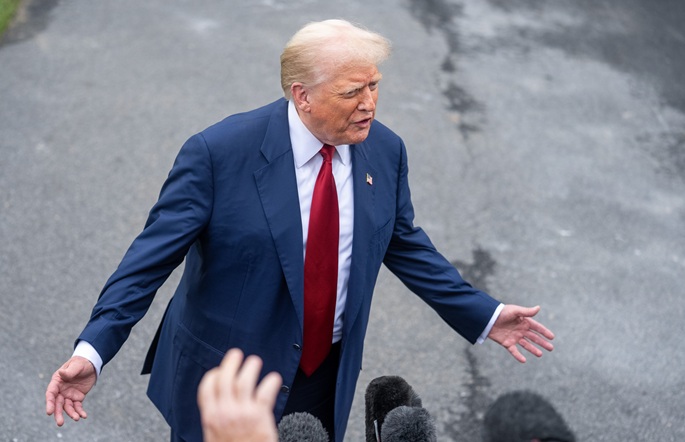
U.S. President Donald Trump announced Saturday that a peace agreement with Iran has been "largely negotiated," subject to finalization between the United States, Iran and other relevant countries in the Middle East,reported Xinhua. As part of the agreement, the Strait of Hormuz will be opened, Trump said in a post on Truth Social. Final aspects and details of the deal are being discussed and will be announced shortly, he said. On Saturday afternoon, Trump spoke by phone with Gulf and other regional leaders to review Iran's latest proposal. Trump said he also had a separate call with Israeli Prime Minister Benjamin Netanyahu, which, likewise, went very well. Meanwhile, Iran on Sunday rejected US President Donald Trump's claim that the Strait of Hormuz would return to its previous status under a proposed agreement, with Iran's semi-official Fars News Agency stating that Tehran would continue to maintain control, reported ANI. According to the report, Iran has agreed only to allow the number of passing ships to return to pre-war levels, but this "in no way means a return to free passage" as it existed before the conflict. Fars News Agency stated that the management of the Strait of Hormuz, including shipping routes, timing of passage and permits, would remain "exclusively under the authority of Iran." Even as Trump had previously declared negotiations over Iran's nuclear program as one of the main and indispensable conditions for any agreement, no commitment has been made by Iran, and the nuclear file has not been discussed at all, the report stated. Fars News Agency stated that American officials have acknowledged in multiple messages to Iran that Trump's tweets are primarily for promotional purposes and media consumption within the United States, and they have recommended that no attention be paid to these statements. Trump has said the United States is engaged in discussions with leaders from several countries regarding efforts linked to peace and stability in the Gulf region, including issues concerning Iran and the Strait of Hormuz. "I am in the Oval Office at the White House where we just had a very good call with President Mohammed bin Salman Al Saud, of Saudi Arabia, Mohammed bin Zayed Al Nahyan, of The United Arab Emirates, Emir Tamim bin Hamad bin Khalifa Al Thani, Prime Minister Mohammed bin Abdulrahman bin Jassim bin Jaber Al Thani, and Minister Ali al-Thawadi, of Qatar, Field Marshal Syed Asim Munir Ahmed Shah, of Pakistan, President Recep Tayyip Erdogan, of Turkiye, President Abdel Fattah El-Sisi, of Egypt, King Abdullah II, of Jordan, and King Hamad bin Isa Al Khalifa, of Bahrain, concerning the Islamic Republic of Iran, and all things related to a Memorandum of Understanding pertaining to PEACE," he said in a post on Truth Social. He further stated that an agreement had been "largely negotiated," subject to finalisation between the United States, Iran and the countries involved in the discussions. "An Agreement has been largely negotiated, subject to finalization between the United States of America, the Islamic Republic of Iran, and the various other Countries, as listed. Separately, I had a call with Prime Minister Bibi Netanyahu, of Israel, which, likewise, went very well. Final aspects and details of the Deal are currently being discussed, and will be announced shortly. In addition to many other elements of the Agreement, the Strait of Hormuz will be opened," he added. Earlier, Iranian President Masoud Pezeshkian said here Saturday that his country seeks to safeguard national interests and remains highly cautious in negotiations with the United States, reported Xinhua. During a meeting with visiting Pakistan's Army Chief Asim Munir, Pezeshkian cited Washington's repeated breach of commitments, attacks on Iran amid talks, and targeted killings of its officials as the basis for widespread public mistrust, according to a presidency statement. Under such circumstances, Iran has pursued negotiations relying on its "brotherly relations" with friendly countries, including Pakistan, "but our main goal is to solely safeguard the Iranian nation's interests through appropriate solutions," Pezeshkian said. "We merely seek to safeguard our people's legal and legitimate rights, but our history and experience of negotiating with the United States urge us to exercise utmost caution," he said. War has never been in anyone's interest and will only bring losses to the region and the world, he added. Munir, who arrived in Tehran Friday night, reaffirmed in the meeting his commitment to regional stability, welcomed the progress made in the negotiations, and voiced hope that they would yield favorable results for Iran and regional states. Separately, Iran's semi-official Fars news agency reported Saturday that if Washington does not show flexibility, peace talks with Tehran will be doomed to failure. Iran insists on not discussing its nuclear program at this stage, releasing its frozen assets prior to negotiations, and continuing its control and management over the Strait of Hormuz, Fars reported, citing an informed source close to the Iranian negotiating team. No negotiation will take place if the three remaining serious issues of disagreement are not resolved, it reported. Iran, the United States and Israel reached a ceasefire on April 8 after 40 days of fighting that started with U.S. and Israeli attacks on Iran on Feb. 28. Following the truce, Iranian and U.S. delegations held one round of peace talks in Pakistan's Islamabad on April 11 and 12, which failed to yield an agreement. Over the past weeks, the two sides have reportedly exchanged several proposed plans outlining conditions for ending the conflict through Pakistani mediation. Iran says 25 ships transit Hormuz Strait in past 24 hrs The Navy of Iran's Islamic Revolution Guard Corps (IRGC) said on Saturday that 25 vessels transited the Strait of Hormuz within the past 24 hours in coordination with its forces. In a statement published on the IRGC's official news outlet Sepah News, the Navy said the vessels, including oil tankers as well as commercial and container ships, crossed the strait while their security was being ensured by the IRGC's naval forces and after obtaining permission. It added despite the insecurity caused in the Strait of Hormuz in the aftermath of the anti-Iran "aggression by the U.S. terrorist army," the IRGC Navy is exercising smart control over the waterway with strength. According to the IRGC's Navy, a total of 92 vessels had crossed the strait between Tuesday and Friday. It has stressed that vessels' passage through the strait must be coordinated with and approved by its forces. Iran tightened its grip on the strait beginning Feb. 28, when it barred safe passage of vessels belonging to or affiliated with Israel and the United States following their joint strikes on Iranian territory. The United States has also imposed a naval blockade on the strait, preventing ships traveling to and from Iranian ports from transiting the waterway.
Go to News Site