 Ruptly
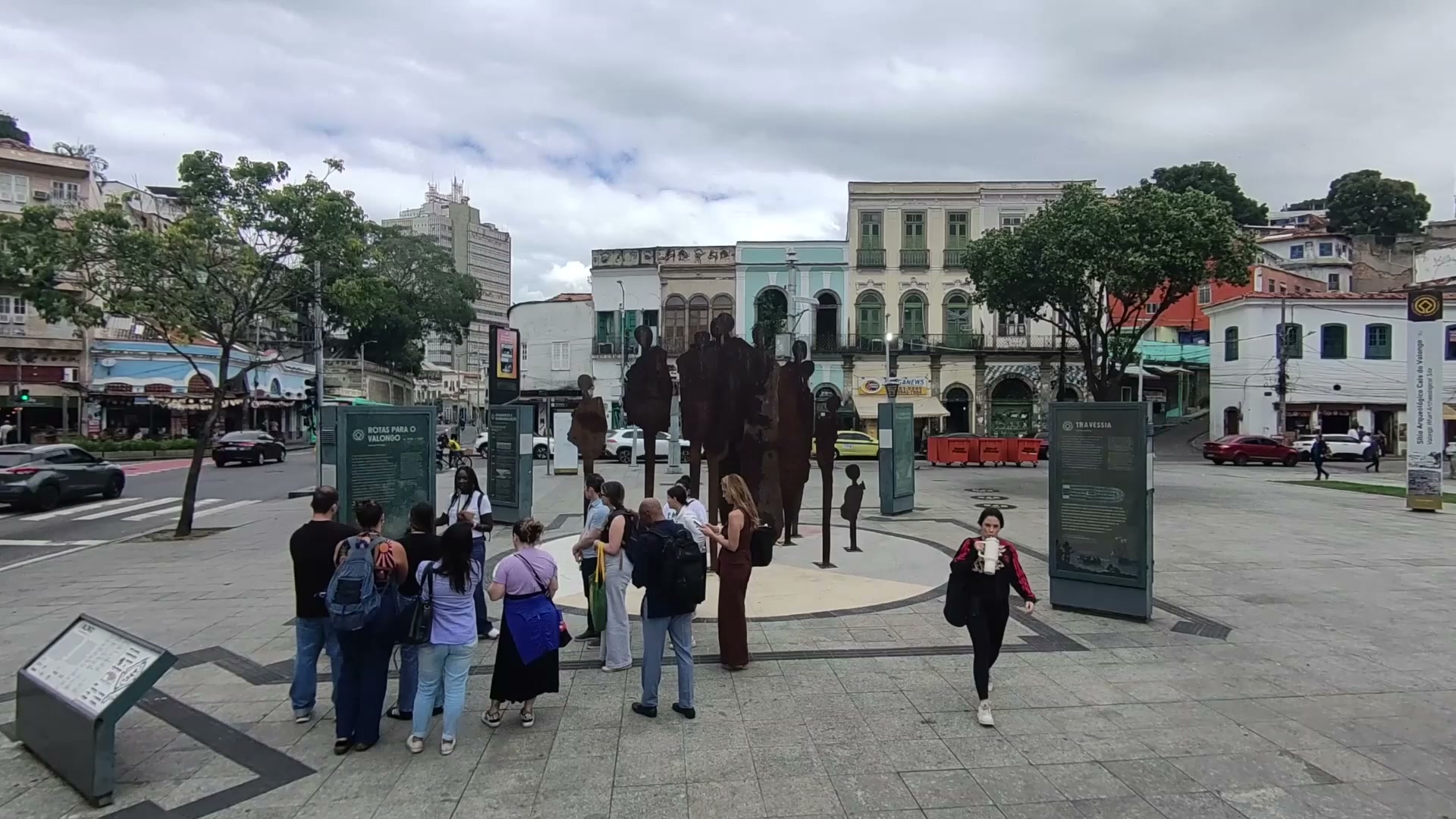
"In the port area of Rio de Janeiro known as 'Little Africa', the memory of the millions of Africans forcibly brought during slavery is preserved, whose influence persists in the culture, music, and traditions of Brazil. In the images captured this Monday, colorful murals alluding to African heritage can be seen on the facades of buildings and walls in the area. The region encompasses the neighborhoods of Saude, Gamboa, and Santo Cristo, where between 500,000 and 700,000 enslaved Africans disembarked between the 18th and 19th centuries. At its center is the Valongo Wharf, declared a World Heritage Site by UNESCO in 2017 as the most significant physical vestige of the transatlantic slave trade in the Americas, and a key piece in efforts to preserve that chapter of history. "The enslaved Africans arrived through this port (...) Here you can feel a very present ancestral African symbolism," said Marcio Santos, a Brazilian boxer. After the abolition of slavery in 1888, Little Africa transformed into an important center of cultural life. The formerly enslaved people and their descendants maintained traditions brought from Africa, creating communities that influenced music, religion, gastronomy, and social life. "We are this African culture, but mixed with Brazilian culture, which maintains that African connection around the world," commented Adriana Barbosa, Founder of Feria Negra, a festival aimed at financially empowering the Afro-descendant community in Brazil. The archaeological site was rediscovered in 2011, and the Brazilian government also recognized it as Afro-Brazilian historical-cultural heritage for its importance in the formation of national identity and as the birthplace of samba, Brazil's most emblematic musical genre. The history of Little Africa reflects the importance of African roots in Brazil. Today it is not only a place of memory but also a celebration of the resilience, creativity, and lasting contributions of Afro-Brazilians to the culture and history of the country."
Go to News Site
 The Independent
 The Mirror
 Daily Mail U.K
 Birmingham Live