 Dawn.com
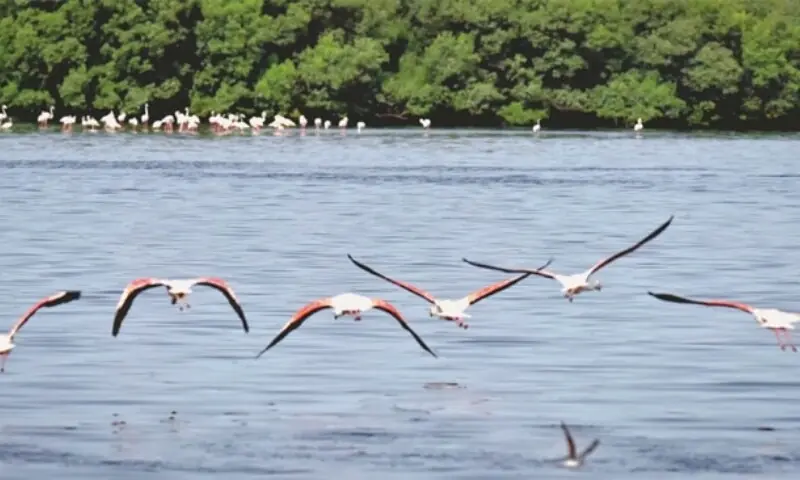
ISLAMABAD: A flock of flamingos resting at Rawal Lake was hunted down by poachers with the help of locals, raising concerns among environmentalists. “We also have evidence that poachers also killed other medium-sized water birds such as the magnificent coots and moorhens,” said an official of the Islamabad Wildlife Management Board (IWMB). Most of the IWMB staff was engaged with seasonal firefighting efforts in the Margalla Hills National Park, the official said, adding that “poachers took advantage of our absence to hunt the birds. About 12 to 13 flamingos were allegedly killed but we are still ascertaining the correct numbers”. A report of the incident has been submitted with the assistant commissioner Islamabad. Incident being investigated; report submitted with assistant commissioner “The police are cooperating with the board and a first information report (FIR) will be registered after further investigations are complete,” the IWMB said. According to the management board, the incident occurred on June 3, and was reported by a bird photographer. The IWMB said sighting of flamingos in Rawal Lake was rare in this season, calling their killing an ecological tragedy. “It was after many years that flamingos had been sighted in Rawal Lake. But the excitement was cut short when poachers along with locals hunted the flock, and forced the surviving birds to escape,” the official said. After inquiries, the IWMB suspected the contractor who has commercial fishing rights for Rawal Lake. According to a social media post about the incident shared with Dawn , the birds, circled around the lake but whenever they tried to land they were followed and shots were fired at them. The surviving birds took flight again and did not return. The Islamabad Wildlife Management Board said it had collected enough evidence, including discharged cartridge, to register a complaint with the police. “The assistant commissioner had visited our office recently and extended complete support of the law,” the IWMB official said. Despite strict laws and patrolling by IWMB staff meant to protect migratory birds, enforcement around the urban wetlands remains challenging. The IWMB said it was surprised to see migratory birds in Rawal Lake in summers and believed they were vagrant birds, adding that flamingos frequented the Salt Range but were rarely seen in Rawal Lake. “But now that they had graced our city, this act may have a devastating effect and they might never return,” the board official said. Expressing serious concern over reports of the alleged killing of flamingos, Ministry of Climate Change and Environmental Coordination spokesperson Mohammad Saleem Shaikh said the Islamabad Wildlife Management Board had taken immediate notice of the incident and initiated an inquiry. He said an IWMB team had already visited the site, collected preliminary evidence and launched an assessment to ascertain the veracity of the reports and identify those involved in the alleged killing of the birds. “The IWMB is treating the matter with utmost seriousness. Evidence gathered from the site is being evaluated and further investigations are underway to establish the facts surrounding the incident, including reports that the birds may have been slaughtered and their meat consumed,” Mr Shaikh said. He added that if the allegations were substantiated, strict legal action would be taken under the applicable wildlife protection laws and all those found responsible would be brought to justice. Saleem Shaikh said the relevant local police authorities had also been informed and were extending support to trace the perpetrators. “The ministry and IWMB remain committed to the protection and conservation of wildlife, and any violation of wildlife laws will be dealt with in accordance with the law,” he added. He said flamingos were an important part of Pakistan’s wetland ecosystems and migratory bird populations, and their protection was essential for maintaining ecological balance and biodiversity conservation. Published in Dawn, June 9th, 2026
Go to News Site
 Daily Nawa-i-Waqt
 ARY NEWS SPORT

 Geo Super
 ARY NEWS