 Autocar
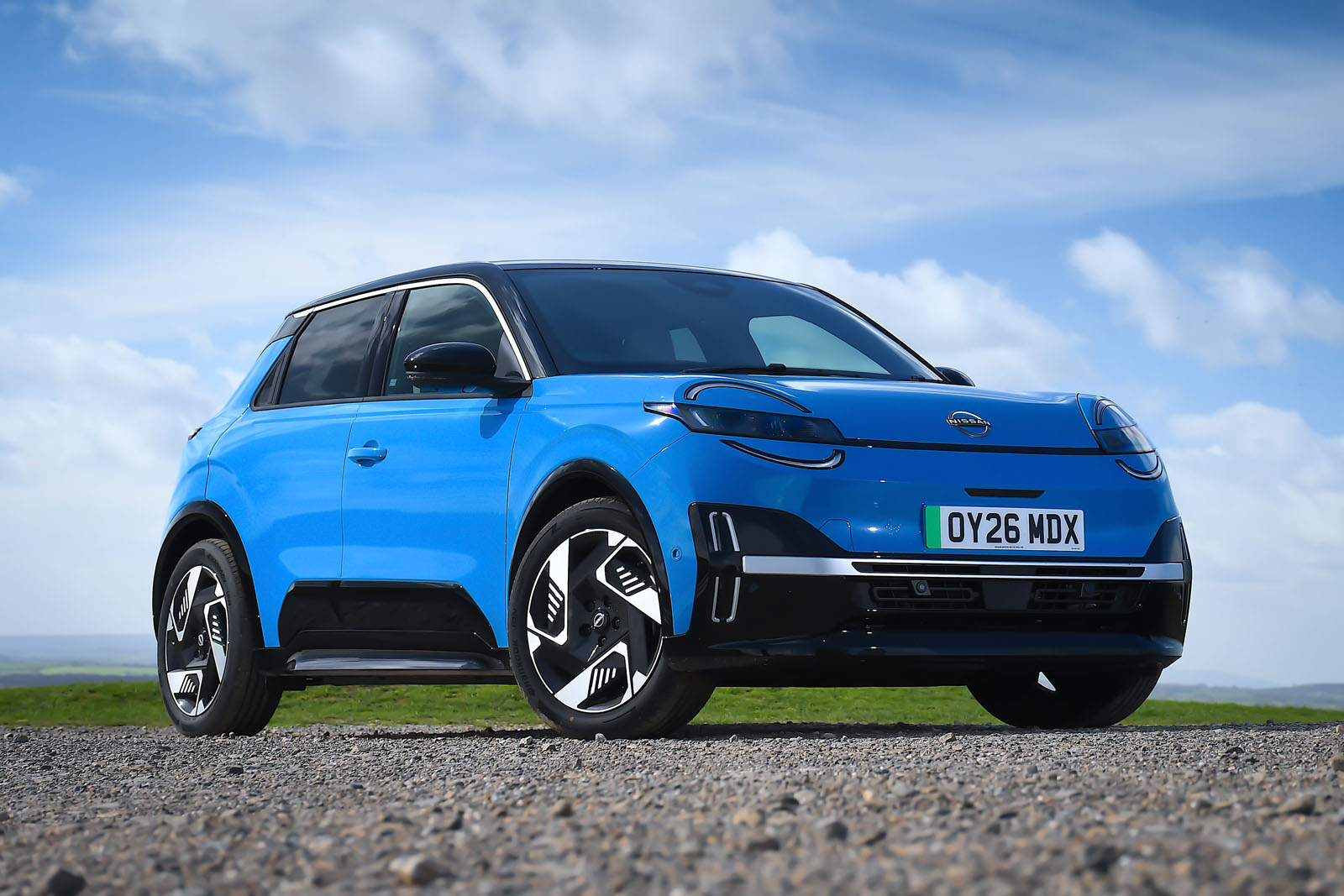
Nissan is the latest car maker to dial down its European focus Nissan, Honda and Mitsubishi are among the Japanese firms to look to other global markets for growth Nissan’s announcement that Jaecoo owner Chery is ready to take over one of the two production lines at its underutilised Sunderland plant neatly illustrates a wider trend: that Japanese car companies are facing an existential crisis in Europe as their fingertip hold on a difficult market is now starting to crumble in the face of Chinese competition. All Japanese brands bar Toyota are struggling to compete in the region and Nissan is the latest to admit that it can no longer commit to developing models just for Europe. “The competition is getting more and more severe with Chinese players,” said Nissan CEO Ivan Espinosa at last month's Financial Times Future of the Car Summit. “Traditionally we were investing a lot in specific products for Europe. With the scale that we have, it has proven not sustainable.” Nissan becomes the latest Japanese brand after Honda and Mitsubishi to deprioritise Europe and instead focus on core regions, which in Nissan’s case means Japan, North America and China. “By leveraging these larger markets, we support the amortisation of such products and don't [put] the burden on an operation that is smaller,” said Espinosa. “What we're doing is actually finding a sustainable way of staying in Europe.” Japanese manufacturers shook up the European market in the 1970s and 1980s, when their superior manufacturing techniques produced more reliable transport. Despite the fears of local automotive executives, though, Japanese brands never really gained their predicted foothold in Europe and struggled to increase market share beyond around 13%. “Many Japanese brands were hugely successful in the era when reliability was the key differentiator. As quality converged across the industry, that advantage became less powerful,” said David Bailey, professor of business economics at the Birmingham Business School. That contrasted with their success in the US, where last year Japanese marques led by Toyota, Honda and Nissan accounted for a third of the market. “Japanese brands cracked America by offering exactly what US buyers wanted: reliable, affordable, sensible family transport. In Europe, being sensible isn’t always enough. Buyers often want heritage, design flair or a premium badge as well,” said Bailey. Now that the Chinese are making serious inroads into the European market, Japanese brands are first in the firing line. “Japanese brands are coming under increasing pressure from Chinese OEMs that are migrating to hybrids to avoid anti-subsidy tariffs and stepping all over Japanese players' toes,” said automotive research analyst Matthias Schmidt. “They are also targeting the same brand-agnostic markets such as the UK, southern European and Nordic markets, where Japanese manufacturers have previously thrived.” The British willingness to give a new brand a go helped secure Japanese investment in the UK, landing the nation factories for Nissan, Toyota and Honda. Now that same brand adventurism has made the UK the biggest market in Europe for Chinese imports and the Japanese are the first to suffer. In the first fourth months of this year, the Japanese share of the UK market dropped to 12.4% from 14.3% in the same period last year, having been overtaken by the Chinese, who captured 15.4%. In April, it was even worse, with the Japanese at 9.3% and the Chinese at 17.3%. Part of the reason for the Japanese brands' lack of success in Europe is the fact that their cars are often developed in their home market, which has rarely dovetailed with Europe’s in terms of drivetrain requirements. After battling for years to come up with a diesel solution for Europe, Japan’s car makers now have to contend with the fast pace of electrification. Hybrids developed by Toyota now sync very neatly with Europe’s needs after a slow burn in terms of acceptance, but EVs are another issue. Japan’s 12.6% overall share of the European car market in the first months of the year drops to just 4.6% for electric compared with a whopping 49% for hybrid. More EVs are coming but the issue stems from the lack of interest back home in Japan, where EVs accounted for less than 3% of sales last year. China, on the other hand, tracks much closer to the electrified future that both the UK and the European Union envisage. For example, China’s share of the UK electric market for the first four months stood at 20.4%, rising to 44% for plug-in hybrids. However, Japan’s failure to launch in Europe is not a story that includes its biggest car maker. Toyota has steadily plugged away at Europe to the point that in 2025 it recorded its biggest year to date in the region, with the Toyota brand logging 1.14 million vehicle sales. The car maker now accounts for around half of all Japanese car sales in Europe after doggedly developing product with the design, technology and quality feel to entice buyers away from Volkswagen Group brands. Cars like the C-HR and Aygo X are region specific and Toyota has thrived because of them. For Japanese brands without the scale to target European buyers, the solution to retain a foothold in Europe is to rely on partners who either offer the local scale or the technology to compete. Some lean on Toyota: the current Mazda 2 is a rebadged version of the Yaris . Nissan taps former alliance partner Renault, which builds the new electric Micra based on the Renault 5 and will soon supply the Wave , a city car based on the Twingo . Mitsubishi also sources a chunk of its range from Renault, including the Scenic-based Eclipse Cross . For EVs, the solution for many Japanese brands has been to turn to what is now their biggest regional rival: China. Nissan’s Espinosa said that collaborating with its Chinese joint-venture partner was an option for future electric platforms in Europe. Honda already sources its e:NY1 electric SUV from China, while Mazda leverages its partnership with Changan to supply the 6e electric saloon and new CX-6e electric SUV. Aside from the early departure of Daihatsu in 2013, no Japanese brand is talking about leaving altogether. Those embracing the new, asset-light method of supplying a combination of imports and partner-developed models are posting profits in the region for now. Mazda, for example, earned the equivalent of £84 million in the financial year ending March 2026, only slightly down on the year before. Honda posted European profits equivalent to £76 million for the same period, up nearly 200% from the previous year. (Suzuki doesn’t break out Europe in its financial results.) However, Nissan remains in the mire financially in Europe, losing the equivalent of £252 million for the financial year but improving on the £460 million loss for the year before. The company is taking steps to reduce costs at its underutilised Sunderland plant, including shutting one of its two lines in preparation reportedly to lease or sell it to a Chinese maker, potentially Chery – the company that bought its Barcelona and South Africa factories. Toyota, meanwhile, continues to earn strong money in Europe, posting profits for the region equivalent to £1.5 billion in the last financial year, equating to a profit margin of 4.9%, down from the 6.6% it managed from the year before. Whether Toyota can remain strong and continue to fly the flag for Japan in Europe remains an open question. European-focused hybrid models like the Yaris Cross and Aygo X hybrid differentiate the brand from the Chinese, but brands like MG, BYD and Chery are filling gaps all the time and posting strong hybrid growth. The world’s toughest market has just got even tougher.
Go to News Site